
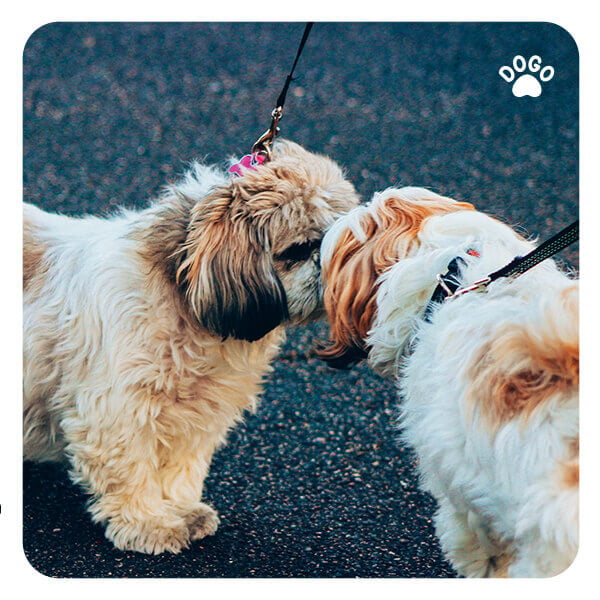
Dog Sniffing Each Other. What Does It Mean?
Post Date:
July 18, 2024
(Date Last Modified: November 13, 2025)
Dogs rely heavily on scent to gather information about their environment and other animals, using specialized anatomy and behavior to sample and interpret chemical cues.
Why Dogs Sniff: The Biology of Canine Scent
The canine nose is anatomically and neurologically specialized for detecting, separating, and interpreting odor molecules. The nasal cavity contains complex turbinate bones that increase surface area and a thick olfactory epithelium where sensory neurons bind odorants; dogs can have far greater olfactory capacity than people. Dogs possess roughly 300 million olfactory receptor neurons compared with about 6 million in humans[1].
Beyond raw receptor numbers, dogs also have a different genomic investment in olfaction: many breeds express on the order of hundreds of functional olfactory receptor genes, commonly around 800 functional OR genes in comparison to fewer in humans, which contributes to finer discrimination of odor components[1]. The physical area of olfactory epithelium amplifies this capability—typical measurements put that surface considerably larger than in people, for example on the order of about 23 square inches (150 cm²) in many dog skull types versus much smaller human values[1].
Dogs also sample air differently: active scenting often involves rapid inhalation cycles that channel air to the olfactory recesses while exhalation follows a different route, improving odor capture and concentration. During focused investigation a dog may cycle breaths rapidly to refresh odor sampling, with active sniffing measured in multiple inhalations per second during investigative behavior[1]. The olfactory bulb and associated brain regions are proportionally larger in dogs, supporting more complex odor processing and learning than is typical in humans[1].
Scent molecules that bind receptors trigger patterns of neuronal activity that are routed to memory centers and associative regions of the brain; repeated encounters with the same odor strengthen neural representations so dogs can recognize individuals, places, or events by smell over long intervals. Dogs’ threshold for detecting certain odorants can be extremely low, with experimental evidence showing detection at very small concentrations in controlled tests, which helps explain why a brief sniff can convey rich, reliable information to a dog[1].
Dogs rely heavily on scent to gather information about their environment and other animals, using specialized anatomy and behavior to sample and interpret chemical cues.
Why Dogs Sniff: The Biology of Canine Scent
The canine nose is anatomically and neurologically specialized for detecting, separating, and interpreting odor molecules. The nasal cavity contains complex turbinate bones that increase surface area and a thick olfactory epithelium where sensory neurons bind odorants; dogs can have far greater olfactory capacity than people. Dogs possess roughly 300 million olfactory receptor neurons compared with about 6 million in humans[1].
Beyond raw receptor numbers, dogs also have a different genomic investment in olfaction: many breeds express on the order of hundreds of functional olfactory receptor genes, commonly around 800 functional OR genes in comparison to fewer in humans, which contributes to finer discrimination of odor components[1]. The physical area of olfactory epithelium amplifies this capability—typical measurements put that surface considerably larger than in people, for example on the order of about 23 square inches (150 cm²) in many dog skull types versus much smaller human values[1].
Dogs also sample air differently: active scenting often involves rapid inhalation cycles that channel air to the olfactory recesses while exhalation follows a different route, improving odor capture and concentration. During focused investigation a dog may cycle breaths rapidly to refresh odor sampling, with active sniffing measured in multiple inhalations per second during investigative behavior[1]. The olfactory bulb and associated brain regions are proportionally larger in dogs, supporting more complex odor processing and learning than is typical in humans[1].
Scent molecules that bind receptors trigger patterns of neuronal activity that are routed to memory centers and associative regions of the brain; repeated encounters with the same odor strengthen neural representations so dogs can recognize individuals, places, or events by smell over long intervals. Dogs’ threshold for detecting certain odorants can be extremely low, with experimental evidence showing detection at very small concentrations in controlled tests, which helps explain why a brief sniff can convey rich, reliable information to a dog[1].
What Dogs Learn from Sniffing
When one dog sniffs another, it is sampling layered chemical signals that often include signature compounds from urine, saliva, skin, and anal gland secretions; these sources carry identity information and physiological state markers. Dogs can discriminate sex and reproductive status from scent cues: for example, urine-borne pheromones change in concentration and composition during estrus, and males will show different investigatory patterns toward females in heat[2].
Age and individual identity are also encoded: volatile compounds and microbiome-derived metabolites alter with diet and age, enabling dogs to pick up on cues that suggest a companion’s life stage or recent meals. Dogs can detect certain illness-related odors, such as metabolic changes or infections, that subtly change the odor profile of skin or breath[2]. Emotional state—stress, fear, or arousal—modifies sweat and glandular secretions; investigators observe altered investigatory behavior and scent signatures when dogs are anxious or excited[2].
Scent functions as a form of social bookmarking: marks left in the environment or on another dog’s coat create persistent cues that dogs can return to and re-evaluate. This olfactory memory supports individual recognition across time and space and underpins many social decisions, from approaching to avoiding another animal[2].
Sniffing as a Greeting: Social Rules and Rituals
Dog-to-dog greetings usually follow a predictable sequence: an approach with loose body posture, brief nose contact or sniffing at the head or shoulders, then movement to flank or rear investigation if both dogs are comfortable. Typical polite greeting sniff durations are often short—commonly 1 to 5 seconds for an initial check—followed by longer investigation if curiosity or uncertainty remains[3].
Posture and timing matter: mutual sniffing with relaxed bodies and loose tails is a calm social exchange, while one-sided prolonged sniffing combined with stiff posture or raised hackles can signal dominance assertion or mounting intent. Submissive signals such as lowering the head, turning the body away, or offering a brief grin-like mouth raise typically reduce tension during close contact[3].
Context shifts expected behavior: in a busy dog park dogs may accept quicker, briefer sniffs because many animals are present, whereas at home or with familiar dogs the ritual can be longer and more intimate. Individual temperament also shapes greeting rituals—some dogs prefer brief checks and immediate play, others require extended investigation before relaxing[3].
Genital and Anal Sniffing Explained
Genital and anal regions concentrate secretions and urine compounds that are rich in pheromones and bacterial metabolites, making them highly informative targets for olfactory inspection. Anal glands secrete oily compounds and bacterial products that are particularly distinctive, and dogs commonly target that area to read identity, health, and reproductive cues[4].
Investigative patterns are age-related: puppies often begin targeted rear-area inspection between 4 and 8 weeks as their sensory systems and social skills mature, while adult dogs typically show quicker, more discriminating interest[4]. Normal genital/anal sniffing is usually brief and followed by other behaviors; prolonged, repeated, or forceful fixation at the rear may indicate medical discomfort, anal sac disease, or compulsive behavior and should prompt observation or veterinary evaluation if it persists more than a few days[4].
Sniffing in Play, Stress, and Aggression
During play, sniffing is often interleaved with play bows, loose movement, and exaggerated mouth gestures; these combinations act as rhythmic checks that confirm shared intent. Play-associated sniffs are typically brief and accompanied by relaxed tails and open mouths, whereas stress-related sniffing can be faster, more repetitive, and paired with lip licking or tucked tails[5].
Certain sniffing patterns can precede conflict: prolonged staring while sniffing, a fixed head position, or nose-to-nose locking combined with body stiffness raises the risk of escalation. Watch for increasing body tension, closed mouths, and lack of self-handicapping signals during sniffing as possible early warning signs that handlers should intervene carefully[5].
Duration, Intensity, and Position: Interpreting Sniffing Nuances
Length, force, and location of sniffing alter meaning: brief exploratory sniffs lasting under about 2 seconds tend to be quick identity checks, whereas sustained investigations beyond roughly 10 seconds are often information-seeking or indicate heightened interest[6].
| Behavior | Typical Duration | Likely Meaning | When to Seek Help |
|---|---|---|---|
| Brief nose-to-nose | <2 seconds (<2 s) | Quick identity check | Not needed |
| Prolonged rear-area sniff | 5–30 seconds | Detailed scent sampling; high interest | If >3 days or paired with scooting, see vet[4] |
| Flank or shoulder sniff | 3–10 seconds | Social assessment and familiarity check | Behavioral consult if paired with aggression[3] |
| Ground or scent-trail sniffing | Variable; minutes possible | Environmental information-gathering | Not typically medical |
Position matters: nose-to-nose checks emphasize immediate social interest but are also higher-risk for tension, flank sniffing is lower-intensity, and ground sniffing is often directed at environmental cues rather than the other dog. Repeated, obsessive, or ritualized sniffing—especially when it interrupts normal function or sleep—may reflect compulsive behaviors or underlying medical issues and warrants professional evaluation[6].
Puppy Development and Socialization Through Sniffing
Puppies have critical sensitive periods for social and olfactory learning: primary socialization windows occur roughly between 3 and 12 weeks of age when exposure to varied, positive scent experiences supports normal adult social behavior[7]. Controlled sniffing experiences—meeting calm dogs, supervised exploration, and scent play—help puppies build reliable olfactory memories and reduce fear responses later.
Play and sniffing act as rehearsal for adult interactions; gentle guided introductions teach puppies to read signals and to switch from inspection to play without escalating tension. Socialization exercises that include short, supervised sniffing sessions with vaccinated, temperament-tested dogs reduce risk while providing essential learning opportunities, and many behaviorists recommend multiple brief exposures each week during the socialization window[7].
Health, Disease Detection, and Veterinary Relevance
Changes in a dog’s scent or unusual sniffing behavior can be clinically relevant: increased interest in another dog’s breath or skin may reflect halitosis, dental disease, or metabolic conditions; rancid or strongly foul odors can indicate infection or necrosis. Owners should note sudden onset of obsessive sniffing, new or persistent foul odors, or increased licking as potential signs to consult a veterinarian[3].
Trained detection dogs can identify certain cancers, low blood sugar, and infectious pathogens in controlled settings, demonstrating that disease alters volatile organic compounds in ways that dogs can perceive; some trained programs report detection sensitivities useful for screening tasks in research contexts[1]. Veterinary assessment is recommended when scent-associated behaviors are paired with clinical signs such as weight loss, vomiting, skin changes, or changes in elimination.
When and How Owners Should Intervene
Interrupt or redirect sniffing calmly to avoid escalation: a gentle call, a treat tossed to the side, or a light leash repositioning can break a tense interaction without forcing the dogs apart abruptly. Leash control is important—keeping slack rather than pulling tight reduces tension; if a dog becomes fixated and body language stiffens, removing the dog calmly to a neutral space is preferable to sudden jerks or punishment, which can increase anxiety[5].
Consent cues and greeting protocols work well: teach a reliable “look” or “leave it” cue, allow dogs to approach on loose leashes, and deny access if either dog shows avoidance signals. Training exercises that reinforce polite greeting skills—rewarding brief, relaxed sniffing and moving to play or a sit—help dogs learn boundaries; many trainers suggest using short, structured practice sessions multiple times per week to shape consistent behavior[5].
Breed, Personality, and Environmental Influences on Sniffing
Breed and genetic background affect sniffing intensity: scent hounds and breeds selected for scent work often show higher baseline investigatory rates and can spend significantly more time tracking a scent than sight hounds or brachycephalic breeds, which may have airflow restrictions that reduce olfactory sampling efficiency[6].
Individual temperament, prior experiences, and sensory impairments also shape sniffing style—anxious dogs may sniff rapidly and repetitively, while older dogs with reduced olfactory sensitivity may investigate less often. Environmental factors
