
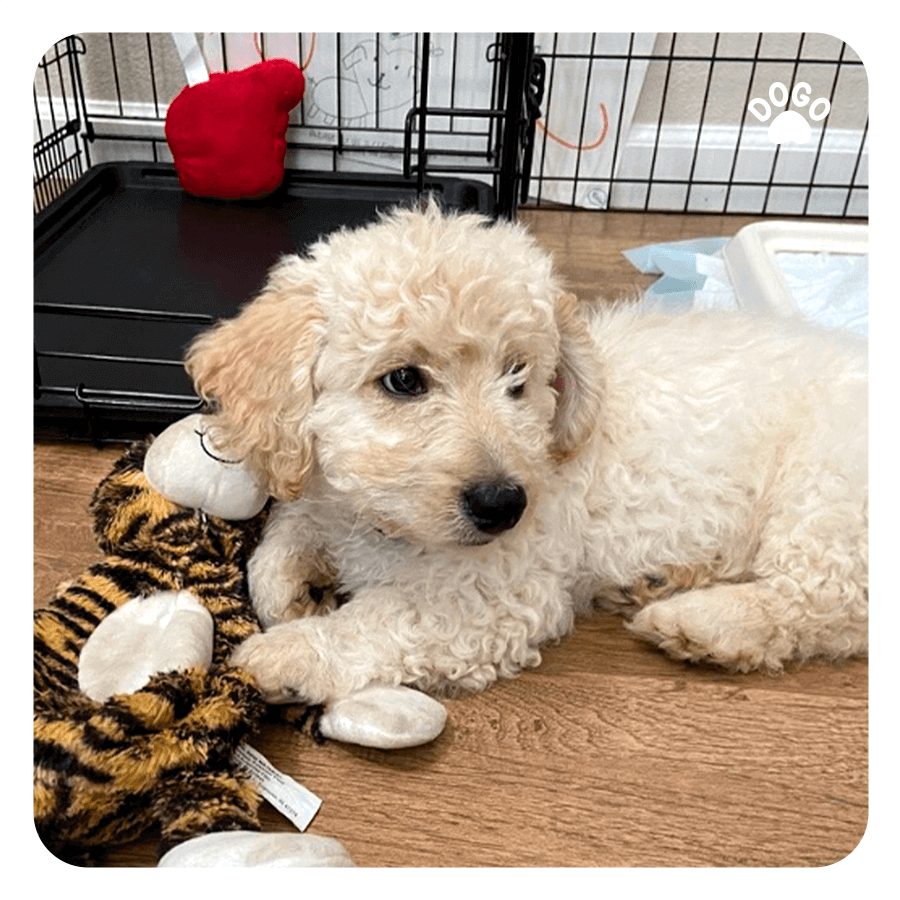
Help! My Dog Pees in the Crate!
Post Date:
July 18, 2024
(Date Last Modified: November 13, 2025)
If your dog is urinating in the crate, identify whether the behavior is true urination, marking, stress-related, or contamination so you can choose the right next steps. Careful observation of patterns and basic medical screening will steer decisions about training, cleaning, and confinement changes.
What’s happening: define the problem and patterns
Start by distinguishing elimination types so you can match the response: true urination is a full stream and usually accompanied by posture and straining; marking is a small spray or dribble often on vertical surfaces; stress-related elimination can be larger or smaller but often follows changes in household routine; contamination is when bedding or previous soil triggers repeated soiling.
- Signs of true urination: full stream, posture, larger volume.
- Signs of marking: small target dribbles, often on walls, corners, or high surfaces.
- Signs of anxiety-related elimination: defecation or urination with restlessness, panting, pacing, or vocalization.
- Signs of contamination: repeat soiling in same spot despite cleaning; dog avoids a specific bed or liner.
Keep a diary noting time of day, location in the crate, whether the dog was left alone, and the volume or frequency; if accidents happen more than 2 times per week, begin a structured log and share it with your veterinarian or behaviorist [1].
Medical causes to rule out
Before changing training, rule out common medical problems that cause inappropriate urination, including urinary tract infection (UTI), bladder stones, urinary incontinence, and systemic disease such as diabetes or Cushing’s. A urinalysis and urine culture are typical first-line tests; culture results commonly take about 48–72 hours to finalize [1].
If physical examination or history suggests deeper issues your veterinarian may recommend bloodwork (CBC/chemistry), urine culture, and imaging such as abdominal radiographs or ultrasound to look for stones, masses, or anatomical defects [1]. Red flags that require urgent veterinary attention include inability to urinate, continuous straining, or large amounts of blood in the urine; these signs may indicate obstruction or severe infection [1].
Age, development, and house‑training status
Puppies have immature bladder control and need frequent potty breaks; many puppies require opportunities to eliminate every 1–2 hours during the day, and reliable overnight control often does not occur until around 6 months of age [2]. Adolescence can include regressions after hormonal changes; neutering may reduce some marking behaviors within about 4–12 weeks but does not guarantee elimination of marking if the behavior is learned or anxiety-driven [2].
Seniors can develop urinary incontinence or changes in frequency; age-related incontinence has different management (medical and environmental) than house-training lapses in younger dogs [2]. If a previously reliable adult dog begins having accidents, re-check medical status before assuming a behavioral cause [2].
Crate size, type, and bedding choices
Choose a crate that lets the dog stand, turn around, and lie down comfortably; measure nose-to-tail and add about 2–4 inches (5–10 cm) for the crate length to ensure a comfortable fit [3]. For very small puppies or weak seniors, use a crate with a low threshold to ease entry and exit.
Bedding that is removable and machine-washable is ideal; heavy absorbent bedding inside a long-term crated space can encourage a dog to treat the crate as a latrine. If the dog soils bedding more than once a week, swap to low-absorbency liners or a waterproof pad that is laundered frequently or replaced [3]. For safety, avoid loose stuffing or items the dog can chew and swallow; select bedding labeled for pet use and check for secure seams and non-toxic materials [3].
Crate placement, routine, and confinement duration
Place the crate in the family living area or bedroom so the dog feels socially connected; isolation in a garage or basement increases stress and the risk of elimination in the crate [2].
| Age | Max continuous crate time | Notes |
|---|---|---|
| 8 weeks | About 1 hour | Very frequent potty breaks and supervised play [2] |
| 3 months | About 2–3 hours | Increase breaks as bladder capacity grows [2] |
| 6 months | Up to 4–6 hours | Many dogs can hold longer overnight but monitor individual needs [2] |
| Adult | Generally no more than 4–6 hours during the day | Adults vary by age and health; breaks and enrichment are important [2] |
Use the crate schedule to sync with potty breaks: puppies need more frequent outings, and adult dogs should have scheduled outdoor trips before and after crate time to reinforce the elimination location and timing [2].
Cleaning, odor removal, and hygiene protocols
Remove soiled bedding promptly and use an enzymatic cleaner formulated for pet urine; allowing the enzymatic product a dwell time of about 10–15 minutes improves breakdown of uric salts and odor compounds [4]. Avoid ammonia-based cleaners that can mimic urine scent and encourage re-soiling.
Launder removable pads and covers according to label instructions; when fabrics are safe at high temperatures, washing at or above 140°F (60°C) is commonly recommended to help sanitize and remove odors from heavily soiled materials [4]. For crate frames and hard surfaces, scrub with detergent, rinse, and follow with appropriate enzymatic product per manufacturer directions [4].
Potty scheduling, diet, and bladder management
Predictable feeding supports predictable elimination; many adult dogs do well on two meals per day spaced about 8–12 hours apart, which helps create regular potty windows [2]. Match water availability to the dog’s routine and medical needs; for healthy adults, overnight periods without water commonly range from 8–10 hours, but never withhold water in a way that compromises hydration or medical care [2].
Schedule outdoor trips right after the dog wakes, after play or meals, and before extended crate time; document successes and adjust timing to reduce accidents. For dogs recovering from urinary illness, follow veterinary guidance on fluid and diet, and maintain frequent potty outings during recovery [1].
Crate training and behavior modification techniques
Build a positive crate association by shaping short, non-stressful crate experiences; start with very brief periods of calm time and incrementally increase duration. A practical rule is to lengthen crate-alone time by about 10–15 minutes after the dog remains calm and does not eliminate during the prior session [4].
Pair a consistent cue with outdoor elimination (a word or phrase) and reward success immediately; use high-value treats or praise and gradually reduce food rewards as the cue is learned. If setbacks occur, return to shorter, successful steps rather than forcing longer confinement.
Addressing stress, separation anxiety, and environmental triggers
Differentiate anxiety-related elimination from medical causes by looking for comorbid signs such as intense whining, pacing, drooling, or destructive behavior at the same times as accidents; if medical causes are excluded, then focus on behavioral strategies [5].
Use desensitization and counterconditioning for trigger-related anxiety: start with stimulus levels that do not provoke elimination and pair with positive reinforcement, gradually increasing exposure. Structured programs typically require consistent practice for about 4–8 weeks to produce measurable change, and many cases need longer follow-up or professional behaviorist involvement [5]. Calming enrichment such as puzzle feeders, secure chew items, and predictable exercise before crate time also reduces stress-related accidents [5].
Temporary fixes and when to change confinement strategy
Short-term protective strategies—waterproof crate liners, a vinyl or rubber bottom tray, and a washable pad that is changed immediately after accidents—can protect bedding and help you manage until the root cause is addressed; choose liners and trays that are easy to clean and safe for the dog [3].
If a dog soils the crate repeatedly despite medical treatment and graded training, switch to supervised confinement options such as a playpen or tethering to a person at home for 3–7 days while you intensify training and monitoring; temporary measures should always be paired with a plan to return to normal containment once the issue is resolved [2].
Sources
- merckvetmanual.com — veterinary diagnostics and urinary disease guidance.
- aaha.org — guidelines on confinement durations, feeding schedules, and behavior recommendations.
- vcahospitals.com — practical crate sizing and bedding recommendations.
- avma.org — cleaning protocols, crate-training increments, and welfare considerations.
- wsava.org — behavior and anxiety management recommendations.
