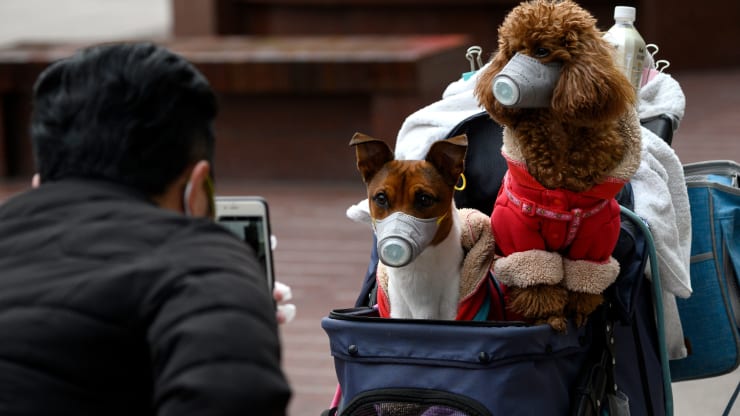
Coronavirus in Dogs. Can Dogs Get Infected?
Post Date:
December 4, 2023
(Date Last Modified: November 13, 2025)
Dogs can be affected by several different coronaviruses, which vary by the tissues they target and how they spread. Clear distinctions exist between coronaviruses that primarily infect dogs and the virus responsible for human COVID-19.
Coronaviruses: basic facts
Coronaviruses are enveloped, positive-sense RNA viruses in the family Coronaviridae and are grouped into four (4) major genera: Alphacoronavirus, Betacoronavirus, Gammacoronavirus, and Deltacoronavirus.[1]
The genome length of coronaviruses is typically about 30,000 nucleotides (approximately 30 kb), which is large for an RNA virus and supports a complex set of accessory and structural proteins.[1]
Entry into host cells is mediated by a spike glycoprotein that binds species- and tissue-specific receptors, creating important differences in host range and pathogenicity.
Animal coronaviruses often circulate independently of human coronaviruses; the virus responsible for human COVID-19 (SARS‑CoV‑2) is a betacoronavirus with molecular and epidemiologic features that distinguish it from common canine coronaviruses.
Coronaviruses that affect dogs
Two principal coronaviruses are recognized in dogs: canine enteric coronavirus (CCoV), which primarily affects the gastrointestinal tract, and canine respiratory coronavirus (CRCoV), which is associated with the respiratory tract and the kennel-cough complex.
CCoV typically causes acute enteritis, and clinical signs such as vomiting and diarrhea commonly last about 3–7 days after onset.[2]
CCoV is most often reported in young dogs and puppies, with most severe disease occurring in dogs younger than 6 months of age.[2]
CRCoV is linked to upper respiratory signs within the kennel‑cough complex and has an incubation period typically in the range of 2–5 days before signs appear.[2]
Both CCoV and CRCoV are distinct from SARS‑CoV‑2 in terms of receptor use, tissue tropism, and usual clinical course for dogs.
SARS‑CoV‑2 and canine susceptibility
Experimental infection studies and early species‑range analyses showed limited susceptibility of dogs to SARS‑CoV‑2; for example, an experimental study detected viral RNA in 2 of 5 dogs after high‑dose exposure under laboratory conditions.[3]
Field seroprevalence surveys of household pets have reported neutralizing antibodies in dogs at low rates, commonly in the range of about 0.2% to 3% depending on the location and study population.[4]
Available data indicate that canine infections with SARS‑CoV‑2 are uncommon, typically transient, and often asymptomatic or mild, but study sample sizes, timing, and geographic differences limit firm estimates.
How dogs become infected
Most documented SARS‑CoV‑2 infections in dogs have been linked to close household exposure to infected humans; household transmission investigations have reported that roughly 10% of exposed households had at least one dog with evidence of infection in some studies.[5]
Dog-to-dog transmission of SARS‑CoV‑2 appears inefficient outside experimental settings, and environmental or fomite transmission is considered a low‑probability route compared with direct close contact.
Risk factors for canine infection include close, prolonged contact with a person shedding virus, underlying immunosuppression in the dog, and confinement indoors with infected people.
Clinical signs and course in dogs
Clinical outcomes differ by virus: CCoV most commonly produces gastrointestinal signs while CRCoV produces respiratory signs; when dogs are exposed to SARS‑CoV‑2 they are often asymptomatic, with studies finding that approximately 40–50% of PCR‑positive dogs show no clinical signs in some cohorts.[4]
- Respiratory: sneezing, nasal discharge, coughing — typically mild and short-lived.
- Gastrointestinal: vomiting, diarrhea, decreased appetite — common with enteric coronavirus.
- Systemic/severe: fever, depression, respiratory distress — uncommon and often linked to co‑infections or comorbidities.
When symptomatic, many dogs recover within about 7–14 days with supportive care and without antiviral therapy in most cases.[2]
Fluid therapy for dehydrated dogs is commonly prescribed at maintenance rates around 60 mL/kg/day, with higher rates for active rehydration as clinically indicated; dosages and routes are adjusted by the veterinarian based on patient status.[1]
Diagnosing coronavirus infection in dogs
For suspected SARS‑CoV‑2 infection, real‑time PCR on nasal, oropharyngeal, or rectal swabs is most informative when collected during the first 7–10 days after exposure or symptom onset; timing outside this window reduces sensitivity.[4]
For CCoV and CRCoV, fecal PCR (for enteric viruses) or respiratory swabs (for CRCoV) are used depending on the clinical syndrome, and the diagnostic approach is tailored to the presenting signs and epidemiologic context.[2]
Serologic testing can show past exposure but typically requires 2–3 weeks or more after infection for reliable antibody detection, so serology is not a substitute for PCR when diagnosing acute infection.[2]
Veterinary diagnostic pathways account for pretest probability, local prevalence, and possible false positives or negatives; veterinary labs and clinicians interpret results in context of clinical signs and exposure history.
Treatment and veterinary care for infected dogs
There are no widely recommended SARS‑CoV‑2–specific antivirals for dogs; care is largely supportive and focused on symptom relief, fluids, nutrition, and monitoring for secondary infections.
Indications for veterinary consultation or hospitalization include persistent anorexia, progressive respiratory distress, hypoxia (for example SpO2 below 90%), or dehydration requiring parenteral fluids.[1]
IV fluid rehydration regimens for moderately dehydrated dogs often use 60–80 mL/kg/day as a starting guideline, individualized to the patient and adjusted during hospitalization as needed.[1]
Isolation protocols for infected pets typically mirror human household guidance: limit direct contact, avoid sharing bedding, designate a single caregiver when possible, and practice hand hygiene after handling the animal.
Prevention and guidance for pet owners
Owners with suspected or confirmed COVID‑19 should limit close contact with pets for about 10–14 days while following infection‑control measures such as mask use and frequent handwashing, and should arrange for another household member to care for animals if feasible.[4]
Routine hygiene measures—washing hands before and after touching pets, avoiding face‑to‑face contact, and cleaning communal surfaces—reduce the already low risk of pet infection and potential environmental contamination.
There are vaccines for canine enteric coronavirus used in some high‑risk settings such as kennels, but routine vaccination is not universally recommended for all dogs; canine SARS‑CoV‑2 vaccination is not part of standard pet vaccination programs and is not broadly recommended for the general dog population at this time.
Public health implications and policy
Public‑health authorities consider the overall risk of dog-to-human transmission of SARS‑CoV‑2 to be very low, and there is no evidence of sustained transmission chains originating from pet dogs in the community.[5]
Surveillance of animals, reporting of suspect cases to veterinary public‑health authorities, and coordination between veterinarians and public‑health agencies remain important to detect any changes in viral behavior or host range.
Shelters, clinics, and animal transport programs should use standard infection‑control precautions and have contingency plans for isolation, testing, and temporary housing when personnel or animals are infected or exposed.
| Virus | Primary system | Typical outcome | Incubation (days) |
|---|---|---|---|
| Canine enteric coronavirus (CCoV) | Gastrointestinal | Acute enteritis; usually self‑limiting | 3–7[2] |
| Canine respiratory coronavirus (CRCoV) | Respiratory | Upper respiratory signs; part of kennel‑cough complex | 2–5[2] |
| SARS‑CoV‑2 (human virus) | Respiratory (sporadic in dogs) | Often asymptomatic or mild respiratory signs | ~2–7 in experimental/observational reports[3] |
Sources
- merckvetmanual.com — Merck Veterinary Manual
- vca.com — VCA Veterinary Hospitals clinical resources
- nature.com — peer‑reviewed experimental infection studies and species susceptibility analyses
- cdc.gov — Centers for Disease Control and Prevention guidance on SARS‑CoV‑2 and pets
- avma.org — American Veterinary Medical Association resources on SARS‑CoV‑2 and animals