
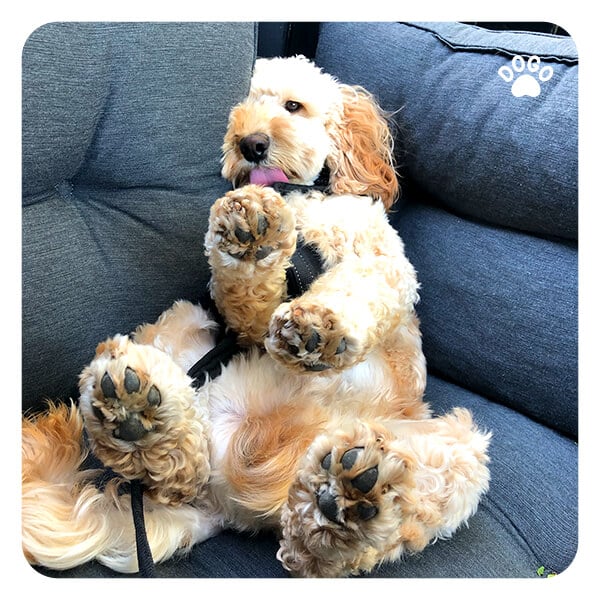
How to draw a dog paw?
Post Date:
November 15, 2023
(Date Last Modified: November 13, 2025)
Observe canine paw structure and materials first, then simplify forms and values so the drawing reads correctly from any angle.
Tools and materials
Choose basic supplies that match your preferred media and give predictable results when sketching and refining a dog paw. A reliable set of basic tools lets you focus on form and texture rather than fighting materials.
- Sketching pencils, erasers, paper
- Optional: blending stumps or tortillons, graphite sticks, alcohol markers
- Optional digital tools: pressure‑sensitive tablet and stylus
Start with a pencil graded between HB and 2B for initial sketches to get clean, erasable construction lines and workable tonal range[1].
For consistent color and value judgment while shading, aim for a neutral workspace light near 5500 K (daylight) so greys and warm/cool shifts read accurately[2].
| Tool | Suggested option | Typical value / use | Notes |
|---|---|---|---|
| Pencil | HB–2B | Sketching and midtone work | Erases cleanly for corrections[1] |
| Paper | Heavy sketch or drawing pad | 90–140 lb (190–300 gsm) | Surface affects texture capture[1] |
| Blending | Tortillon / stump | Softens graphite for fur and pads | Use sparingly to avoid over-blending |
| Tablet | Pressure‑sensitive stylus | Brush dynamics for fur and tonal control | Good for iterative layering |
Understanding paw anatomy
A simple anatomical picture helps make sure pads, toes, and claws sit in believable relation to each other and to the limb.
A typical canine paw has four weight‑bearing toe pads and a single large metacarpal or metatarsal pad that bears most of the load[3].
Claw placement follows the vertical axis of each toe pad and sits just forward of the pad’s tip; most adult dogs show four claws aligned with the toe pads while some front paws include an additional dewclaw higher on the inner side[4].
Front and hind paws differ subtly: front paws tend to be broader and slightly more splayed for weight distribution, while hind paws are usually narrower and straighter in alignment; observe these differences in reference photos for breed variation.
Choosing references and poses
Good references show structure, weight, and variation; use them to build confidence in proportions and perspective before committing to final lines.
Photographs allow freeze-frame study of detail, while live observation or short video clips reveal how toes spread under weight and how pads compress; include multiple views so you can triangulate the form from front, three‑quarter, and side angles.
Select breed-specific examples when accuracy matters: brachycephalic or heavy-chested breeds often show broader, thicker pads; sighthounds show narrow, elongated pads. Mix several references to capture both generic structure and breed character.
Breaking the paw into basic shapes
Simplify the paw into elementary shapes to control proportion and perspective before adding detail.
Use a larger oval for the main pad and four smaller circles or ovals for toe pads; place light construction lines to represent the paw’s midline and toe arc so spacing and alignment read correctly from the chosen viewpoint.
To indicate foreshortening, compress the depth of the toe ovals along the axis pointing away from the viewer and widen the main pad in the axis perpendicular to that perspective; this keeps the paw readable and anchored.
Drawing the main pad and toe pads
Begin by laying down the main pad shape because it anchors toe placement and limb connection.
Sketch the central pad as a rounded triangle or heart‑shaped oval depending on breed and angle, then place four toe ovals in an arc just above the main pad; keep toe size relative to the main pad so the paw reads balanced.
When a paw is foreshortened, overlap the toe ovals and reduce their vertical heights to create the illusion of depth; establish the pad contact points with the ground line so weight placement is convincing.
Adding claws, skin folds and creases
Small features such as claws and inter‑toe folds give realism and indicate how the paw moves and bears weight.
Claws are simple tapered cones with a curved outer edge and a flatter inner edge where they attach near the toe pad; indicate the nail bed as a small crescent and the exposed tip beyond the pad if the paw is splayed or in motion.
Inter‑toe skin folds sit between adjacent toes and compress when weight is applied; a few subtle curved lines and soft shading convey these creases without overworking the surface.
Fur texture and hair direction
Hair direction follows the underlying form: short guard hairs radiate from near the wrist or ankle and follow the limb down toward the paw, while fur between pads is shorter and less directional.
For short‑coated breeds, use short, controlled strokes that follow pad and digit contours; for long or feathered breeds, indicate major clumps and flow lines rather than every hair to keep legibility.
Simplify texture for stylized work by implying clumps with grouped strokes and avoiding conflicting directions that contradict the form.
Shading, highlights and creating volume
Light and shadow define pad roundness and fur mass; plan a primary light source and use gradients to describe transitions from pad tops to underside shadows.
When shading rubbery pads, keep transitions softer and include small specular highlights on wet or shiny surfaces to indicate moisture; plan core shadows that are roughly 30 percent darker than local midtones to anchor volume[1].
Use textured hatching or directional strokes for fur areas and softer, smoother gradients for pad surfaces; blend sparingly to retain tooth where needed.
Variations, stylization and common mistakes
Adapt paw proportions to breed, size, and the intended style; exaggerated toe size or simplified pads can make a paw feel cartoony, while accurate proportions ground realism.
Common mistakes include misaligned toe pads, pads drawn too flat against the ground, and inconsistent light across the paw and limb; check alignment with your construction lines, refine shadow placement, and compare with your references to correct these errors.
When stylizing, reduce the number of lines and exaggerate one feature at a time—either the pad size or claw length—so the design reads clearly without collapsing into anatomical inaccuracy.
Practice drills and step‑by‑step demo
Set up short, focused studies that isolate one challenge at a time so you build muscle memory for shapes, texture, and light. Begin with quick thumbnails that lock proportion and perspective before committing to details; spend a single short session on multiple thumbnails rather than polishing one drawing to avoid overworking a study.
A practical routine is to do a warm‑up of gesture thumbnails for 20–30 minutes, then complete two focused studies of the same paw from different angles in 30–45 minutes each; these timed sessions encourage decisive construction and visible improvement over weeks of practice[5].
Step approach for a single study: sketch the limb axis lightly, block in the main pad and toe pads as simple ovals, refine claw placement and skin folds, then layer texture and shading. Repeat this sequence deliberately for multiple poses to internalize the order of operations and typical corrective moves for alignment and foreshortening[1].
When working digitally, use separate layers for construction, line work, and shading so you can toggle visibility and compare how shape adjustments affect the silhouette; this habit saves time and clarifies which strokes contribute to believable form[2].
Troubleshooting and corrective checks
If a paw looks flat, check two things: the arc formed by the toe pads and the relationship between the main pad and the ground plane. A readable three‑dimensional pad will have a soft highlight near the top surface and a core shadow beneath; adjust your midtones and shadow edges until weight reads clearly in relation to the limb[1].
Misaligned toes are usually a construction error—erase back to the guideline arc and realign each toe center so their nail axes converge along a consistent curve. If a single toe consistently looks too large or too small, compare its diameter to the main pad’s width and redraw the offending toe using the proportional relationships visible in your reference photos or anatomical diagrams[3].
Overly dark or uniformly blended fur often removes the sense of individual hairs and direction; restore directionality by reintroducing short strokes that follow the limb’s flow, then reapply edge sharpening to areas where fur overlaps pads or separates from the ground shadow[1].
Media‑specific tips and final polish
Graphite: Reserve a range of values and keep the tooth of the paper visible for fur; lift small highlights from pads with a kneaded eraser instead of drawing highlights in white. For pads that appear too dry, add tiny specular dots and a soft reflected highlight at the pad edge to simulate moisture without flattening the texture[1].
Markers and pens: Work from light to dark and preserve midtones by leaving paper or a pale layer untouched; use 2–3 successive translucent layers to build pad depth and fur shadow without producing patchy ink saturation[2].
Digital: Take advantage of pressure sensitivity to vary stroke width for hair and use soft airbrushes at low opacity for pad gradients; use a multiply layer for shadow and an overlay or screen layer for subtle highlights, adjusting opacity to taste[2].
Practice projects to track progress
Build a mini‑project by collecting 6–10 reference images of paws showing a range of angles and weights (front, three‑quarter, side, splayed) and complete a study from each reference over two weeks; document corrections between attempts so you can see measurable improvement in proportion, foreshortening, and texture handling[4].
Include at least one live‑observation session if possible: observing toe spread under weight and pad compression can reveal nuances that photographs may miss, and alternating photo and live studies accelerates understanding of dynamic anatomy[4].
Closing tips
Work from big to small: establish the silhouette and proportion first, then commit to claws, creases, and fur. Keep reference images organized by pose and breed so you can quickly cross‑check proportions, and revisit the same reference periodically to test different lighting scenarios. Regular, focused practice with corrective review produces the most reliable improvements in paw drawing.


