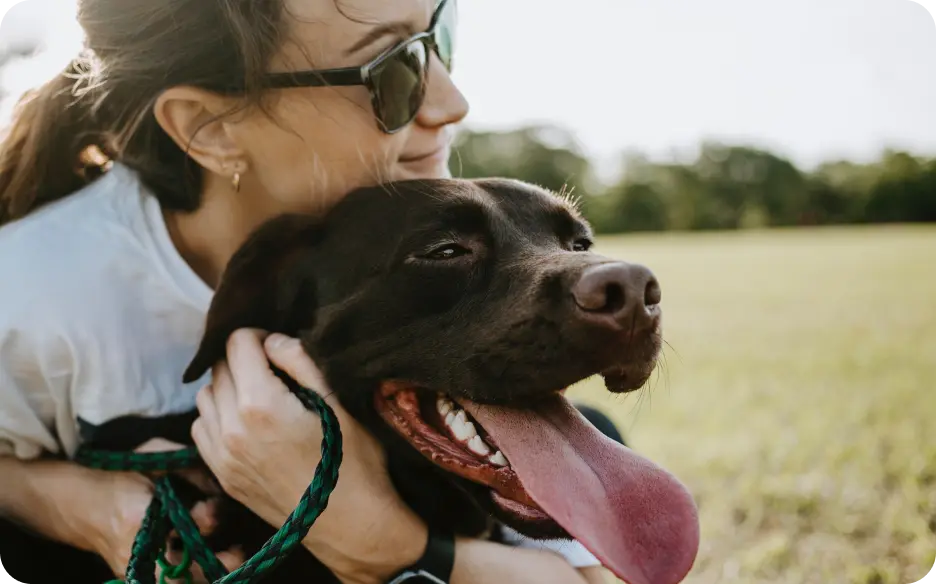
Why Are Dogs So Cute?
Post Date:
December 10, 2024
(Date Last Modified: November 13, 2025)
People commonly describe many dogs as “cute” because of how their bodies and faces appear to human observers. The visual impression arises from combinations of shape, proportion, texture, and movement that resemble juvenile traits.
Physical morphology: neoteny and proportions
Many of the features people read as “cute” in dogs are classic neotenous traits—those juvenile characteristics that persist into adulthood and trigger caregiving responses in observers. Three core neotenous elements that repeatedly show up across breeds are relatively large eyes, a rounded skull or forehead, and a shortened snout, each of which exaggerates the infant-like appearance of the face[1].
Head-to-body proportion matters: a higher head-to-body ratio generally increases the perceived youthfulness of an animal, and many companion breeds intentionally retain proportions closer to juvenile mammals rather than the elongated profiles of some working or wild canids[1]. Two related measurements people unconsciously attend to are eye-to-head size and muzzle length; larger eyes set low on a rounded face make the eyes read as physically larger and more salient, which magnifies the “cute” signal[1].
Coat texture and color pattern amplify neotenous impressions. Soft, downy or dense undercoats and a lack of coarse guard hairs tend to be associated with juvenile coats, and color contrasts such as dark masks or light facial markings frame the eyes and increase perceived roundness of the head[1]. Breeders and designers often exploit one or two of these visual levers—shape and contrast—to heighten cuteness in images and selection for pet-focused breeds[1].
It is important to distinguish universal cues from breed-specific traits. One distinction is that some cues (for example, large relative eye size) tend to be cross-cultural and cross-species effective, while others (such as a particular coat pattern or compact body type) are interpreted through cultural and stylistic lenses that vary by region and fashion. Observers thus respond to both a handful of hardwired visual templates and a broader set of learned aesthetic preferences when judging a dog’s cuteness[1].
Facial expressions and eye contact
Facial expressions and eye contact
Dogs have evolved facial musculature and gaze behaviors that make their faces especially expressive and approachable to humans. One muscle in particular, the levator anguli oculi medialis, produces an inner-eyebrow raise that is more developed in dogs than in wolves and helps create the “puppy eyes” look[2].
The eyebrow raise, combined with changes in blink rate and short bouts of sustained eye contact, functions as a communicative package that humans often interpret as appealing or solicitous[2]. Experimental work shows that mutual gaze between dogs and owners correlates with behavioral signs of attention and with physiological changes in both species[2]. Human observers also tend to anthropomorphize canine facial movements, assigning emotional states such as guilt or affection to expressions that, in ethological terms, are primarily social signals rather than direct windows into canine internal feeling states[2].
Movement, playfulness, and body language
Motion patterns such as exaggerated play bows and head tilts often read as juvenile or nonthreatening, which increases perceived cuteness and approachability. Two common, high-salience signals that reliably attract human attention are the play bow and the head tilt, both of which exaggerate body proportions or facial visibility and cue an intent to interact rather than to threaten[3].
Clumsy or bouncy gaits, short, rapid movements, and relaxed inhibition during play all communicate harmlessness and social intent; these motion qualities mimic infantile locomotion and reduce perceived risk when humans evaluate an animal’s affordances for close interaction[3]. Dogs also use rhythmic tail wagging and soliciting body postures to maintain attention during interactions, and those patterns are particularly effective in small, rapid sequences that humans find engaging[3].
Vocal cues and sounds
Acoustic properties of vocalizations help determine how nurturing or urgent a call will feel; three acoustic features commonly associated with perceived cuteness are higher pitch, greater pitch variability, and shorter, repetitive cadences, which humans tend to read as infant-like or attention-seeking[3].
Puppy vocalizations are typically higher in fundamental frequency than many adult adult barks or growls, and their plaintive whines or yips often follow rhythmic patterns that encourage caretaking responses from listeners[3]. Human caretakers commonly report increased approach and soothing behaviors in response to higher-pitched or more plaintive dog sounds, and experimental playback studies confirm faster orienting and caregiving gestures to those sounds compared with lower, harsher calls[3].
Human cognitive triggers: Kinderschema and evolved biases
Innate attention templates like Kinderschema bias human perception toward features that signal juvenile status and elicit caregiving; the schema is typically summarized by about five visual attributes—large eyes, large head relative to body, round forehead, short muzzle, and soft outlines—that together increase perceived cuteness[4].
Kinderschema works rapidly and largely automatically: cute stimuli capture attention faster and are assigned higher subjective reward value in human observers, which helps explain why images of juvenile-faced dogs are disproportionately shared and liked in modern media environments[4]. Individual differences and cultural norms modulate sensitivity to the schema, so what a person finds adorable can vary based on experience, exposure, and cultural aesthetics while the underlying bias remains widespread across populations[4].
Domestication and artificial selection for cuteness
Domestication pathways favored tameness and reduced fear responses in early canids, which often coincided with retention of juvenile traits; some genetic and archaeological syntheses place the start of dog domestication at roughly 15,000 years ago, though estimates vary by method and dataset[5].
Modern selective breeding has further amplified features humans prize for aesthetics and companionship, such as brachycephalic skull shapes and miniature body sizes, producing entire classes of “toy” and companion breeds where juvenile proportions are extreme by adult mammal standards[5]. Those choices are often intentional: breeders select for visible traits that increase appeal and market demand, while unintentional by-products of selection can include correlated shifts in behavior and physiology that also influence human perception of cuteness[5].
Neurobiology and hormonal feedback loops
Reciprocal neuroendocrine mechanisms help lock in the bond between humans and dogs: mutual gaze and gentle touch reliably trigger oxytocin release in both species, creating a reinforcing positive-feedback loop that strengthens caregiving behavior and the perception of cuteness. One influential experimental series demonstrated increased urinary oxytocin in dog–owner pairs after periods of mutual gaze and interaction[2].
Reward circuitry in the human brain, including dopaminergic pathways, responds to images or interactions with attachment figures; viewing juvenile-faced animals activates regions linked to reward and motivation, which helps explain why cute dogs can generate strong approach impulses and resource investment from humans[2].
| Signal | More common in | Typical human response |
|---|---|---|
| Play bow | Juveniles and social play | Approach, mimicry, smiling |
| Inner-eyebrow raise | Adult and juvenile companion breeds | Soothing, increased attention |
| High-pitched yips/whines | Puppies | Soothing vocalizations, offering contact |
| Head tilt | Across ages | Increased engagement, reward |
Social bonding, attachment, and communicative fit
Dogs’ readiness to attend to human cues—such as following pointing gestures and tracking gaze direction—creates a communicative fit that amplifies their social appeal; experimental work has shown dogs outperform wolves in many tasks that require spontaneous use of human communicative signals, indicating a tuned sensitivity to human partners[3].
Attachment patterns between dogs and owners resemble those found in human infants and caregivers, and secure, responsive relationships increase the frequency of solicitous behaviors (leaning, nudging, soliciting eye contact) that humans perceive as endearing and which perpetuate bonding cycles[3]. Social signals that solicit care are therefore both proximate drivers of perceived cuteness and functional tools dogs use to elicit resources and comfort.
Cultural amplification: media, fashion, and breed trends
Photography, short-form video, and memes amplify particular aesthetic templates and create feedback loops where visible traits become more desirable; certain breeds or looks gain popularity quickly once they achieve visibility in influential media channels, accelerating breeding and consumer demand for those appearances[4].
Commercialization of cute dog imagery—through merchandise, influencer content, and stylized photography—reinforces standardized cultural tastes that can override local or functional preferences, making visual features self-reinforcing signals of desirability across diverse audiences[4].
Consequences and ethical considerations of breeding for cuteness
Pursuing extreme aesthetics has measurable welfare costs: brachycephalic conformations are linked to breathing difficulties and eye problems, and breeds with extreme skull shapes commonly require assisted reproduction or have higher rates of birthing complications[6].
Responsible choices—favoring health-tested breeding, open information about breed-specific risks, and adoption from shelters—help mitigate the trade-offs between aesthetics and welfare; policy and education that emphasize functional health over extreme juvenile features can reduce the prevalence of preventable suffering associated with some “cute” traits[6].
Sources
- currentbiology.com
- pnas.org
- plos.org
- frontiersin.org
- nature.com
- merckvetmanual.com