
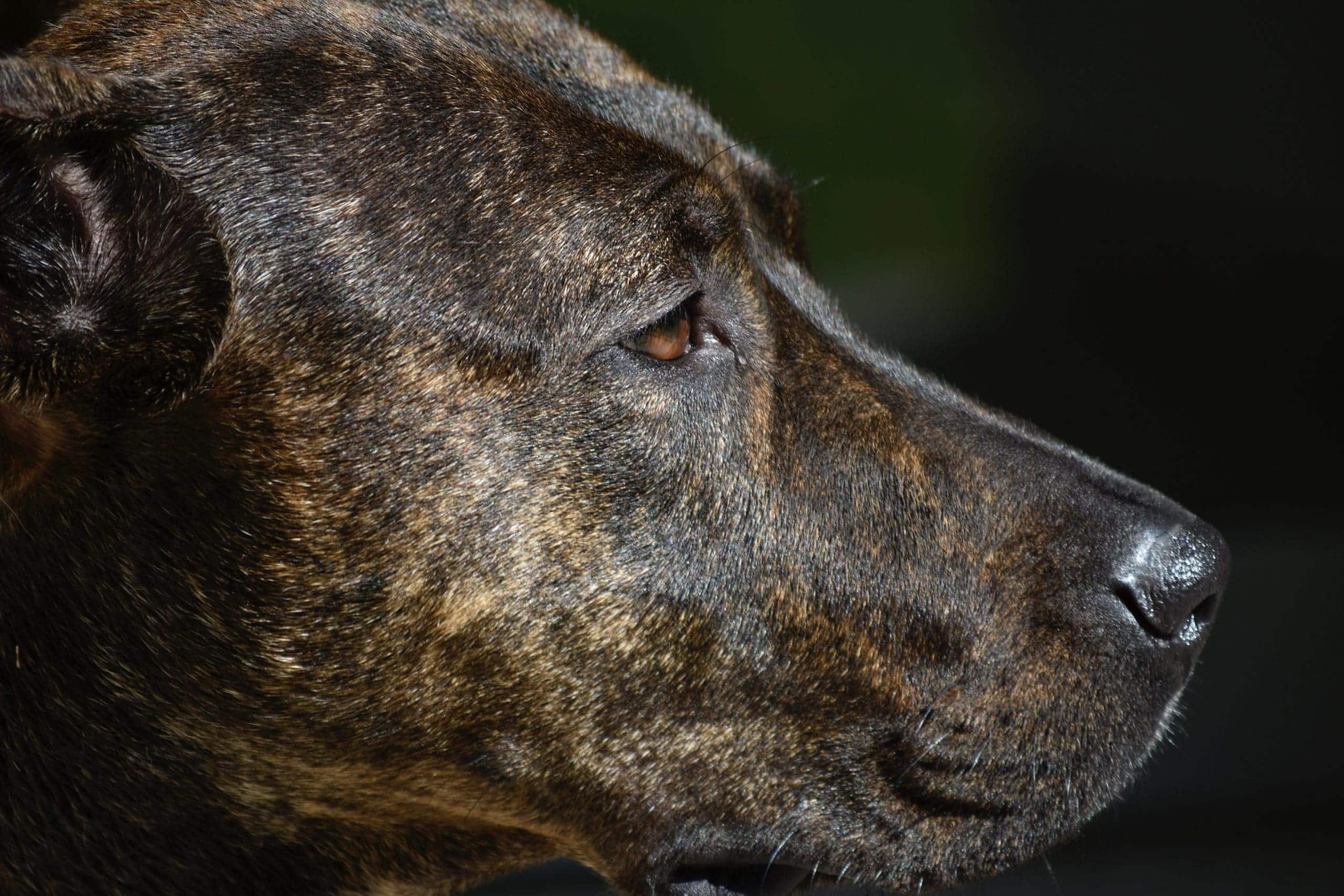
Why does my dog stick the tip of his tongue out while sleeping?
Post Date:
January 18, 2026
(Date Last Modified: February 5, 2026)
It’s a small, often delightfully odd detail: the very tip of a dog’s tongue peeking from between closed lips while they sleep, and it’s one of those behaviors that makes owners smile, snap photos, and sometimes worry in equal measure.
Why a snoozing tongue captures your attention
Dog lovers notice and question tongue-tip sleeping behavior because it’s both visually striking and easy to photograph, and it often appears at intimate moments—during a nap on the couch, after a long walk, or when a pup crashes at a sleepover—so curiosity or concern follows naturally.
Owners typically first spot it in quiet moments: when scrolling through lull photos, arriving home to a napping companion, or watching a puppy finally go to sleep after play. Certain breeds make it more noticeable—flat-faced dogs with short muzzles, long-tongued breeds, or dogs missing teeth tend to show tongue tips more often. Social media and messaging amplify the behavior: a sleeping dog with a tongue peeking out is easy to anthropomorphize and share, and that repetition makes it feel more common than it might actually be.
In short: what’s really happening
In most cases the tip of a dog’s tongue sticking out during sleep is harmless and is likely linked to relaxed jaw and muscle tone during sleep, though other benign reasons such as heat regulation, missing teeth, or dreaming may also play a role; seek veterinary care if the tongue can’t be retracted, the dog has breathing trouble, or the behavior appears suddenly with other worrying signs.
The simplest explanation is that as muscles relax—especially during deeper sleep—the tongue can slide forward slightly. Dogs who are warm, have dentition gaps, or are in certain sleep positions often show this. Less commonly, it may signal an underlying problem such as a neurologic condition affecting the nerves or muscles that control the tongue, or respiratory compromise that forces a dog to keep the airway open. If the behavior is new, persistent, or accompanied by drooling, difficulty eating, weakness, or labored breathing, contact your veterinarian promptly.
Anatomy and reflexes — the biology of the tongue tip
A dog’s tongue is a muscular structure anchored by tissues in the mouth and controlled by cranial nerves and a suite of small muscles; during sleep those muscles naturally lose tone, especially in REM sleep, which can let the tongue fall forward.
When dogs enter REM sleep they often show marked reductions in muscle tone compared with non-REM sleep; this relaxation can allow soft tissues like the tongue to slip past the lips. The tongue is also an active organ for thermoregulation—panting moves air across the tongue and mouth to promote cooling, so a partially exposed tongue after recent panting may be a leftover of that cooling mechanism. Dental structure matters too: missing or worn teeth, an overwide jaw, or abnormalities of the palate can change how the tongue rests at the mouth’s edge, making a little “blep” more likely.
When it happens — sleep stages, temperature and other triggers
The moments when tongue-tip exposure appears are not random; timing, environment, and recent activity all influence how likely you are to notice it.
It often appears shortly after a dog falls into deeper sleep or after a period of active panting—following exercise, play, or heat exposure—when cooling mechanisms are still active. Sleep position matters: dogs sleeping on their side, with their head hanging slightly over the edge of a bed, or with a relaxed lower jaw are more likely to let the tongue slip out. Meals and dental irritation can alter how a dog holds its mouth afterward, and medications or sedatives that deepen muscular relaxation may increase the chance. Humid, hot rooms or recent vigorous activity are common situational triggers.
Signs it’s more than just a cute quirk
Most tongue exposures are harmless, but certain signs may suggest a medical problem that needs veterinary attention: persistent drooling, inability to retract the tongue, difficulty swallowing, labored breathing, pale or blue-tinged gums, sudden collapse, or the new appearance of neurological signs like seizures or dramatic incoordination.
A slowly progressive problem—worsening drooling, weight loss from poor eating, or increasing difficulty breathing—deserves sooner evaluation. Sudden onset after trauma, suspected toxin exposure, or in a dog that is weak or has abnormal neurologic behavior (head tilt, facial droop, ataxia) should be treated as urgent. I typically advise owners to treat persistent inability to close the mouth or retract the tongue, or any sign that the airway might be compromised, as a reason to seek immediate veterinary care.
Practical steps for pet parents
Before rushing to the clinic, observe and collect clear information: time how long episodes last, note whether the dog is in REM or quiet sleep, and record any breathing pattern changes or sounds; take photos or short videos if you can do so without disturbing the dog.
When the dog is awake and calm, briefly and gently look in the mouth to check for sharp teeth, foreign material, ulcers, or swelling—never force the mouth open if the dog resists. Note appetite, drinking, energy level, and whether drooling, gagging, or coughing accompanies the tongue exposure. Keep a simple log (dates, duration, what the dog was doing before sleep) and bring these observations and any media to the veterinarian to help with diagnosis. Importantly, don’t try to tape or push the tongue back into the mouth; that can cause harm or stress.
Creating a comfy sleep space and gentle training tips
For benign cases where you just want to reduce occurrence or make monitoring easier, small environment and handling adjustments often help: give your dog a supportive sleeping surface that keeps the head aligned, regulate room temperature, and calm the dog before sleep to reduce heavy panting.
A firm but cushioned bed, a small pillow or rolled towel under the neck for dogs that habitually let their head hang, and a cooler, well-ventilated room can reduce overheating and the need to pant. A consistent wind-down routine after exercise—cool-down time, water access, and quiet activity—can limit lingering heavy panting. Train gentle, rewarded handling so that mouth checks become a calm, cooperative process; short sessions rewarding the dog for allowing you to touch around the mouth make veterinary exams less stressful later.
Products that help — and ones to skip
Choose gear that supports comfort and monitoring without restricting natural movement: a supportive orthopedic or elevated bed for better head alignment, a night camera or pet monitor to record episodes without disturbance, and a humidifier if dry indoor air seems to be a factor; avoid restrictive muzzles or devices overnight.
An elevated bed can keep gravity from letting the head drop into a position that encourages tongue protrusion, while a simple camera lets you capture the exact context and timing for your veterinarian. A humidifier helps for dogs that sleep with a slightly open mouth in very dry environments. Never use anything that pulls the mouth closed or constrains breathing while a dog sleeps—taping, tying, or restrictive muzzles can be dangerous.
When to see a vet: symptoms that need attention
If the tongue exposure is accompanied by progressive signs—worsening eating, persistent drooling, changed bark, difficulty breathing, or new neurologic signs—then more than home adjustments are needed; your veterinarian may recommend a physical exam, oral/dental evaluation, thoracic imaging if breathing is involved, or neurologic testing such as imaging or referral to a specialist.
Expect the vet to examine the mouth closely, assess airway and breathing, and evaluate neurologic function. Dental X-rays can reveal tooth root or jaw problems that alter tongue position, while chest X-rays or airway exams may be useful if breathing problems are suspected. For neurologic concerns, referral to a veterinary neurologist for advanced imaging (MRI) or nerve/muscle testing may be advised. Early, well-documented observations and videos you bring to the appointment can meaningfully speed diagnosis and guide appropriate care.
References and further reading
- Merck Veterinary Manual: “Upper Airway Obstruction (Dogs and Cats)” and “Dental Disease in Dogs and Cats” — Merck Veterinary Manual, sections on airway and dental conditions.
- American Veterinary Medical Association (AVMA): Client education resources on canine behavior and signs of distress — AVMA.org pet care pages.
- Ettinger SJ, Feldman EC. Textbook of Veterinary Internal Medicine: Diseases of the Dog and Cat. 8th ed. Elsevier. Chapters on respiratory and neurologic disorders.
- Platt SR, Olby NJ (eds). BSAVA Manual of Canine and Feline Neurology. British Small Animal Veterinary Association; practical guidance on cranial nerve and tongue-related neurologic disease.
- American Veterinary Dental College (AVDC): Resources on oral health, missing teeth, and their impacts on oral posture and function.
