
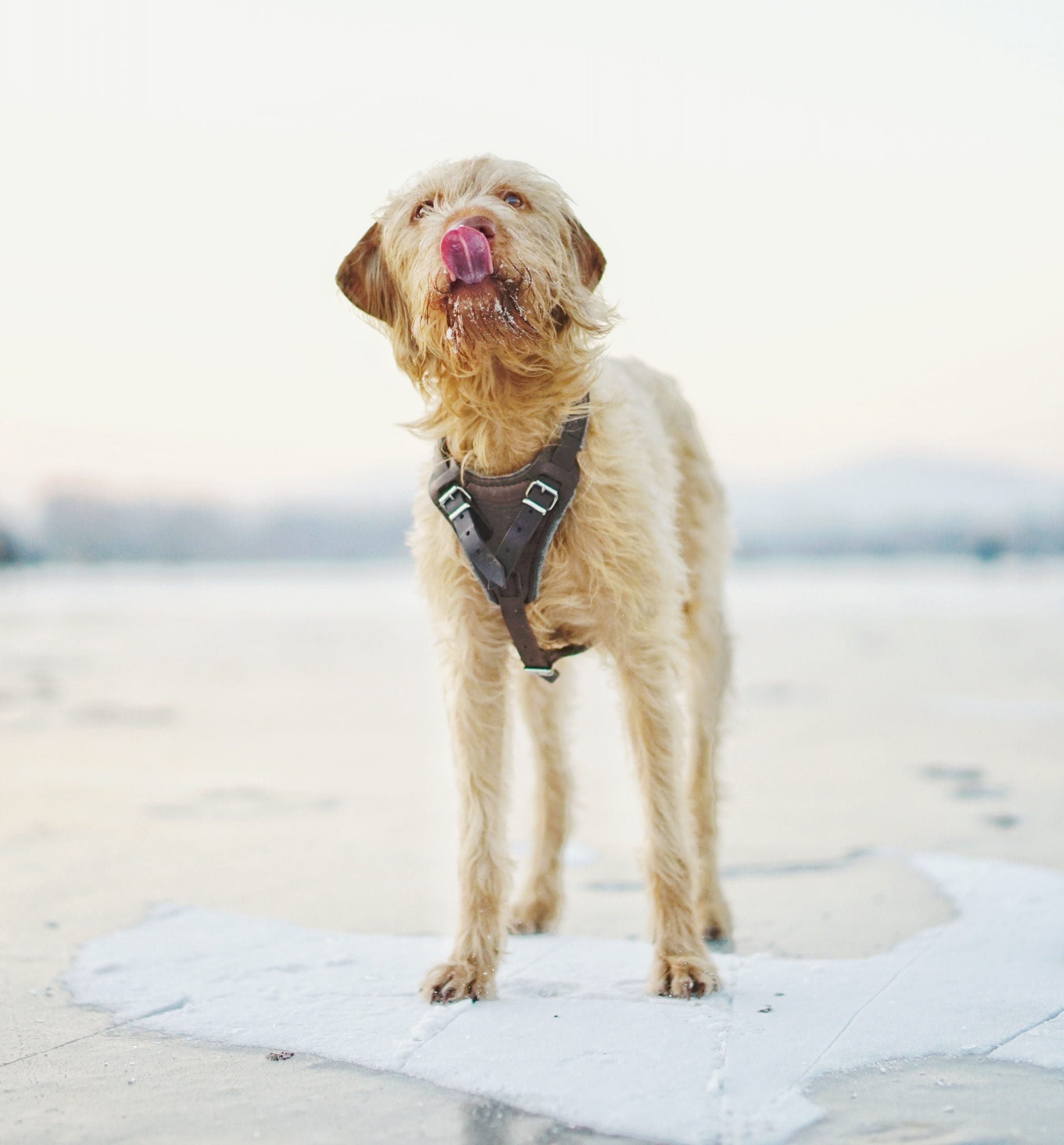
Why does my dog stare at me?
Post Date:
December 3, 2025
(Date Last Modified: February 5, 2026)
You look up and your dog is staring. It can feel sweet, odd, flattering, or worrying depending on the moment. Understanding why dogs fix their gaze helps you respond in a way that strengthens your relationship and keeps both of you safe. Below I explain practical reasons dogs stare, the biology behind the behavior, when to pay close attention, and what you can do right away and over time.
Why This Matters to Dog Lovers
When a dog stares, owners often read emotion into the look—guilt, love, judgment—which can lead to well-meaning but counterproductive responses. People tell me they feel judged when their dog won’t stop staring at them across the couch, or anxious when a once-friendly gaze becomes intense. Those emotional reactions matter because they shape how you respond and therefore how the behavior changes.
Staring matters in everyday situations: during training (it can be a cue that your dog is ready to learn), when calming a nervous dog, or when assessing safety—for example, a dog staring at a stranger versus at a treat. I typically see staring used as a low-effort way to request something (attention, food, a door opened) and as a social signal during quiet bonding moments.
It helps to know when to be curious and when to be concerned. A gentle, intermittent stare while you prepare dinner is likely very different from a sudden, fixed stare paired with stiff body language or a change in mobility. Learning those differences reduces misreads and keeps your dog healthier and happier.
Quick Answer: Why Dogs Stare
Most of the time, a dog staring at you is a form of communication with several overlapping purposes. First, it’s often a request—your dog may be asking for attention, food, or permission to move. A fixed gaze directed at your face or hands is a convenient way to get information and influence your behavior.
Second, staring can be an expression of social bonding. Dogs and humans appear to form a feedback loop where direct eye contact releases calming hormones in both species; this may be why dogs hold looks during gentle interactions. Third, dogs are attuned to human faces and gestures; they watch us to pick up cues about what to do next, especially in situations where they’ve learned we provide direction.
So—attention-seeking, social bonding, and cue-reading are the big three reasons. Context usually tells you which one is most likely in the moment.
Dog Communication and Biology
Eye contact is a basic social signal for many mammals, and domestic dogs have adapted to use human faces as reliable sources of information. Wolves and dogs differ in how they use gaze—dogs are unusually skilled at reading human gestures and following gaze direction, which may reflect their long history living alongside people.
There’s evidence that eye contact between dogs and humans may trigger a hormonal response that strengthens bonds. Studies suggest oxytocin levels in both dogs and humans rise during positive, mutual gaze, which is likely linked to feelings of calm and attachment. I describe it as a gentle biochemical nudge that encourages friendly closeness rather than a conscious strategy your dog plans out like a person would.
Beyond biology, much of staring is learned. Dogs quickly associate the look with outcomes—if staring at you while you cook leads to a dropped morsel, that look becomes reinforced. Similarly, dogs that get praise for eye contact while training will offer the behavior more often. Their sensitivity to human faces and expressions makes their gaze a flexible tool for communication.
When Dogs Tend To Stare
Staring shows up in predictable moments. Meal preparation, when people are eating, or when the routine is about to change (leash appear, coat by the door) are classic times. During training or play, a dog may stare while waiting for your cue or anticipating a toss; in those contexts the gaze is cooperative and goal-oriented.
Dogs also stare in low-light, unfamiliar, or stressful situations. When unsure, many dogs look to humans for guidance. I often see shy or anxious dogs fix their gaze at a trusted person to check whether a situation is safe; the look is a request for reassurance. In stressful moments the stare may be longer and combined with other signs of tension.
Individual differences matter: breed tendencies, age, and temperament influence how much a dog uses eye contact. Herding breeds, for example, have been selected for focused attention and may stare more during tasks. Puppies may stare intermittently as they learn, while older dogs might stare more if hearing or vision changes alter how they compensate for sensory loss.
Warning Signs and Medical Red Flags
Not all staring is harmless. A sudden change in staring patterns—new intensity, frequency, or timing—can suggest an underlying medical or neurological issue. If a solid stare appears alongside a head tilt, circling, loss of coordination, disorientation, or seizure-like activity, seek veterinary attention promptly.
Staring paired with signs of pain (flinching when touched, reluctance to move), changes in vision (bumping into furniture, delayed responses), or repetitive, fixed staring that seems compulsive may indicate physical problems or obsessive-compulsive behavior. I don’t assume a diagnosis from the look alone, but I do treat changes in behavior as an important early signal worth checking out.
Also be alert for staring in contexts that feel aggressive—hard, unwavering eye contact with a stiff body, raised hackles, and a closed mouth can be part of a threat sequence. If you see those elements, keep a safe distance and seek advice from a behavior professional rather than trying to correct the dog yourself.
What Owners Can Do Now
- Check basics first: hunger, water, bathroom, temperature, and whether your dog might be physically uncomfortable. These are the most common drivers of sudden requests.
- Observe context and take notes. Note time of day, what was happening, body language, and whether the stare produced a result. Patterns are revealing and helpful if you need to consult a vet or trainer.
- Avoid unintentionally rewarding demanding stares. If your dog stares for a treat and gets one every time, the behavior is reinforced. Wait for a calmer cue or teach an alternate polite behavior before giving what’s requested.
- If the stare is new, intense, or comes with other signs (wobbly gait, head tilt, changes in appetite or bathroom habits), contact your veterinarian promptly.
These steps let you address immediate needs and gather information. When you respond calmly and consistently, you reduce the chance of unintentionally strengthening an unwanted stare-based habit.
Training and Environment Strategies
Teaching reliable alternatives is the most effective long-term approach. One simple method is to train a clear “look” or “watch me” cue: lure your dog’s gaze with a treat, mark the moment they make eye contact with a click or word, then reward. Once reliable, you can control when eye contact earns attention and when it does not.
Equally useful is teaching an incompatible behavior—sit and focus, or place on a mat—so that the dog offers something else while waiting. Consistent daily routines around feeding, walks, and play reduce opportunistic staring by removing uncertainty and the expectation that staring will bring unpredictable rewards.
Redirection works well for habitual stares. Offer a chew, a food puzzle, or a short training session when your dog begins to stare for attention. Over time, the dog learns that calm behaviors bring longer, more satisfying rewards than repeated, demanding stares.
Helpful Tools and Gear
- Puzzle feeders and slow-dispense toys to keep the mouth and mind occupied during times when staring is often rewarded (meal prep, evenings).
- A clicker and a small treat pouch for marker-based training to teach and reinforce “look” and other cues efficiently.
- A home camera to record when you’re not present so you can see what prompts staring episodes and check for changes in frequency or context.
These tools aren’t magic, but used consistently they support training and help you manage an environment so your dog has fewer reasons to stare out of boredom or need. Choose safe chews and supervise novel devices; if a camera reveals concerning behaviors, share the footage with your vet or a certified behaviorist.
Sources
- Nagasawa M., et al. “Oxytocin-gaze positive loop and the coevolution of human–dog bonding.” Science. 2015;348(6232):333–336.
- Merck Veterinary Manual. “Normal Behavior and Behavior Disturbances in Dogs.” Merck & Co., Inc. — sections on social behavior and attention-seeking.
- American Veterinary Medical Association. “Understanding Dog Behavior: Tips for Owners.” AVMA client education resources on reading canine body language.
- American College of Veterinary Behaviorists. “Consumer FAQs and Resources for Owners.” ACVB guidance on when to seek professional help.
- McConnell, P. “The Other End of the Leash: Why We Do What We Do Around Dogs.” (2002) Practical insights on human–dog communication and training.
- Yin, S. “Low Stress Handling, Restraint and Behavior Modification of Dogs & Cats.” (2009) Practical techniques for reducing stress during interactions and training.
