
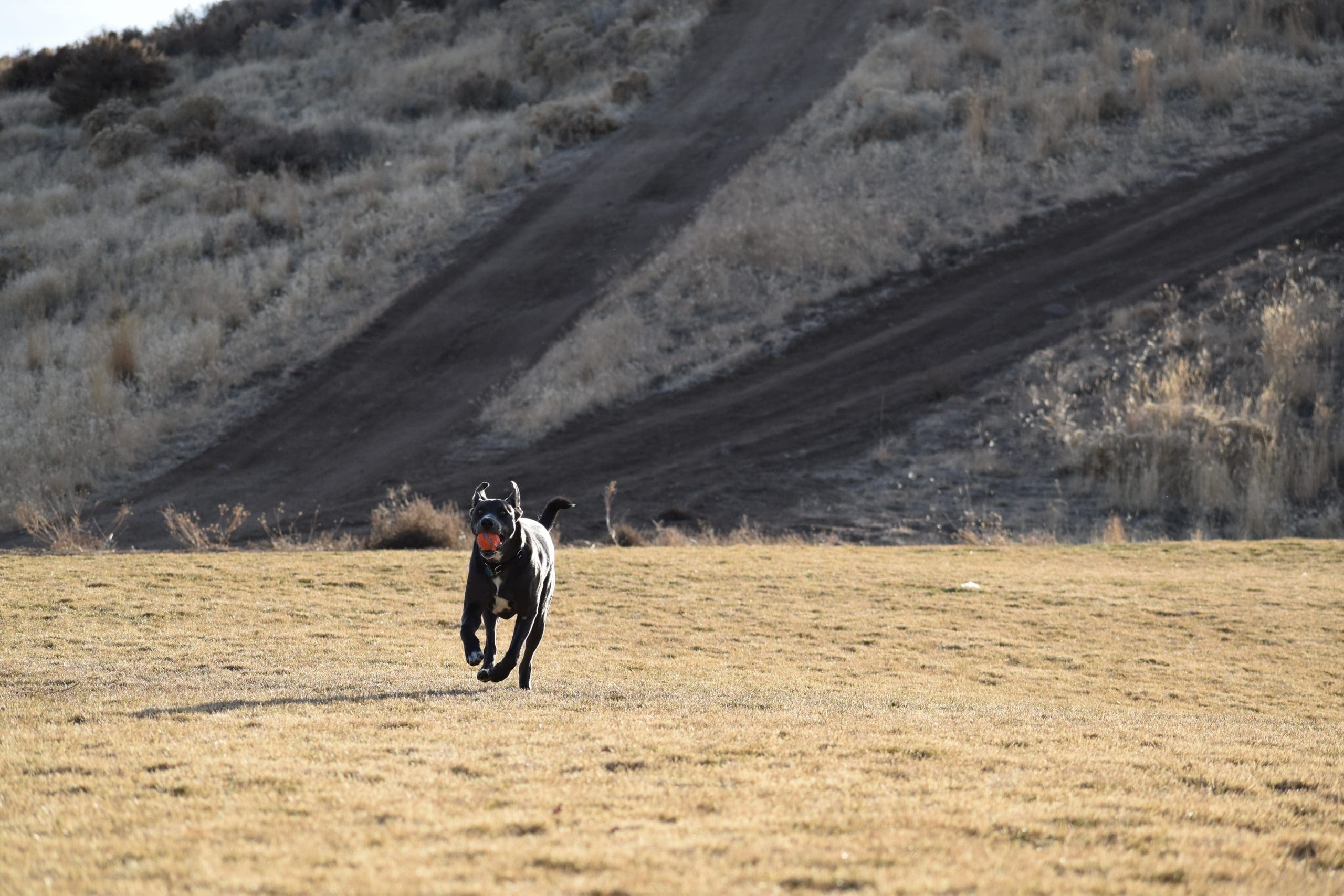
Why do dogs like playing fetch?
Post Date:
December 2, 2025
(Date Last Modified: February 5, 2026)
Dogs fetch for reasons that touch on bonding, exercise, and mental engagement, so understanding why your dog loves (or doesn’t love) fetch helps you tailor play that’s safer and more satisfying for both of you.
What fetch gives your dog (and why you should care)
For many owners, fetch is more than a game; it’s one of the easiest ways to strengthen a relationship, burn energy, and give a dog a predictable source of mental work. Play that includes a human partner tends to reinforce social bonds because dogs read our cues and respond to attention, praise, and the shared rhythm of calling, chasing, and returning. If you know the reasons behind fetch, you can make it a constructive part of daily life—reducing boredom, lowering the chance of destructive behavior, and helping a dog maintain a healthy weight and muscle tone.
Fetch also provides mental challenge. Chasing a thrown object and solving how to get it back recruits problem-solving skills: where did it land, how to pick it up, and whether to return it for another throw. For dogs that are left idle, structured fetch sessions can prevent sniffing-out mischief that often starts with boredom.
At a glance: the core reason dogs fetch
At base level, fetch combines instinct, learned rewards, and social cues. The chase taps into a predatory-chase sequence that many dogs retain, but the sustained behavior of picking up and bringing an item back is shaped by reward learning—praise, play, or a food exchange. Dogs are also attuned to human communicative signals; your eye contact, stance, and tone can turn a single run after a ball into a cooperative ritual. Breed and individual personality matter too: many retrievers were selected for willingness to retrieve and return, whereas a scent hound may be eager to chase but less likely to deliver the item back.
How instincts, reward systems, and canine communication drive fetch
Think of fetch as a human-shaped funnel that channels parts of a natural sequence. The predatory sequence—orient, stalk, chase, capture—doesn’t always end with consumption in domestic dogs. Fetch is likely linked to the chase and capture steps; the “carry” and “deliver” parts are behaviors some breeds were selected to do reliably. When a dog runs to fetch, dopamine and other reward pathways are probably engaged; receiving praise, a pat, or the next throw reinforces the loop and makes the behavior repeatable.
Puppy mouthing and play signals are part of how young dogs learn this pattern. A puppy that repeatedly mouths a soft toy while a person plays is practicing motor patterns used in adult retrieving. I typically see dogs that learned early, consistent play with people develop a stronger and steadier interest in fetching as adults. Attention-seeking also plays a role: if bringing the toy back reliably gets attention, dogs may use fetch to gain social interaction and cooperation from their person.
Best times and places to play fetch for safety and fun
Not every dog will show the same fetch drive at every life stage or in every setting. Young, high-energy dogs often have burstier enthusiasm and can do short, intense sessions; older dogs or those with joint issues may prefer gentler versions such as rolling a toy or doing short retrieves. Breed predispositions are strong—retrievers, spaniels, and some sporting breeds were bred to return game and often enjoy retrieving with people. Hounds and some terriers may chase readily but are less likely to return without training.
The playing surface and environment matter more than people realize. Grass is forgiving on joints, while hard surfaces like concrete increase concussion to paws and shoulders, which can become a long-term problem if sessions are repetitive. Space and safety also influence whether a dog is eager to fetch: open, secure areas allow confident running, whereas crowded or slippery places can make a dog reluctant. Finally, recent reinforcement history affects enthusiasm—if a dog was recently rewarded for returning, they are more likely to repeat the behavior.
Spotting danger: risks, warning signs, and medical red flags
Fetch is generally safe when adapted to the dog, but it carries risks that owners should watch for. Signs of overexertion or heat-related stress may include very heavy panting, drooling, bright red or pale gums, unsteady gait, vomiting, or collapse; these signs may suggest progressing heatstroke and warrant immediate cooling and veterinary attention. Limiting play on hot days and offering frequent water and shade can reduce the risk.
There are also oral and ingestion risks: small or hard toys can fracture teeth or be chewed into pieces that a dog might swallow, and some materials are toxic. Choking or sudden coughing during play should prompt removal of the toy and, if concerns persist, a vet visit. Watch for limping, stiffness, or sudden lameness after play—these can indicate strains, sprains, or joint injury, and may require veterinary assessment before resuming normal activity.
Behavioral red flags include an escalation of possessiveness over the toy or aggressive guarding toward people or other dogs. If a dog begins to snap, stiffen, or refuse to give up a retrieved item, stop the game and consult a professional trainer or veterinary behaviorist; early management can prevent escalation into serious aggression.
Introducing fetch safely: simple first steps for owners
Begin by matching sessions to your dog’s age and fitness. Short bursts of play—several two- to five-minute repeats for puppies, and 10–20 minute sessions for many adults—tend to be effective without overwhelming joints or attention. Teach “drop it” and “leave it” before long sessions; a simple exchange—offering a high-value treat in return for the toy—usually works better than trying to tug it from a dog’s mouth.
Reward calm returns rather than only retrieval. If you always reward only when a dog brings the toy back while excited and lunging, you may inadvertently reinforce roughness. Instead, mark and reward moments of calm approach and a relaxed release. Build distance and duration gradually: one or two short throws at first, then add a throw or two more as the dog demonstrates reliable returns and stays comfortable afterward.
Training techniques and tips for managing the play space
Control of the environment makes fetch safer and more predictable. Use a fenced yard or secure area where the dog cannot run into traffic. Remove potential hazards like broken glass, holes, or debris, and avoid areas with many off-leash dogs if your dog becomes reactive when others join the play. Introduce distractions in small steps—practice fetching with a few low-level distractions and only increase the challenge once the dog responds reliably to cues.
Establish consistent verbal and gesture cues. Pick a short cue such as “fetch” or “get it,” and separate the return cue (e.g., “bring” or “come”) and the release cue (“drop,” “give”). Consistency helps a dog understand each phase of the interaction. If you want to phase out food rewards, start by using high-value treats for early sessions and then intermittently reinforce with praise or a toy exchange as the behavior becomes established.
Choosing safe toys and essential fetch equipment
Choose toys by size, durability, and your dog’s play style. Large, durable rubber balls or bumpers reduce choking risk for big chewers; softer, non-toxic retrieval toys are better for younger dogs or those with sensitive teeth. Avoid small hard balls that can be swallowed or cause fractured teeth in dogs that chew aggressivel—if a tennis ball is used, monitor for excessive chewing and consider a rubber-coated ball designed for dogs to reduce abrasive wear on teeth.
Ball launchers can give distance without fatiguing your shoulder, but they can also encourage very long chases that stress joints—use them sparingly and never on hard surfaces. Familiar toys such as KONGs or bumper-style dummies can be useful for structured retrieves and for varying the type of feedback your dog receives. Always inspect toys regularly for damage and retire those with tears or loose parts.
When fetch goes off-script: troubleshooting behavior and injuries
If your dog swallows part of a toy, starts coughing and cannot breathe, or collapses, seek emergency veterinary care immediately. For milder ingestion concerns or if you’re unsure, call your veterinarian or a pet poison hotline for advice. If fetch increases guarding or aggressive behavior, stop sessions and consult a certified trainer (CPDT) or a veterinary behaviorist; these professionals can offer structured desensitization and safe exchange techniques.
If your dog shows persistent lameness, stiffness after play, or signs of chronic joint pain, have a veterinarian assess for orthopedic issues. For growing puppies, avoid repetitive high-impact retrieving until growth plates are likely to be closed—this period can vary by size but is often around 12–18 months depending on breed and individual development.
References and further reading
- Merck Veterinary Manual: Hyperthermia (Heat Stroke) in Dogs — https://www.merckvetmanual.com/generalized-conditions/hyperthermia/overview-of-hyperthermia
- American Veterinary Society of Animal Behavior (AVSAB): Position Statement on Reward-Based Training and Behavior Modification — https://avsab.org/resources/position-statements/
- International Association of Animal Behavior Consultants (IAABC): Articles on Canine Play and Play Signals — https://iaabc.org/articles/
- Serpell J., editor. The Domestic Dog: Its Evolution, Behaviour and Interactions with People. Cambridge University Press; comprehensive academic coverage of breed differences and behavior.
- Certification Council for Professional Dog Trainers (CCPDT) / Karen Pryor Academy resources on “drop it” and cooperative retrieve training techniques — https://www.ccpdt.org and https://karenpryoracademy.com
