

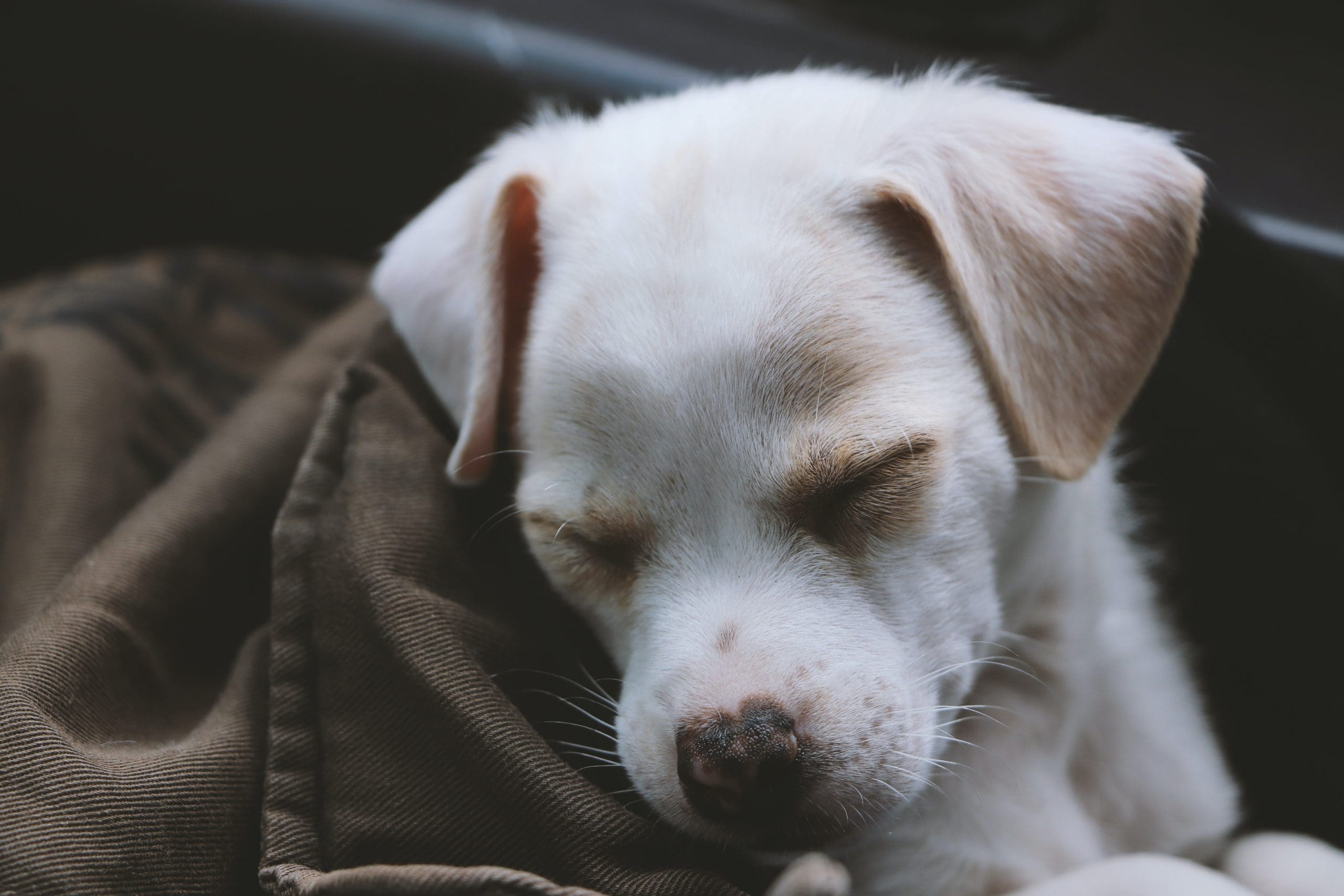
Why do dogs eat underwear?
Post Date:
December 7, 2025
(Date Last Modified: February 5, 2026)
Understanding why dogs eat underwear helps protect your dog, your home, and deepens your bond by turning a gross habit into a solvable problem.
What underwear-chewing reveals about your dog — and why it matters to you
It’s more than an embarrassing mess on the laundry room floor. I typically see owners come to me worried about the immediate safety of their dog—choking or intestinal blockage—as well as frustrated by ruined clothes and the feeling that their dog is “misbehaving.” That mix of practical and emotional impact matters: it can lead to guilt, strained routines, and avoidance of otherwise normal activities like leaving laundry out to dry. This article will help you recognize common scenarios, weigh safety concerns, and leave you with specific next steps for triage, prevention, and training so the habit becomes manageable rather than mysterious.
Common culprits behind the underwear habit
If you need a quick checklist: dogs often eat underwear because the fabric carries strong human scent, which can be appealing; puppies and some adults mouth things out of curiosity or teething discomfort; some dogs chew to get attention or ease stress; and in fewer cases the behavior may be a form of pica—eating non-food items—linked to an underlying medical or nutritional issue. Not every dog who nibbles fabric has the same motive, and the cues around when and how often it happens usually point you toward the right explanation.
Is it hunger, play, or comfort? The functions of this behavior
Dogs are scent-oriented animals, and underwear can carry the concentrated smell of a person—skin oils, sweat, or even traces of body fluids—which may be attractive in a similar way to how dogs investigate food scraps. The act can serve an olfactory foraging or scavenging function: the item is smelled, mouthed, and sometimes swallowed because it smells “interesting.”
Puppies and adolescent dogs use their mouths to learn about the world. Mouthing is a normal developmental behavior that often declines with age; if your dog is young, chewing underwear may be part of that exploration or relief from teething. For some dogs, a soft piece of fabric becomes a comfort object—similar to a child’s blanket—and chewing or carrying it reduces anxiety or provides self-soothing.
When ingestion is persistent or unusual—eating dirt, rocks, or repeatedly consuming non-food items like underwear—it may suggest pica, which can be associated with nutrient shortfalls, gastrointestinal disease, parasites, or certain metabolic issues. In those cases, the behavior is more likely to be a sign of an underlying physical problem than simple curiosity or attention-seeking.
When and where dogs are most likely to go for underwear
Timing and context reveal a lot. Puppies and adolescent dogs are the most common culprits: I often hear “she’s perfect at the dog park but rips through my laundry when I’m at work.” Senior dogs can also start eating non-food items if they develop cognitive decline or altered appetite. Stressful changes—new housemates, moving, vet visits, or shifts in routine—can trigger fabric-chewing as a displacement behavior.
Accessibility plays a huge role. Unzipped laundry bags, open hampers, folded piles on the bedroom floor, or laundry left in a basket within reach create opportunity. Most incidents happen when owners are out of sight—during work hours or overnight—so patterns often point to unsupervised times. Noticing whether it occurs when the household is busy (seeking attention) versus when the dog is alone (boredom or anxiety) helps narrow the cause.
Hidden dangers: choking, intestinal blockages, and when to call the vet
Eating fabric isn’t just messy—there are specific medical risks. Small pieces may pass through the gut, but soft fabrics, underwear waistbands, and especially long strips of elastic or strings can cause partial or complete intestinal obstruction. Warning signs that need urgent attention include choking, persistent vomiting, abdominal pain or bloating, loss of appetite, bloody stools, pale gums, or sudden lethargy. If you see any of these, prompt veterinary evaluation is recommended.
Recurrent pica—frequent ingestion of multiple types of non-food items—may suggest parasites, anemia, malabsorption, or endocrine problems and is worth investigating medically. Eating synthetic fabrics has higher obstruction risk than some natural textiles because they can form a mass or snag on intestinal folds. Behaviorally, if the chewing escalates into repetitive, hard-to-interrupt actions despite management, it may be moving toward a compulsive disorder and could benefit from professional behavior help.
If your dog swallows underwear: immediate steps to take
- Remove access immediately. Secure underwear, close doors, and put laundry in a lidded hamper or a locked area so the dog can’t continue.
- Check your dog for signs of distress. Look for coughing, gagging, noisy breathing, drooling, pawing at the mouth, or obvious obstruction in the mouth or throat. Quickly check gum color—pale or blueish gums indicate trouble.
- If the dog seems fine but you know an item was swallowed, watch closely. Note any vomiting, abdominal discomfort, or changes in bowel movements and collect a fresh stool sample if you can; it may help your veterinarian.
- Call your veterinarian immediately if there is any breathing difficulty, repeated vomiting, severe abdominal pain, blood in stool, weakness, or collapse. Describe the item swallowed (fabric type, size, presence of elastic or metal) and be prepared to follow guidance about radiographs or observation.
- Record the context: time of day, what was accessible, what stressors were present, and how often this has happened. That information is valuable to your vet or a trainer in determining cause and next steps.
How to stop it for good: training techniques and environmental fixes
Prevention and behavior change work best together. Start with management: make the environment safe so your dog never gets rewarded by success. Use closed doors, high shelves, or a lidded hamper and adopt a laundry routine that removes temptation—close bedroom doors, put personal items out of reach immediately, and consider baby gates if needed.
Teach two practical cues: “leave it” so the dog learns not to touch a tempting object, and “drop it” so you can retrieve items safely. I typically train “leave it” by placing a low-value item on the floor, covering it with your hand if necessary, and rewarding the dog for looking away or orienting to you; gradually increase difficulty. For “drop it,” practice trading: offer a favored treat or toy in exchange for the object so the dog learns a reliable way to give up fabric without escalation.
Enrichment reduces the drive to seek inappropriate items. Provide durable chew toys, food-dispensing puzzles, and scent games that simulate foraging. Increase structured exercise and mental work; often an afternoon walk and a sniff-based game can prevent the late-afternoon or evening raids on laundry piles. If the behavior is driven by anxiety, address the underlying stress with predictable routines, counterconditioning, and, if necessary, guidance from a behavior professional.
Consider professional help when management and owner-led training don’t reduce the behavior, when ingestion is frequent, or when the dog shows signs of anxiety or compulsive behaviors. A certified behaviorist can design a behavior modification plan and coordinate with your vet for any medical testing or medication that may help.
Safe gear and products that protect your dog (and your laundry)
Smart tools make prevention easier without creating new risks. Use a sturdy, lidded laundry hamper or a closed closet for dirty clothes; inexpensive changes like a hamper with a lid or a high shelf often stop incidents entirely. For short-term deterrence, vet-approved bitter sprays may discourage mouthing but are not a substitute for training and can wear off; avoid anything that could be toxic if ingested. Choose enzyme-based laundry products or odor removers to reduce the scent cues that attract dogs, but don’t rely on them alone.
Offer safe alternatives: durable rubber toys (KONGs), reinforced nylon chews made for your dog’s size, and appropriate teething toys for puppies. Scent-based enrichment tools like snuffle mats or treat-dispensing toys provide the smell-and-search satisfaction that underwear might be supplying. Avoid using human clothing as a “toy” unless you’re prepared to supervise closely; fabric items intended for play should be specifically designed for dogs so they don’t fragment into dangerous pieces.
References and expert resources
- Merck Veterinary Manual: “Foreign Bodies — Gastrointestinal” (section on dogs and cats)
- Manual of Clinical Behavioral Medicine for Dogs and Cats by Karen L. Overall (practical guidance on pica and object-directed behaviors)
- Journal of Veterinary Behavior: articles on pica, ingestion behaviors, and enrichment strategies (select recent reviews in the journal)
- International Association of Animal Behavior Consultants (IAABC): resources on destructive chewing and pica in dogs
- American Veterinary Medical Association (AVMA): client education materials on abnormal ingestion, behavior, and when to seek veterinary care
