
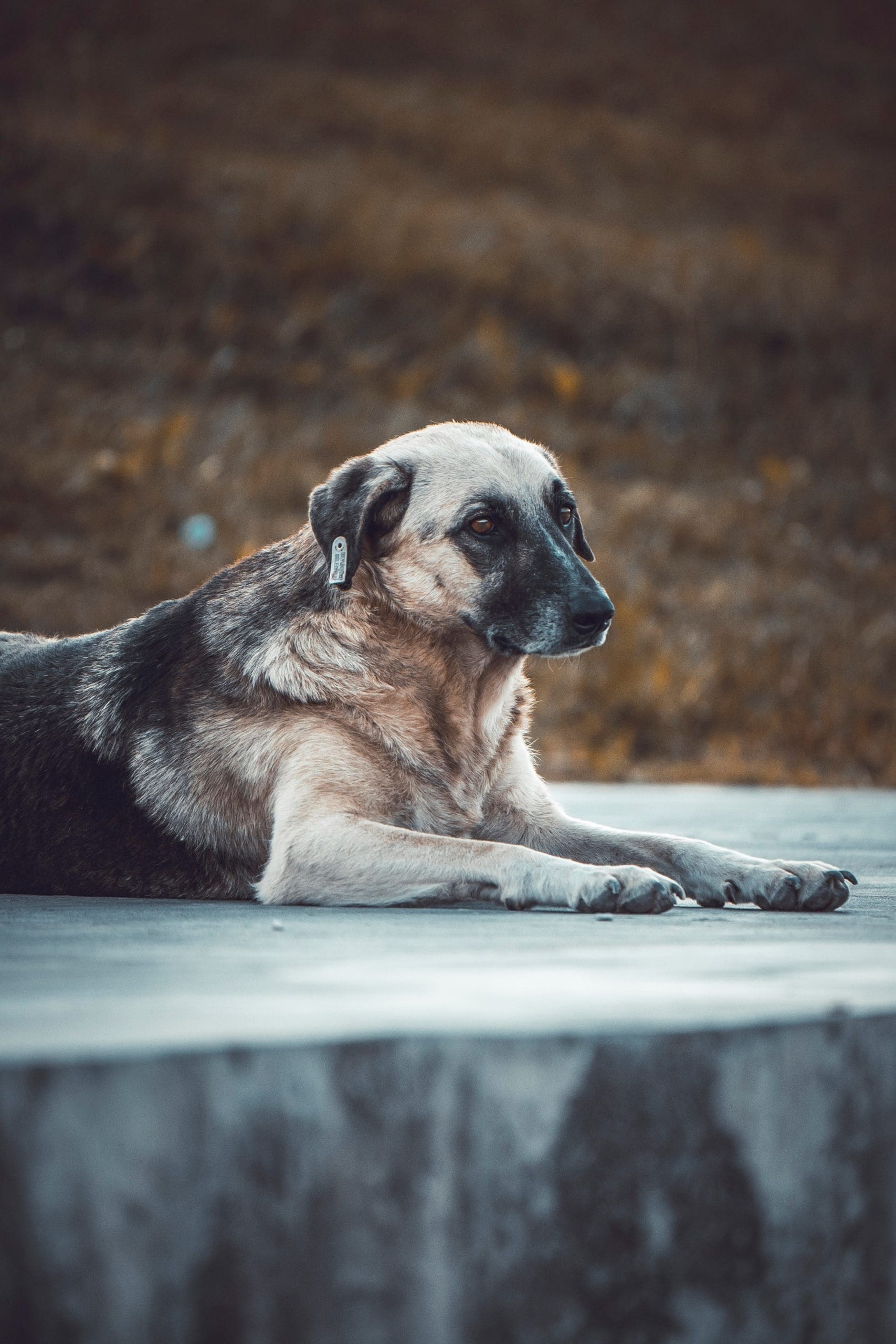
Why do dogs bite themselves?
Post Date:
January 23, 2026
(Date Last Modified: February 5, 2026)
Understanding why your dog is biting or chewing at themselves matters because it’s rarely just a bad habit — it’s often your dog’s way of telling you something is wrong. I typically see owners dismiss repetitive licking as “quirky” until a hotspot, infection, or tear in the skin leads to pain, vet bills, and a dog who’s miserable. Early recognition preserves comfort, reduces the chance of chronic skin changes, and keeps the bond between you and your dog strong: dogs in pain or distress are less engaged, and families carry emotional stress and unexpected expenses when problems worsen. Common owner scenarios include a dog who repeatedly licks a paw after walks, a dog that obsessively chews a flank after a change in household routine, or a dog developing a smelly, raw patch after a few days of licking. Many owners believe a collar alone fixes everything, or that licking is “just attention-seeking”; neither is reliably true, and acting quickly often prevents escalation.
Bottom line — what’s most likely causing your dog to bite itself
Dogs usually bite or chew themselves because of itch (allergy, parasites, skin disease), localized pain or neuropathy, stress-driven compulsive grooming, or simply to remove an irritant — and when you see open wounds, foul odor, rapid worsening, fever, or marked lethargy, those are red flags that need prompt veterinary attention.
- Most frequent causes at a glance: fleas or other parasites; allergic itch (environmental or food); contact irritants; localized pain (arthritis, ear or tooth pain); compulsive or anxiety-related overgrooming.
- Red flags: bleeding sores, rapidly spreading redness, pus or bad smell, fever, sudden collapse, or loss of appetite — all justify an urgent vet visit.
- Quick home checks you can do now: look for fleas/tick dirt, inspect paw pads and between toes, smell for odor at the site, gently part fur to spot redness or moisture, and note when and how often the biting occurs.
Inside body and behavior: medical causes and what the biting may be communicating
On a basic level, biting and overgrooming are driven by sensations in the skin and nervous system that your dog is trying to relieve. Itching is a sensory experience that may be triggered by histamine and immune processes in response to fleas, pollen, dust mites, or food proteins; scratching and chewing briefly reduce the sensation, which reinforces the behavior. Pain can also drive localized chewing: dogs may bite at a painful joint, a sore tooth, or an injured paw, and sometimes neuropathic changes after trauma create odd sensations that a dog tries to “fix” with the mouth.
Behaviorally, chronic licking can shift into a compulsive pattern. What begins as a response to an irritant may become self-rewarding: the dog licks, feels momentary relief, and the brain learns to repeat that action even when the original trigger has faded. Stress and anxiety — from a new person in the home, a recent move, or separation — are common drivers of compulsive overgrooming. Normal grooming is intermittent and focused (cleaning face, paws after walks); pathological grooming is persistent, focused on one spot, and often produces hair loss, skin thickening, or wounds.
When surroundings trigger it: common environmental causes and typical scenarios
The environment often contains the sparks that start or perpetuate biting. Seasonal pollen or increased mold in spring and fall may make atopic dogs much itchier, while household allergens like dust mites and cleaning chemicals can worsen inflammation year-round. I frequently see flares after a coat change or when families use a new laundry detergent, candle, or floor cleaner. Boredom and confinement matter too: a dog left alone with low mental stimulation can redirect restless energy into chewing at a paw or flank. Moving house, new household members, altered exercise routines, or the arrival of a baby can all be triggers for stress-related grooming.
Chemicals and plants are another category to watch. Lawn fertilizers, insecticides, certain ornamental plants and essential oils can irritate pads and skin, and de-icer salts picked up on walks can create burning sensations between toes that the dog responds to by chewing. Even topical products meant to help — an over-the-counter flea product not approved for dogs, or an essential oil applied directly to the fur — may cause a localized reaction and lead to intense biting.
Red flags to watch for — warning signs that require immediate veterinary attention
Some signs mean you should prioritize immediate veterinary assessment rather than waiting. Open sores that produce discharge, bleeding that doesn’t stop, rapidly enlarging redness, or a strong foul odor often point to secondary infection and may require antibiotics or debridement. When chewing is daily, gets worse despite brief home measures, or is accompanied by fever, lowered energy, or loss of appetite, systemic illness or deep infection may be present. Neurological signs — stumbling, head tilt, weakness, or unusual vocalization — together with localized biting can suggest pain or nerve disease and need prompt evaluation. Recurrent problems in the same spot that resist treatment may reflect a behavioral pattern, an underlying allergy that needs long-term management, or an anatomical problem such as a foreign body or nail issue.
How to respond now: practical actions owners can take safely and effectively
Your immediate goals are to keep your dog safe, limit further damage to the skin, and collect information that helps your veterinarian. First, prevent more self-injury: fit an Elizabethan collar or a soft cone alternative if your dog is actively creating wounds. If you don’t have a collar, a temporary safe barrier (a large towel or breathable garment) can help until you get to the vet. Clean any small, superficial area with plain saline or clean water; avoid hydrogen peroxide or alcohol, which can slow healing. Apply a loose bandage only if it can be kept clean and dry — and remove it frequently to inspect the site.
Then do a systematic home exam: part the hair and look for fleas or black “flea dirt,” check paw pads and between toes, open the ear to see if there’s redness or odor, look under the tail for anal issues, and gently palpate joints for heat or pain. Keep a behavior log: record time of day the dog bites, what happened before (walk, grooming, visitor), duration and intensity, and any treatments you tried. Photograph the affected area from multiple angles and date the pictures; this visual record is highly valuable at a veterinary appointment. Call your vet if there is any sign of infection, if the behavior is frequent and escalating, or if your dog shows systemic signs — and be ready to share photos and your behavior log to speed diagnosis.
Fixing the root: environmental management and training strategies that help long-term
Once immediate medical concerns are addressed, longer-term management focuses on reducing triggers and reshaping behavior. For suspected allergies, removing obvious triggers is a reasonable start: wash bedding weekly in hot water, switch to unscented detergents, avoid lawn-treated areas for walks, and consider a hypoallergenic bedding material. Increasing physical exercise and adding structured mental enrichment — food-dispensing toys, scent games, and short training sessions — redirects energy and reduces boredom-driven chewing. I often recommend scheduled, active sniffing walks to dogs prone to paw chewing: scent work tires them out mentally in ways that reduce repetitive mouthing.
For anxiety-driven or compulsive licking, desensitization and counter-conditioning can be effective. That means identifying triggers, exposing the dog to low levels of the trigger without allowing stress to build, and pairing that exposure with positive rewards. For example, if grooming triggers a dog’s anxiety, make grooming very short and very rewarding, gradually increasing duration. If compulsive behavior persists despite environmental changes, referral to a veterinary behaviorist or certified trainer who uses positive reinforcement is appropriate; they can assess whether medication plus behavior modification would help. Throughout, avoid punishment-based approaches, which often increase stress and worsen the pattern.
Helpful tools and protections: gear to prevent injury and support recovery
Practical, veterinary-approved gear can protect healing skin and give you time to diagnose and treat the underlying cause. An Elizabethan collar (hard or soft) prevents a dog from reaching most areas; inflatable collars are sometimes better tolerated while still limiting access. Protective garments — one-piece “onesies” or breathable recovery suits — are useful for torso wounds, and vet-approved paw wraps or adhesive booties protect pads after cleaning. For open but noninfected wounds, non-adherent sterile dressings secured lightly can keep the area clean; only use bandaging techniques advised by your veterinarian to avoid cutting circulation. Enrichment tools that have worked for many owners include durable puzzle feeders, Kong toys stuffed with frozen food, and chew-appropriate dental chews; redirect chewing toward safe items and rotate toys to maintain interest.
- Gear checklist: Elizabethan collar or soft cone; inflatable collar option for comfort; breathable recovery suit or protective garment; vet-supervised paw wraps or adhesive booties; safe, durable puzzle feeders and chews to redirect attention.
If it doesn’t improve: next steps, referrals, and when to escalate care
If your dog’s chewing continues despite the steps above, further diagnostics are often needed. A veterinarian may recommend skin cytology, fungal cultures, flea combing under magnification, or skin scrapings to look for mites. Blood tests and food trials may be used to investigate allergies, and imaging or orthopedic exams can find hidden sources of pain. For confirmed behavioral compulsions, medication options that reduce obsessive grooming exist and are most effective when combined with behavior modification. I typically see the best outcomes when owners document the problem, implement short-term protections, and work with a vet or behaviorist to create a combined medical and behavioral plan rather than relying solely on topical fixes.
References and further reading
- Merck Veterinary Manual: “Pruritus (Itching) in Dogs” — Merck Veterinary Manual, sections on causes and management of canine pruritus.
- American Veterinary Medical Association (AVMA): client information on “Hot Spots (Acute Moist Dermatitis) and Skin Problems in Dogs.”
- American College of Veterinary Dermatology (ACVD): “Guidelines for the Diagnosis and Treatment of Canine Atopic Dermatitis” (ACVD consensus statements and guidance documents).
- American Veterinary Society of Animal Behavior (AVSAB): position statements on humane behavior modification and resources for separation-related and compulsive behaviors in dogs.
- Olivry T., Mueller R.S., and Rosser E.J. et al., “Treatment of canine atopic dermatitis: 2010 update” — Veterinary Dermatology (consensus and review articles on allergic skin disease management).
- Journal of Veterinary Behavior: reviews and clinical reports on compulsive grooming and acral lick lesions in dogs (search term: “acral lick dermatitis review” for current peer-reviewed articles).
