
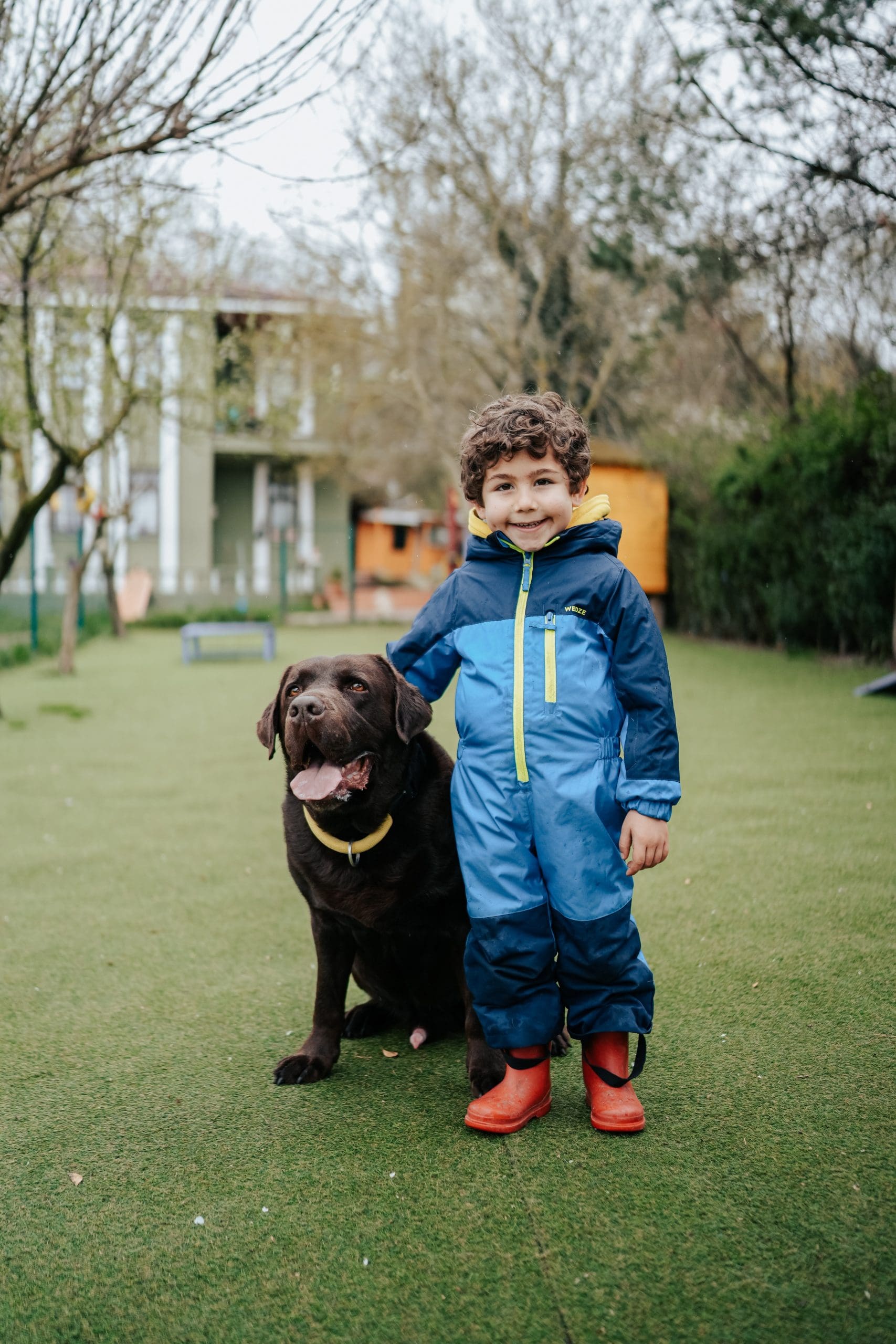
What is a group of dogs called?
Post Date:
December 29, 2025
(Date Last Modified: February 5, 2026)
Ask a dog person what a group of dogs is called and you’ll usually hear “a pack.” That answer is correct in many contexts, but it doesn’t tell the whole story. How we name and interpret groups of dogs depends on biology, history, and how closely those dogs live and work with people. Below I unpack the common names, the natural reasons dogs gather, practical ways to manage groups safely, and what to do if group dynamics become a problem.
From Pack to Kennel: What Do We Call a Group of Dogs?
The term most people use is a pack. In classical ethology, a pack describes a social group of canids that forage, defend territory, or raise young together. For domestic dogs, pack still fits when animals live semi-independently and coordinate activities, such as some free-roaming or feral dog groups. For dogs living with people, other words are common and often more useful: kennel for a group kept together under human care; team for working dogs pulling sleds or carts; brace when referring to two dogs working as a pair.
- Common collective names you’ll hear: pack, kennel, team, brace, leash (archaic for a group on lead).
Language also carries cultural baggage. People sometimes use pack to imply strict dominance hierarchies or “alpha” control — ideas that have been simplified in older training literature. Modern observation suggests dog social organization is flexible, and calling a household group a pack may mislead owners about what their dogs actually need.
Why Dogs Band Together — Motives, Roles, and Typical Behaviors
Dogs are social by descent; their ancestors hunted or scavenged in groups where cooperation could improve access to food and safety. That evolutionary background still shapes behavior, but the expression depends on environment. In resource-rich human homes, social structure often centers on shared routines and relationships with people rather than rigid rank fights over food.
When I work in shelters or on free-roaming dog projects, I typically see groups organize around predictable resources: food sources, safe resting spots, and access to mates. In those settings, stable affiliative bonds may form between some individuals while others remain peripheral. Vocal synchrony — multiple dogs barking together — and scent-marking around a food site are common sensory cues that a group uses to coordinate and claim space.
Signals that a group is operating smoothly include loose, reciprocal play, tolerance around feeding with mild ritualized signals to avoid conflict, and shared resting areas. Signals that tension exists include repeated resource guarding, targeted growling or chasing, and escalating fights that don’t stay ritualized. Such tension is often linked to competition over scarce resources, illness, or abrupt changes in the group’s composition.
How Dog Groups Form, and Practical Ways to Manage Them Safely
Formation starts with proximity and predictability. Dogs that spend regular time together — daily walks, shared rooms, or common yards — usually develop expectations about who gets priority for certain resources and how to greet each other. Familiarity reduces uncertainty; predictable routines reduce conflict. From a practical standpoint, owners can use that predictability to keep interactions safe.
Below are clear, practical steps I recommend when introducing dogs or managing groups. These steps are grounded in routine, clear boundaries, and gradual exposure rather than attempts to assert dominance.
- Start on neutral ground. Introduce dogs on neutral territory with both on loose leashes, walking parallel at a comfortable distance. Allow visual and olfactory assessment without forcing direct eye contact or crowding.
- Use parallel activity to build positive association. After a calm parallel walk, allow brief supervised sniffing and then separate to a positive activity like a short play session or feeding. Repeat short, successful interactions rather than long, tense ones.
- Manage resources. Feed separately or use barriers for high-value items while relationships form. Shared toys and single-point feeding are common triggers; controlled access reduces escalation risk.
- Allocate one-on-one time. Each dog should get focused attention and predictable exercise so that social needs aren’t all channeled into the group dynamic.
- Read body language. Look for softening signals (loose body posture, play bows, mutual sniffing) versus tension signs (stiff posture, hard stare, pinned ears). Intervene early with distance or redirection rather than waiting for a clear fight.
- Seek professional help for repeated escalation. If conflict persists despite management, consult a behavior professional who can assess medical causes, training gaps, or environmental triggers. I typically advise this when minor scuffles become more frequent or intensity rises.
When walking multiple dogs, practical equipment choices help: front-clip harnesses for better steering, two-person handling for strong or reactive dogs, and keeping fasteners and leashes simple so you aren’t fumbling when you need control. For multi-dog households, schedule staggered feeding and secure rest spaces so dogs can opt out of interaction; freedom to withdraw is a strong predictor of long-term harmony.
If a Pack Turns Aggressive: Warning Signs and How to Intervene
First, separate and secure. If a fight breaks out, avoid putting your hands in the middle. Use noise, a barrier, or a blanket to distract and create space; I have used a water spray or throwing a heavy towel over dogs to break focus and then separate them calmly. Once separated, secure dogs in separate rooms or crates until they’ve had time to calm.
Next, investigate underlying causes. Sudden onset of aggression may be linked to pain, neurological issues, or medical conditions that change tolerance thresholds. If an otherwise well-behaved dog becomes reactive, a veterinary exam is a sensible first step — pain-related aggression is likely linked to discomfort and may appear as tension toward household members or other dogs.
If the cause appears behavioral, document patterns before changing routines. Note what happened immediately before each incident, the location, who was present, access to food or valuable items, and any health changes. This record helps a behavior professional design targeted interventions rather than broad, one-size-fits-all recommendations.
Behavioral strategies that often help include management to prevent rehearsed conflict, structured desensitization to triggers, and counter-conditioning so dogs learn new emotional responses. For example, if a specific doorway or doorway resource reliably precedes tension, temporarily block access and retrain approach behavior with low-value reinforcement, gradually increasing challenge as dogs show tolerance.
When multiple dogs live together and one individual repeatedly triggers conflict, consider rehoming options or environmental changes that reduce overlap — separate feeding areas, additional resting spots, and timed access to favorite spaces. Those practical steps can restore stability without dramatic interventions.
Myths vs. Reality: Common Misconceptions About Dogs in Groups
One common myth is that owners must assert dominance to control a group. In my experience, attempting to dominate dogs often increases stress and confusion in the household. Clear, consistent rules and predictable leadership through routine and training — not intimidation — tend to produce calmer groups.
Another misconception is that dogs living together will naturally resolve all conflicts. Some dogs have incompatible temperaments or medical conditions that make shared living impractical. In those cases, thoughtful separation strategies and environmental changes are kinder than forcing interactions that escalate over time.
Lastly, people often expect free-roaming groups to mirror wolf packs. Wild canid social structures and free-ranging dog social patterns overlap, but urban or scavenging dog groups are usually more fluid and closely tied to human resource patterns. Assuming a rigid pack hierarchy can misdirect management efforts.
Practical Takeaways for Dog Lovers: Simple Steps You Can Use Today
If you own multiple dogs, plan introductions deliberately, manage resources to reduce competition, and give each dog predictable attention and exercise. Read subtle body language and intervene early when tension grows. If violence erupts, separate calmly, rule out medical causes, and document events before changing routines or seeking professional help.
For people who encounter groups of free-roaming dogs: keep a respectful distance, avoid sudden movement, and never leave food out that could concentrate dogs near children or property. If community dogs are causing concern, contact local animal welfare organizations that handle humane population and welfare management rather than attempting to relocate or engage the animals yourself.
Sources and Further Reading
- Merck Veterinary Manual: Canine Behavior (MerckVetManual.com).
- American Veterinary Society of Animal Behavior (AVSAB): Position Statement on Dominance in Dogs (avsab.org).
- American Kennel Club: What Is a Group of Dogs Called? (akc.org).
- ASPCA: Understanding Dog Behavior and Behavior Problems (aspca.org).
- Bradshaw, J. (2017). Dog Sense: How the New Science of Dog Behavior Can Make You a Better Friend to Your Pet (Pelican Books).
