


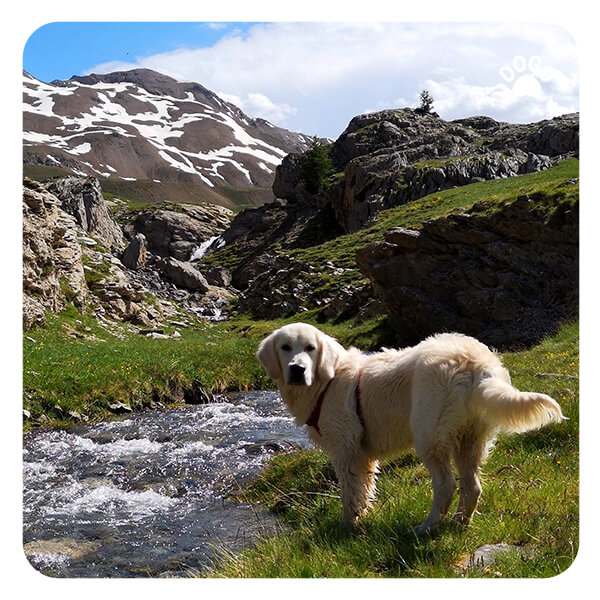
How to Take Your Dog Camping
Post Date:
November 8, 2023
(Date Last Modified: November 13, 2025)
Taking a dog into the outdoors requires attention to rules, logistics, and environmental conditions to ensure the pair travels and camps responsibly. Proper planning reduces surprises and helps protect wildlife and other visitors.
Trip planning & permits
Start by confirming the specific regulations for the parks, forests, or recreation areas on your route. Many land-management agencies require dogs to be leashed and restrict leash length; a common standard is a leash no longer than 6 ft (1.8 m)[1]. Check whether day-use or backcountry permits are required and whether dogs are allowed in certain zones, since seasonal closures or wildlife-protection closures can change access.
Plan your itinerary with realistic daily distances and clear exit points. For multi-day trips, match mileage to your dog’s conditioning; a practical guideline is about 3–5 miles (5–8 km) of hiking per day for dogs building backpacking fitness[2]. Identify a set of emergency-access points and roads near your route; aim to have at least one routable access point within roughly 10 miles (16 km) or a 30-minute drive of any planned campsite when possible so you can reach veterinary care or evacuate quickly[2].
Account for communications and local services before you leave. If parts of your route lack reliable cell coverage for more than 24 hours, bring an alternate communicator such as a satellite messenger or personal locator beacon and plan for delayed two-way contact[3]. Collect contact information for the nearest emergency veterinary clinic or animal hospital for each night’s campsite; whenever practical, know a clinic within about 50 miles (80 km) of your planned camp that can accept emergency arrivals[2].
Before departure, confirm campground rules about waste disposal, food storage, and night containment so you can pack compliant gear and permits. Many sites require that food and garbage be stored in bear-resistant lockers or locked vehicles to prevent wildlife interactions, and failure to follow those rules can lead to fines or closure of a site.
Dog fitness, vaccinations & health checks
Have a physical exam with your veterinarian before extended outdoor travel and schedule it within 30 days of departure to confirm fitness and update preventive care[4]. Update core vaccinations according to local regulations and the clinic’s protocol; rabies schedules commonly require a current certificate valid for 1–3 years depending on vaccine type and jurisdiction[4]. Discuss parasite prevention: most heartworm, flea and tick products are given monthly, so ensure the dog is current for at least one monthly dose before leaving and continue dosing on schedule while away[4].
Assess your dog’s age, weight and mobility against the planned terrain. Puppies under about 6 months commonly should avoid long ascents and repeated steep descents because growth plates are still developing[5]. Senior dogs or those with arthritis may need shortened daily mileage or easy footing; consider limiting hikes to under 3 miles (5 km) on rough terrain for unconditioned older dogs until you confirm tolerance[6].
Know basic clinical fluid needs and medication planning. Maintenance fluid requirements are approximately 40–60 mL/kg/day; plan for hydration support when activity and heat increase needs beyond baseline[4]. If your dog is on chronic medication, pack at least a 7–14 day surplus beyond the planned trip duration and keep dosing records with the original prescription labels to facilitate care if you need a refill[6].
Training essentials and recall
Reliable recall is one of the highest‑value skills for safe outdoor outings; practice short, frequent drills of 10–15 minutes twice daily in progressively more distracting environments before the trip[5]. Reinforce leave‑it, sit/stay and polite leash manners with reward rates of several small treats per successful response so the dog associates compliance with positive outcomes[5].
Familiarize your dog with the camping gear and vehicle prior to departure. Start crate or tent-door training with brief 15–30 minute sessions and increase duration gradually to reduce anxiety on the trail or at camp[6]. Practice loading and unloading the vehicle and stepping in and out of any ramps or steps you plan to use to minimize stress and prevent injury during stops[5].
Train for common distractions by simulating wildlife sounds, food on the ground, and encounters with other dogs; perform at least 5–10 controlled exposure sessions so the dog learns to respond reliably rather than react[5].
Essential gear and packing checklist
Create a consolidated bag of dog‑specific gear organized for quick access. Include a sturdy leash and harness, a visible ID tag plus microchip registration, a travel water bowl and at least 2–3 days of food in separate airtight containers for the first leg of the trip[1]. For active multi‑day trips, plan to carry enough food to meet increased caloric demands—many working or hiking dogs require roughly 20–50% more calories than their sedentary maintenance allotment while on trek[7].
Pack bedding, a coat or booties if low temperatures or rough ground are expected, a canine life vest for water travel rated to the dog’s weight, poop bags and a rigid waste container to keep used bags sealed until proper disposal[1]. Include a compact first‑aid kit with bandage material, antiseptic wipes, an emergency blanket and any prescription meds; also carry a spare collar and leash in case the primary set is lost or damaged[6].
Choosing dog-friendly campsites and routes
Prioritize designated pet-friendly campsites and trails and verify any seasonal restrictions before you arrive; many areas permit dogs only in developed campgrounds and on certain trails to protect wildlife or nesting birds[1]. Select routes that match your dog’s conditioning: for mixed-terrain days, alternate one moderate hike of 4–6 miles (6–10 km) with an easier day of 1–2 miles (1.5–3 km) to allow recovery on multi-day trips[2].
Consider shade and water access when choosing a pitch; in exposed alpine or desert zones, aim to camp where shade is available between midday hours or be prepared to create shaded areas to prevent overheating during peak sun hours[3]. Avoid sensitive habitats and posted restricted zones—staying on durable surfaces and on designated trails helps reduce impact and the chance of fines or closures if rules are breached[1].
Safe travel and vehicle procedures
Secure your dog in the vehicle with a crash-tested harness, properly anchored crate, or cargo barrier to reduce injury risk; several safety organizations recommend using restraint systems tested for crash forces and appropriate to the dog’s weight and size[6]. Plan for regular stops every 2–3 hours to offer water, a bathroom break and a short walk to relieve stiffness and reduce motion stress[2].
Never leave a dog unattended in a parked vehicle; interior temperatures can rise to dangerous levels quickly—vehicles parked in direct sun may become unsafe within 10–20 minutes on warm days and can reach lethal temperatures well under an hour[3]. When traveling, check vehicle temperature before allowing the dog to re-enter and carry a thermometer or use the dashboard as a quick temperature guide.
Sources
- nps.gov — National park and land-management regulations and guidance.
- avma.org — Veterinary guidance on emergency planning and animal health in the field.
- fcc.gov — Communications infrastructure and guidance on coverage and emergency communicators.
- avma.org — Veterinary guidance on emergency planning and animal health in the field.
- avma.org — Veterinary guidance on emergency planning and animal health in the field.
- avma.org — Veterinary guidance on emergency planning and animal health in the field.
- avma.org — Veterinary guidance on emergency planning and animal health in the field.
