How To Know If Your Dog Loves You?
Post Date:
December 10, 2024
(Date Last Modified: November 13, 2025)
Dogs communicate much of their emotion through posture and movement, and interpreting those signals helps owners understand when a dog is showing affection.
Reading Body Language
Observing posture and motion gives the clearest clues that a dog is expressing fondness through behavior. There are three common tail positions owners should notice: low, neutral, and high, each of which is used in different social contexts and can change quickly during an interaction[1].
Ear and overall body posture provide additional scale and context; two broad ear/body postures—forward/erect and neutral/soft or flattened—help distinguish arousal and attention from relaxation and trust[2]. A forward, alert posture combined with a high tail usually signals focus or excitement rather than relaxed affection, whereas a soft, loose body with relaxed limbs and a neutral-tail carriage more reliably indicates comfort and social closeness[2].
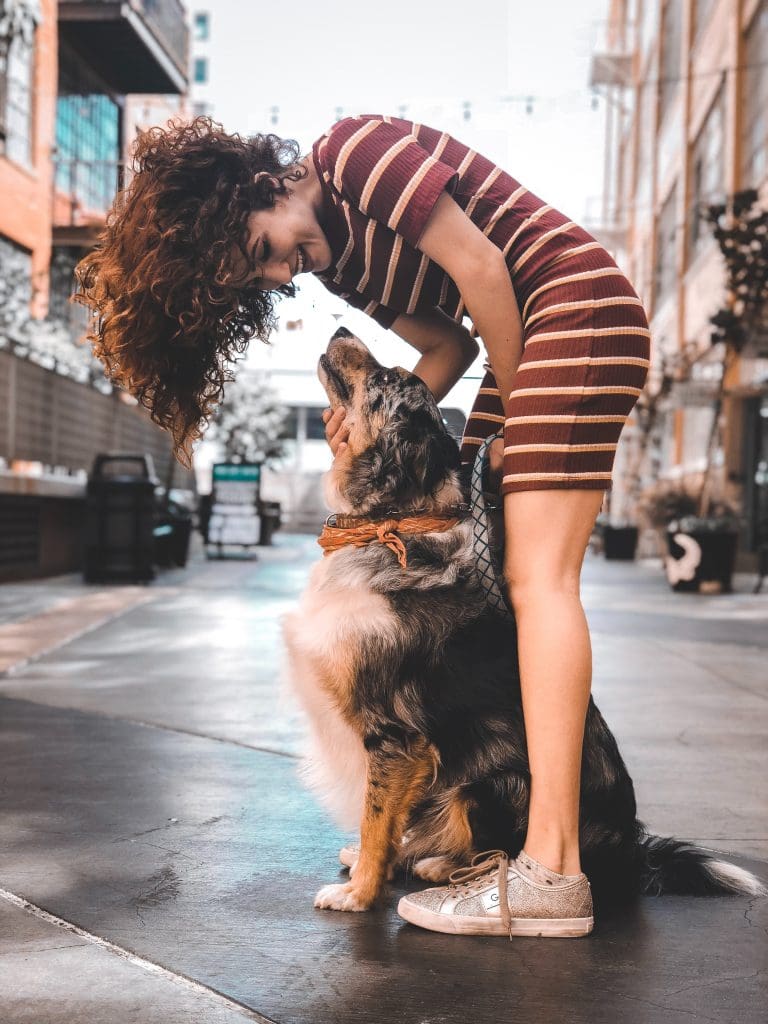
Physical approaches such as leaning or gentle nudging are direct affiliative signals; dogs commonly lean into people for short intervals of about 10–30 seconds when seeking connection or reassurance, and repeated brief contacts over a day reflect ongoing social bonding rather than a single reflexive action[3]. A relaxed stance held for several minutes in a familiar environment usually coincides with trust and contentment, while a stance that tightens or shortens to just a few seconds can indicate alertness or uncertainty rather than affection[5].
| Tail position | Wag type | Typical interpretation |
|---|---|---|
| Low | Slow, low-amplitude | Submissive or uncertain; may precede seeking comfort |
| Neutral | Loose, moderate-speed | Relaxed interest and affiliative intent |
| High | Fast, wide sweeps | High arousal or confidence; context needed to interpret |
| High circular | Rapid, helicopter-style | Intense emotional state; may be excitement rather than calm affection |
Interpreting any single cue in isolation risks misreading intent; tail wag speed and direction can be categorized into roughly three contextual patterns that must be weighed against ears, body tension, facial expression, and the situation to decide whether the movement reflects affection or something else[4]. Combining signals—such as a neutral tail with soft eyes and a relaxed mouth—creates a consistent picture of sociability, while mismatched cues (for example, a wag with a tense body) call for caution and a different response from the handler[1].
Facial Expressions and Eye Contact
Dogs use subtle facial muscles and gaze patterns to communicate comfort and attachment; soft, relaxed eyes and slow blinking often accompany trust and contentment while hard stares or wide “whale eye” can indicate stress or avoidance. A slow blink that lasts roughly 1–2 seconds is commonly described by ethologists as a calming signal in affiliative contexts[2].
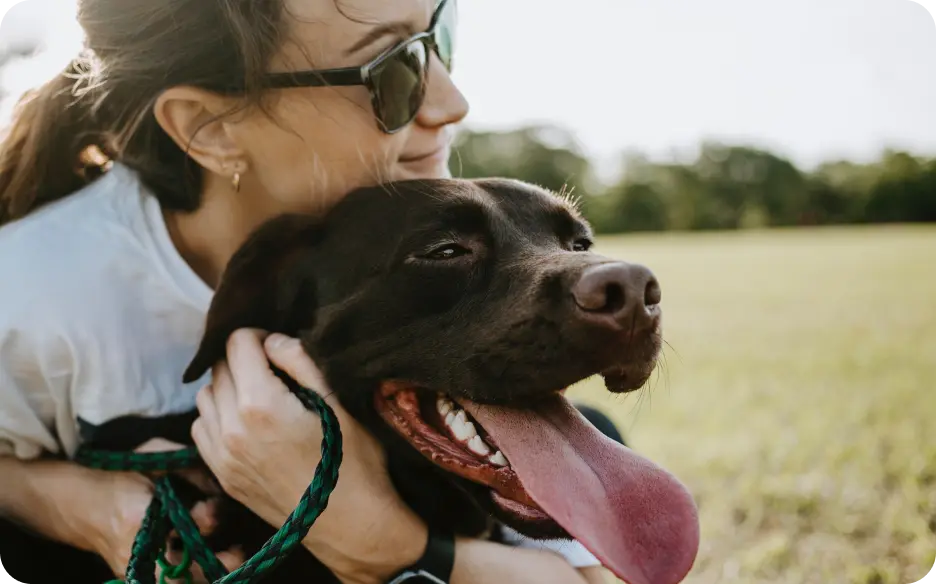
A relaxed mouth with the tongue either resting lightly or slightly exposed typically appears when a dog is comfortable and socially open, whereas frequent lip-licking, yawning, or a closed tight mouth occurring repeatedly over a short interval—about several seconds—can mark mild discomfort or appeasement rather than relaxed affection[2]. Sustained gentle eye contact for a few seconds while the dog’s body remains loose is often a positive bonding behavior; by contrast, a dog that shows the whites of the eyes around the iris (whale eye) during gaze is usually signaling tension and should not be forced into prolonged eye contact[1].
Tail Wagging Explained
Tail motion conveys graded emotional information rather than a simple “happy” signal; side-to-side wags and circular, helicopter-style wags can mean different things depending on height and speed. A neutral, moderate-speed wag with the tail held at midline is commonly associated with relaxed social interest, while a high, stiff tail wag combined with a tense body is more likely to reflect high arousal or potential assertiveness[1].
Observers should note both the direction and amplitude: the same dog may wag more to the right or left depending on positive or negative emotional bias in a given situation, and circular wags are often reported during intense greeting excitement that lasts from a few seconds up to about 30 seconds during arrivals[4]. Because wagging can accompany many states, combining tail data with ears, mouth, and overall body tension gives the most reliable read on affection versus excitement[1].
Touch, Cuddling, and Proximity
Physical closeness is a clear affiliative strategy for many dogs; leaning against a person, sitting on or draping a paw over a lap, and persistent nuzzling are frequently observed behaviors that indicate trust and a desire for contact. Dogs often lean into people for short bouts—commonly 5–30 seconds at a time—when seeking reassurance or attention[3].
Choosing to sleep within arm’s reach, or directly on a person, is another strong signal of bond and security: many dogs that are socially bonded to their caregivers prefer to rest within 1–3 feet (0.3–1 m) of them when given the option[3]. Nuzzling, gentle pawing, and deliberate positioning against a handler during calm moments are repeated affiliative cues and are less likely to be random when they occur consistently over days or weeks[5].
Vocalizations and Sounds
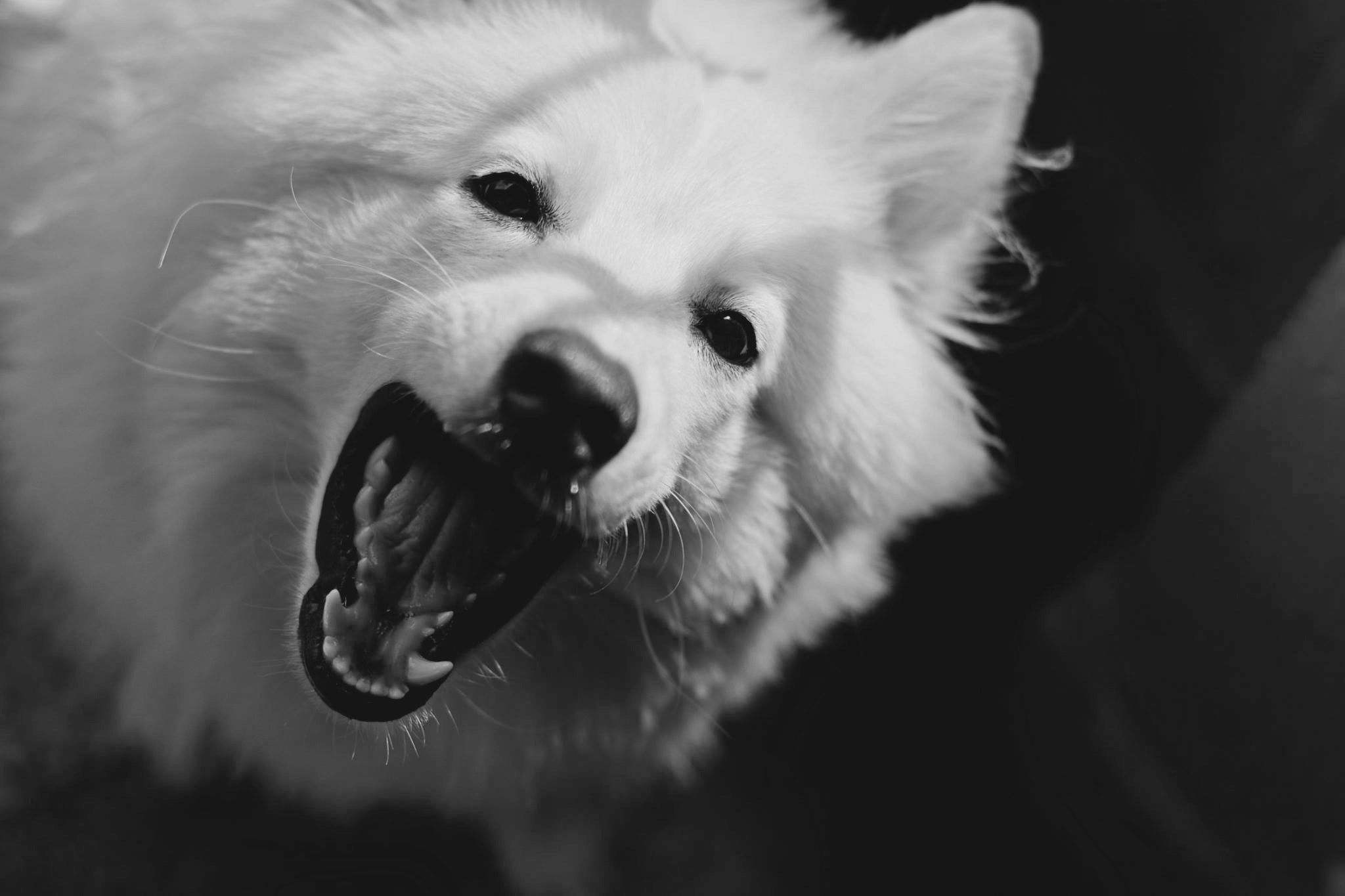
Dogs use a range of vocal signals to solicit attention or to express contentment; soft whining and short, low-frequency sighs often serve as contact-seeking sounds and typically occur in brief bursts of 1–4 seconds during close interactions[3]. Quiet, rhythmic noises made while settling down to rest are usually affiliative, whereas high-pitched prolonged whining that continues for many minutes often signals distress rather than affection[3].
Gentle, talkative barks or chirps during play are commonly paired with loose body language and short play bows; when vocalizations are low in volume and paired with soliciting gestures like pawing or bringing a toy, they generally indicate positive intent and social engagement[4].
Play, Attention-Seeking, and Shared Activities
Initiating play, bringing toys, and repeatedly inviting interaction are clear indicators of social preference; a dog that regularly presents a toy to a specific person multiple times per day demonstrates a learned association between that person and rewarding social interaction[4].
Following a person through the house and maintaining proximity while watching their movements—often within 2–6 feet (0.6–1.8 m) indoors—is a common marker of social attachment and monitoring behavior among bonded dogs[4]. Dogs that reliably respond to play invitations with appropriate play signals (such as play bows lasting 1–3 seconds, loose gait, and role reversals) are showing social competence and a positive relationship with their partner[4].
Protective, Comforting, and Caregiving Behaviors
Some dogs exhibit protective or caregiving gestures that correlate with attachment; alerting to unfamiliar sounds near a handler, positioning themselves between their person and a perceived threat, or nudging a handler when upset are behaviors associated with concern and affinity. A dog that moves to block or interpose itself within 0–2 feet of a caregiver during a stressful event is often demonstrating a protective response tied to attachment rather than simple territoriality[1].
Nudging or pawing when a person is distressed can be brief—usually a few seconds of contact repeated until the person responds—and is interpreted by behaviorists as an attempt to solicit social support or to alter the human’s state[5]. Guarding behaviors combined with relaxed overall posture are different from aggressive guarding and should be assessed in context and with veterinary or behaviorist input when frequent or intense[2].
Reunion Responses and Separation Behavior
How a dog greets its person after a separation offers useful evidence of attachment; enthusiastic reunions that include spinning, jumping, and intense tail wags commonly last from a few seconds up to about one minute depending on the animal and the situation[4]. Dogs that wait calmly at a door or settle quietly when left often display a secure attachment style, while dogs that pace, howl, or destroy household items when alone may be showing separation-related distress and need behavior modification support[5].
Recovery speed after a brief separation—returning to normal play or relaxed behavior within minutes—tends to indicate resilience and a healthy attachment, whereas persistent agitation for many minutes signals the need for intervention and possible consultation with a certified behaviorist[5].
Individual, Breed and Health Factors
Expressions of affection vary widely by temperament, breed tendencies, and physical health; some breeds are genetically predisposed toward high sociability and frequent tactile signaling, while others are more reserved and show attachment in subtler ways such as close following or quiet proximity[4].
Age and medical status also shape affectionate behaviors: puppies under about 6 months typically show more overt play solicitation and repetitive contact-seeking, whereas senior dogs—commonly defined as over 7 years for many medium breeds—may reduce physical contact due to discomfort or stiffness and instead show attachment through calmer proximity[2]. Pain, illness, or sensory loss can suppress typical affiliative signals and should prompt a veterinary evaluation when a previously social dog suddenly withdraws or stops seeking contact[1].
Socialization and past experience strongly influence how love is expressed; dogs with consistent, positive early social exposure are more likely to use a broader repertoire of affiliative signals and to generalize attachment behaviors across people and environments[4].