
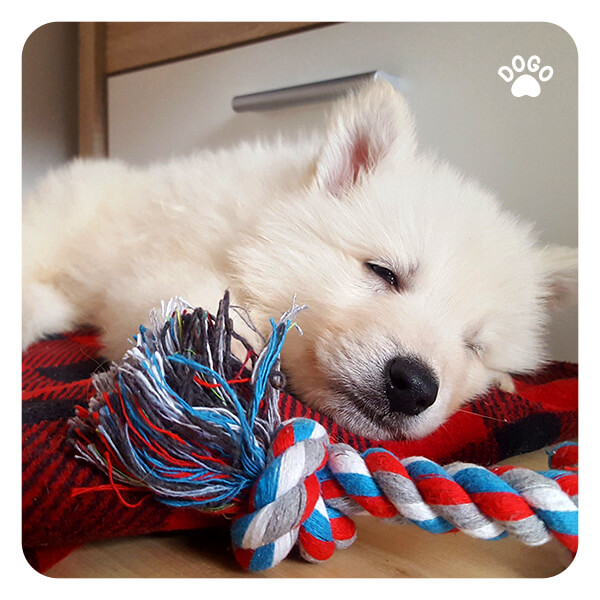
Dog Sleeping Positions – What Do They Mean?
Post Date:
July 18, 2024
(Date Last Modified: November 13, 2025)
Descriptions of common dog sleeping positions and associated observations.
Why dog sleeping positions matter
Sleep posture offers visible clues about a dog’s comfort, physical state, and immediate needs, and can be a nonverbal signal owners, trainers, and clinicians use during routine observation.
Adult dogs typically sleep about 12 to 14 hours per day under normal household conditions[1], and changes from a dog’s normal pattern or posture can indicate altered temperature regulation, pain, or anxiety that merit attention.
Relaxed/sprawled positions (Side & Superman)
When a dog lies on its side or fully stretches with limbs extended, the posture commonly accompanies deeper sleep stages and muscle recovery; clinical guidance on canine physiology notes maintenance fluid and recovery needs relevant to deep-rest periods, with typical maintenance fluid guidance near 50 mL/kg/day in clinical contexts[2].
Environmental temperature influences posture: many dogs choose sprawled poses when ambient air is warm, often above about 75°F (24°C), to maximize exposed surface area for passive heat loss[3]. Breed, coat type, and individual conditioning affect how readily a dog adopts these positions.
Large, athletic breeds may use side-sleep to aid muscular recovery after exercise, while short-coated types may sprawl more frequently in warm homes; frequent position changes during sleep may reflect normal sleep architecture rather than discomfort.
Curled/denning positions (Donut & Burrow)
Curling into a donut or burrowing into bedding conserves heat and protects the torso and vital organs; puppies and many small-breed dogs favor curling, and puppies may sleep as much as 18 to 20 hours per day during early development[1].
Curling is common when a dog is cold, in unfamiliar surroundings, or seeking a secure feeling; when the same posture occurs during otherwise normal behavior and resolves with warming or settling, it is usually a normal thermoregulatory or comfort response.
If curling is accompanied by trembling, persistent pacing, or avoidance of contact, the posture may be driven by anxiety rather than temperature, and behavioral or environmental adjustments can help.
Belly-up/exposed position (Trust & Cooling)
Sleeping on the back with the belly exposed maximizes exposed ventral surface for heat dissipation and is widely read as a sign of high trust and relaxation in a safe home environment[3].
In warm rooms, dogs commonly shift to belly-up to speed cooling, while dogs in cooler conditions rarely choose this posture; if a dog remains belly-up but shows difficulty rising or apparent stiffness for longer than 48 hours after an acute event, veterinary evaluation is advisable for musculoskeletal causes[2].
Sphinx/perched position (Alert & Light-sleep)
The compact, upright sphinx pose indicates light sleep or dozing with quick-access readiness to move; research on canine sleep stages shows that light-sleep cycles and brief arousals commonly occur in short intervals during an animal’s rest period[5].
Dogs often adopt the sphinx when in new locations, when guarding, or when anticipating activity; body cues such as ear orientation, head lift, and slow tail movement distinguish vigilant resting from tense, anxious posturing.
| Position | Typical meaning | Common context | When to seek help |
|---|---|---|---|
| Side / Full-stretch | Deep rest, cooling | Warm home, after exercise | Sudden immobility or pain |
| Curled / Donut | Heat conservation, security | Cold rooms, puppies, small breeds | Ongoing trembling or avoidance |
| Belly-up | Trust, strong cooling need | Comfortable home, warm weather | Difficulty rising or stiffness |
| Sphinx / Perched | Light sleep, readiness | New places, guarding | Persistent restlessness or pacing |
| Leaning / Cuddling | Social bonding, attachment | Close human or animal company | Excessive clinginess with distress |
Leaning & cuddling (Social bonding)
Contact-seeking behaviors such as leaning, draping a paw, or full-body cuddling indicate social affiliation and comfort in many dogs; socialization windows around the early weeks of life influence these behaviors, with critical socialization periods commonly cited between roughly 3 and 12 weeks of age[3].
Breed tendencies and life stage affect contact preferences: some breeds are predisposed to close physical contact, while independently bred types may prefer more distance; changes toward excessive clinginess, especially when an owner prepares to leave, can be a sign of separation-related distress and benefit from behavioral intervention.
Guarding & protective postures
Positions that place the head up, body over toys or food, or situate the dog between an owner and a doorway can reflect guarding instincts, resource-related discomfort, or territorial vigilance; surveys and clinical studies document measurable prevalence of resource-guarding behaviors in general practice populations[5].
Management strategies include preventing access to high-value triggers during rest, structured desensitization with professional guidance, and consistent training plans that reinforce relaxed resting without confrontational retrieval.
Factors that change sleep position (Age, breed, environment, health)
Age and conformation strongly influence sleep choices: puppies and elderly dogs often show different preferred poses, and large or deep-chested breeds may avoid positions that compress the ribcage; chronic musculoskeletal disease such as osteoarthritis increases with age and can alter preferred postures, with clinical resources noting appreciable prevalence in older canine cohorts[2].
Environmental variables — room temperature, bedding type, available space, and daily routine — shape posture selection; for example, insufficient bedding or hard substrates can push a dog toward compact poses that protect joints rather than positions that maximize comfort.
When positions indicate medical or behavioral concern
Warning signs that accompany worrisome posture changes include reluctance to move, repeated restlessness, vocalizing when shifting position, or labored breathing at rest; clinically, a resting respiratory rate persistently above 40 breaths per minute is a red flag that often requires prompt veterinary assessment[2].
Distinguishing short-term discomfort from chronic disease involves monitoring for duration and pattern: brief, activity-linked shifts often resolve with rest, whereas persistent or progressive changes warrant veterinary diagnostics and, when indicated, behavioral consultation.
Practical tips to encourage healthy, comfortable sleep
- Choose an appropriately sized bed with enough surface area for the dog to stretch fully; beds should generally be at least as long as the dog’s nose-to-tail length plus a few inches, and older dogs benefit from low-entry designs.
- For joint support, consider orthopedic-style cushioning with a thickness in the range of 2 to 4 inches (5 to 10 cm) depending on size and body condition[4].
- Control ambient temperature and provide cool surfaces or elevated beds in warm seasons and insulated, den-like bedding in cooler months to allow posture-appropriate thermoregulation.
- Establish a consistent sleep routine and a quiet, low-traffic sleep location to reduce light-sleep vigilance and encourage deeper restorative rest.
- Address anxiety-driven sleep postures with gradual desensitization and counter-conditioning under the guidance of a qualified behavior professional when needed.
Further practical guidance on observing, documenting, and responding to changes in canine sleep posture and associated welfare considerations.
Monitoring and documenting changes
Regularly tracking a dog’s typical sleep postures and baseline behaviors helps detect meaningful shifts; for example, recording sleep-rest patterns over a 7-day window provides a practical baseline for most household dogs[1].
Measure resting respiratory rate (RR) at rest for 15 seconds and multiply by 4 to get breaths per minute, and consider veterinary contact if the RR is consistently above 40 breaths per minute when the dog is relaxed and not recently active[2].
When assessing mobility or pain-related postural changes, note duration of the change: transient shifts that resolve within 24 hours after rest or analgesia are often less concerning than alterations that persist longer than 48 to 72 hours and progressively worsen[2].
What to bring to a veterinary or behavioral appointment
Bring concise documentation: a 24- to 72-hour log of sleep postures, photos or short video clips that show the posture and any movement difficulties, and notes about appetite, activity level, and any recent changes in household routine or environment[5].
If a veterinary exam is advised, basic measurements such as body weight and a recent, home-measured resting RR will help clinicians triage concerns; examples include reporting weight in pounds and RR in breaths per minute to match common clinical expectations in many practices[2].
Behavioral strategies for anxiety-related sleep postures
For dogs whose sleep posture changes are driven by anxiety, structured desensitization with short, progressive exposures is recommended; practical programs often use brief training sessions of around 5 to 10 minutes per session, repeated multiple times per day, while gradually increasing tolerance to the trigger under reward-based management[5].
Providing predictable routines and a designated safe space that the dog can access without pressure supports reduced vigilance and deeper sleep; environmental enhancements and counter-conditioning exercises typically require consistent practice for several weeks to produce measurable behavior change in many cases[5].
Adjusting the sleep environment for health and comfort
Maintain ambient temperatures in typical indoor ranges that support thermoregulatory comfort; many companion animals are comfortable in environments roughly between 68°F and 72°F (20°C to 22°C) when bedding and ventilation are appropriate[3].
Choose bed height and entry that match the dog’s mobility: a low-entry bed reduces strain for older or arthritic dogs, and thicker, supportive padding of roughly 2 to 4 inches (5 to 10 cm) of resilient foam improves pressure distribution for medium and large breeds[4].
Interpreting sudden versus gradual changes
Sudden onset of an unusual sleep posture or clear pain behaviors after a specific event (e.g., a fall or acute lameness) typically warrants prompt veterinary assessment within 24 hours, especially when mobility is affected[2].
Gradual shifts toward guarded postures, incremental reductions in stretch behaviors, or progressive reluctance to adopt previously normal resting positions are more suggestive of chronic conditions such as degenerative joint disease and benefit from staged veterinary diagnostics and multimodal management[2].
Simple home-care adjustments owners can make
When a dog favors curled positions because of cool conditions, add insulated, den-style bedding or a covered crate to conserve body heat; conversely, provide a cool, elevated mat or tiled floor access when the dog prefers sprawling positions to cool down[3].
For dogs that seek frequent contact or leaning at bedtime, offer a neutral, comfortable alternative such as an adjacent human bed-side mat to balance attachment needs with healthy boundaries, and pair the change with short, predictable departure rehearsals to reduce separation-related hypervigilance over time[5].
When medical management is likely needed
Persistent reluctance to fully stretch, repeated hesitance to rise, or decreased ability to shift positions without yelping or stiffness often indicate musculoskeletal pain; veterinary assessment often includes orthopedic palpation and may recommend analgesic trials or imaging when indicated[2].
If clinicians suspect a systemic cause (for example, cardiopulmonary disease), they may prioritize diagnostics such as thoracic auscultation, radiographs, and measurement of resting RR and effort, since chronic respiratory compromise commonly manifests with altered sleep and posture[2].
Creating an evidence-minded plan at home
Combine environmental adjustments, routine establishment, and targeted behavior exercises and re-evaluate over a planned interval such as 2 to 4 weeks; if there is minimal improvement or if new signs appear, escalate to a professional behaviorist or veterinary team for tailored intervention[5].
For medically complex or older dogs, periodic rechecks every 6 to 12 months help track progression of musculoskeletal or cardiopulmonary conditions that might alter preferred sleep postures and overall welfare[2].
Sources
- vca.com — general clinical and owner-facing guidance on canine sleep and development.
- merckvetmanual.com — clinical reference for fluid requirements, musculoskeletal disease, and respiratory concerns.
- avma.org — guidance on thermoregulation, socialization windows, and general welfare considerations.
- aaha.org — practical recommendations for bedding and environmental management in companion animals.
- ncbi.nlm.nih.gov —
