
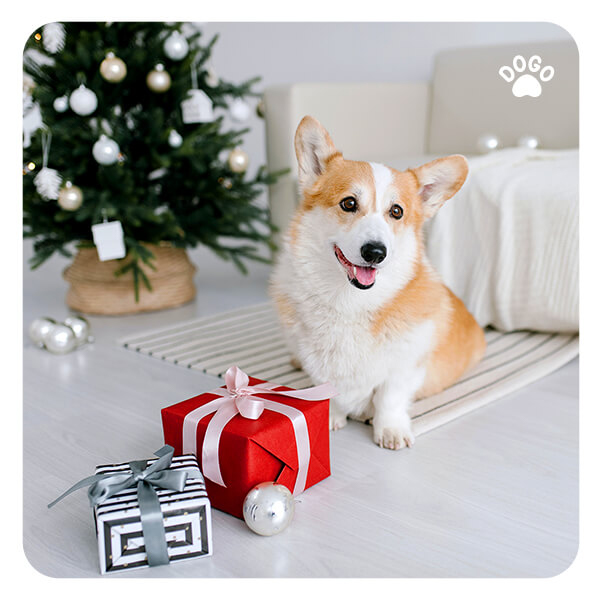
Christmas Gift Ideas For Your Dog
Post Date:
October 26, 2023
(Date Last Modified: November 13, 2025)
Choosing gifts for a dog means matching items to their size, health, temperament, and daily routines so the present is safe and enjoyable.
Assess Your Dog’s Preferences & Needs
Start by categorizing size and body condition: as a simple guideline, many caregivers describe dogs under 20 lb as small, 20–50 lb as medium, and over 50 lb as large.[1]
When planning feeding-related gifts, account for maintenance water needs using a clinical estimate of about 40–60 mL/kg/day (which helps scale treats and wet-food additions), and use that volume when calculating extra moisture from new canned foods or frozen treats.[1]
Consider life stage and breed-specific issues in plain terms: a toy that’s fine for a spry young toy breed may be inappropriate for a senior large-breed dog with arthritis, so list your dog’s weight, current activity, and any known joint diagnoses before buying.
Safe, Non‑Toxic Treats
Avoid ingredients known to be hazardous: xylitol can cause severe hypoglycemia and liver injury in dogs at relatively small doses, so any product listing xylitol should be excluded immediately.[2]
Keep treats to a small portion of daily energy intake; a commonly cited target is that treats make up no more than 10% of the total daily caloric allowance to prevent weight gain and nutrient dilution.[3]
For dogs with food sensitivities, choose single‑ingredient treats such as dehydrated proteins or plain pumpkin, and check labels for common allergens; for medically restricted diets, consult the treating veterinarian before introducing new commercial or homemade treats.[3]
Interactive Toys & Puzzles
Mental enrichment toys extend engagement and slow treat consumption; rotate puzzles and food‑dispensing toys rather than leaving all items available at once to maintain novelty and challenge.
- Food‑dispensing toys (slow‑release kibbles or pasteable fillings), puzzle feeders (compartment shapes and sliding covers), and hide‑and‑seek plushes are common categories that suit different play styles.
Adjust difficulty to the dog’s ability: beginners start with puzzles that have one to two compartments, intermediate dogs progress to multi‑step puzzles, and highly experienced dogs benefit from timed or multi‑chamber devices, with complexity increased gradually and supervised until the dog learns safe use.[6]
Set a rotation plan such as changing toys every 1–2 weeks to keep novelty high and reduce boredom-related destruction, and always inspect puzzles for wear before filling them.[6]
Durable Chews & Tough Toys
Select chew items with material and safety ratings appropriate to your dog’s bite force; soft chewers do well with rubber or plush, while power chewers need thicker, abrasion‑resistant materials made for sustained gnawing.
Supervise a dog the first time it uses any new chew and observe for the initial 10 minutes to confirm the item holds up and does not break into sharp fragments that could be swallowed.[3]
Avoid giving chews that are smaller than a safe minimum for your dog (for many medium to large dogs avoid items under about 1 in (25 mm) in the smallest dimension to reduce choking risk); replace any chew that becomes a small or sharp fragment.[4]
For fetch and tug play pick toys designed for the activity: buoyant balls for water fetch, elongated tugs with reinforced stitching for interactive pulling, and long‑lasting chew posts for solitary gnawing.
| Category | Best for | Primary safety note |
|---|---|---|
| Interactive puzzles | Mental stimulation | Match difficulty to skill |
| Durable chews | Power chewers | Inspect for fragmentation |
| Comforts & apparel | Seniors & short‑coated breeds | Correct sizing to avoid rubbing |
| Personalized items | Identification & keepsakes | Avoid heavy ornaments on collars |
Cozy Comforts & Seasonal Apparel
When choosing beds and blankets, pick a bed length that allows the dog to stretch comfortably; a common practical rule is to select a bed that is about 6–12 inches (15–30 cm) longer than the dog’s measured body length from nose to tail base.[4]
Short‑coated or small dogs often benefit from an insulated coat when temperatures fall; many caretakers start using a coat when ambient temperatures drop below roughly 45°F (7°C) for susceptible dogs, while individual tolerance varies by age and health.[3]
Booties help protect pads from ice and salt; introduce them with short indoor sessions to let the dog acclimate, and clean water‑resistant apparel according to care labels to preserve insulation and reflective properties.
Calming wraps and thundershirt‑style garments are often used as adjuncts for anxious dogs; consider trying one in low‑stress situations first to assess benefit and fit, and consult a veterinarian for severe anxiety cases.
Personalized & Keepsake Gifts
Engraved identification tags and custom collars are practical keepsakes; ensure engravings include at least the dog’s name and an up‑to‑date contact number, and choose lightweight tag materials for small breeds to avoid neck strain.
Custom bowls and embroidered blankets make attractive gifts; when selecting materials look for food‑safe coatings on bowls and machine‑washable fabrics on bedding for ease of cleaning and longevity.
Photo ornaments and custom toys can be meaningful but avoid attaching small decorative pieces to wearables that could be chewed off and swallowed.
Subscription Boxes & Gift Services
Subscription boxes for treats or toys are available at many frequencies (monthly or quarterly options are common), so choose an interval that matches how quickly your dog uses items and how you manage toy rotation.
Check the provider’s ingredient transparency and recall policy before subscribing, and consider a trial or single‑box purchase to evaluate suitability before committing to an ongoing service.
Health, Dental & Grooming Gifts
Oral care is a high‑value gift: daily toothbrushing is the gold standard for plaque control, and if daily brushing is not feasible aim for at least three times per week while using an enzymatic toothpaste made for dogs.[2]
Dental chews and water additives may supplement brushing but are not complete replacements; discuss chews and supplements with your veterinarian before use, especially for dogs with periodontal disease or dietary restrictions.
For joint or skin supplements, look for veterinary guidance and evidence‑backed ingredients; some products are supported by clinical studies and should be introduced only after the veterinarian confirms appropriateness for your dog’s weight and medical history.[5]
Basic grooming kits—good clippers, a dematting tool for long coats, and a nail trimmer sized to your dog—provide ongoing utility; if you buy a clipper set, choose one rated for your dog’s coat type and check blade cooling and maintenance instructions to extend life.
Training & Enrichment Experiences
Training classes such as group obedience or trick sessions are typically structured into short multi‑week blocks; many community programs offer 6–8 session courses that balance progression and repetition for most dogs.
Scent work, agility taster classes, and supervised socialization outings provide both enrichment and skill development; gift certificates for a starter package or a private lesson allow tailoring to the dog’s temperament and help owners avoid overfacing the dog.
Day‑care trial passes or guided hikes with pet‑friendly groups can be good introductions to social or outdoor experiences, but ask about staff ratios, vaccination requirements, and temperament screening before booking.
Budget‑Friendly & DIY Gift Ideas
Homemade treats can be economical and controlled: a simple baked recipe is 2 cups whole wheat flour, 1 cup plain canned pumpkin, and 1/4 cup (60 mL) natural peanut butter mixed into a dough and baked at 350°F (175°C) for about 20 minutes, cooled before serving; always confirm individual ingredient safety for your dog first.[4]
DIY toys from household items—such as a stuffed sock with a knot, or a towel braided into a tug—can be engaging, but avoid small parts, loose threads, or materials that easily shred into swallowable pieces; inspect homemade toys frequently and retire them at the first sign of damage.
Presentation matters: store treats in airtight containers, label jars with date made, and keep perishable homemade treats refrigerated for up to 7 days or frozen for longer storage.
Sources
