Bath Time: When and How to Wash Your Dog
Post Date:
November 12, 2023
(Date Last Modified: November 13, 2025)
Bathing is a routine part of dog care that affects coat condition, odor control, and skin health. Proper timing and technique help balance cleanliness with the animal’s natural skin oils and comfort.
How Often to Bathe Your Dog
Short-coated, low-activity dogs are commonly bathed every 6 to 8 weeks to maintain cleanliness without stripping natural oils[1].
Long-coated or frequently groomed show-type dogs often require baths every 4 to 6 weeks to prevent matting and maintain coat manageability[2].
Dogs with double coats that shed seasonally may need less frequent full baths during low-shed periods and slightly more attention—roughly every 8 to 12 weeks—during heavy-shed seasons to help remove loose undercoat when combined with regular brushing[1].
| Coat Type | Low Activity | Moderate Activity | High Activity |
|---|---|---|---|
| Short | 6–8 weeks | 4–6 weeks | 2–4 weeks |
| Long | 6–10 weeks | 4–6 weeks | 3–4 weeks |
| Double | 8–12 weeks | 6–8 weeks | 4–6 weeks |
| Non-shedding / Curly | 6–10 weeks | 4–8 weeks | 4–6 weeks |
Increase bathing frequency after environmental contamination such as mud, oil, or skunk contact; in many cases an immediate wash or spot treatment is warranted rather than waiting for a routine schedule[6]. Conversely, unnecessary weekly bathing for a healthy, dry-coated indoor dog can lead to dry, irritated skin and a disrupted skin barrier[2].
Signs Your Dog Needs a Bath
Persistent offensive odor that does not dissipate with airing is a common trigger for a full bath, especially when combined with visible soil or greasy coat sections[3].
Visible dirt, grease, or matted fur around the hindquarters, armpits, or belly are clear cues that a wash is needed to prevent skin irritation and tangles[1].
Excessive scratching, persistent flaking, or clustered crusts merit attention; if bathing and routine care do not reduce these signs within a few days, veterinary evaluation is recommended because underlying dermatitis, allergy, or infection may be present[3].
After specific exposures—mud puddles, road salt, chemical spill, or skunk oil—an immediate rinse or a targeted decontamination procedure is advised; follow-up cleansing intervals vary by contaminant but often begin with an immediate rinse and a repeat wash within 24 hours if residues persist[6].
Breed, Coat, Age and Lifestyle Considerations
Coat structure changes how frequently baths are helpful: single-coated, oily breeds usually tolerate more frequent bathing, while double-coated breeds rely on natural undercoat oils and usually tolerate less frequent full immersion[2].
Puppies and very small dogs may be more sensitive to temperature and handling; many veterinarians recommend avoiding full baths for very young puppies unless soiled, and if a bath is necessary, keep it brief and warm to reduce stress and risk of chilling[4].
Seniors and dogs with mobility issues can become chilled or fatigued during a bath; in these cases short, supervised sponge baths and warm towel drying are safer than prolonged showers or tub sessions, and professional grooming assistance may be required[3].
Working dogs or outdoor companions who encounter dirt, sweat, or allergens will typically need more frequent cleaning and targeted spot treatments compared with indoor pets that have limited outdoor exposure[1].
Health and Skin Conditions Requiring Special Care
Allergic dermatitis, bacterial skin infections, and fungal conditions often need medicated shampoos or prescribed topical agents; such products are generally used on a veterinarian-directed schedule, which commonly ranges from every other day to twice weekly depending on the diagnosis[3].
Medicated baths for conditions such as Malassezia or superficial pyoderma sometimes call for a contact time of 5 to 10 minutes per application to allow active ingredients to work before rinsing—follow exact product and veterinary instructions for soak time and frequency[3].
Avoid home baths for open, deep, or draining wounds and for animals showing systemic signs like fever or lethargy; these situations require veterinary assessment and often specific topical or systemic therapy rather than routine bathing[3].
Preparing for Bath Time
Begin with a thorough brush and detangle session to remove loose hair and mats; trimming severe mats before bathing prevents tightened tangles as the coat dries and reduces discomfort[5].
Choose a bathing location appropriate to the dog’s size and temperament: kitchen sink or utility tub for small dogs, bathtub or dedicated grooming tub for medium to large dogs, and outdoor hose or wash station for very large or heavily soiled dogs when weather permits[1].
Set water to lukewarm—around 100°F (38°C)—to avoid chilling or scalding; verify with your wrist or a thermometer and adjust before placing the dog under the stream[5].
Provide a non-slip surface, protect ears from water ingress with cotton or gentle ear covers as advised by your vet, and have treats ready to reward calm behavior during and after the bath[4].
Tools and Products You Need
- Dog-formulated shampoo and conditioner selected for coat type and skin condition; avoid human shampoos and pH-imbalanced products[6].
- Brushes and combs appropriate to coat (slicker brush for long/curly, bristle or rubber brush for short coats), a wide-tooth comb for tangles, absorbent towels, and a non-slip bathing mat.
- Optional grooming dryer rated for pets with temperature control and a cool or low-heat setting; a towel-only dry is acceptable for dogs sensitive to noise or heat.
- A pair of blunt-nosed scissors or mat splitter only for small, shallow mats; severe mats require professional attention to avoid skin injury.
Step-by-Step Bathing Procedure
Brush the coat thoroughly to remove debris and loose hair before any wetting; pre-bath detangling shortens bathing time and reduces mat tightening when the coat is wet[1].
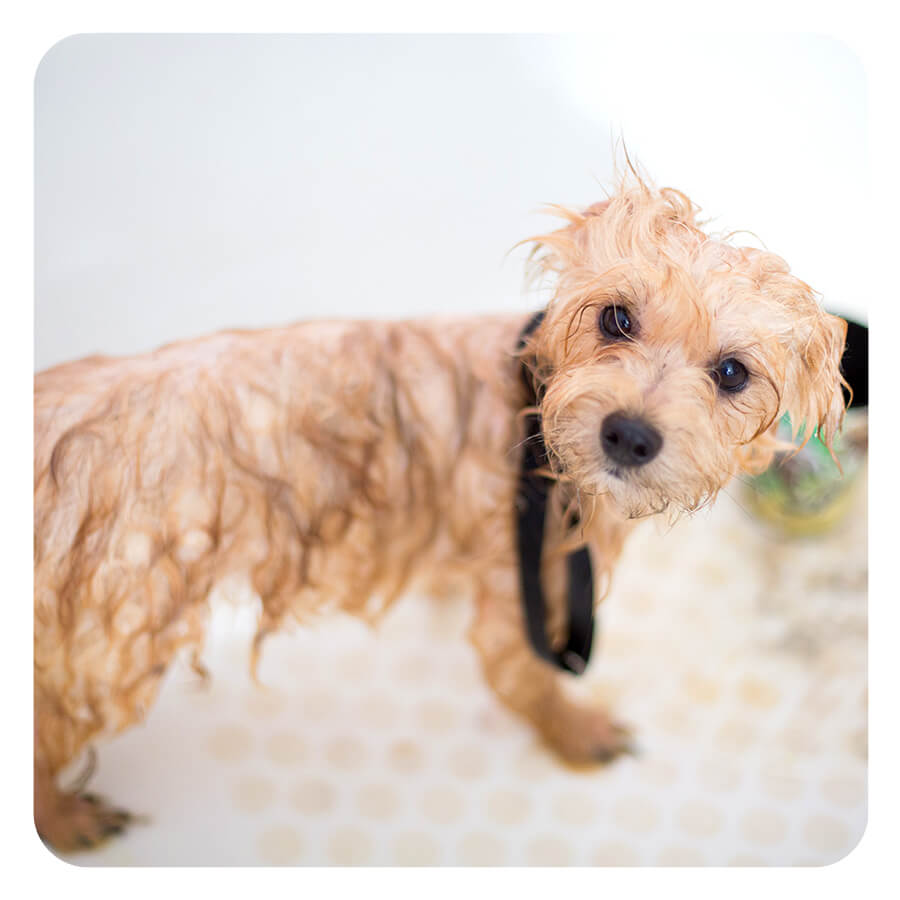
Wet the coat thoroughly with lukewarm water, avoiding a direct strong stream into the face; apply shampoo starting at the neck and working back to the tail, then down each leg with gentle massaging motions for at least 2 minutes to lift dirt and distribute product[2].
Protect eyes and ears by avoiding direct shampoo application to the face; use a damp washcloth to clean the muzzle and around the eyes, and carefully rinse the head area last to minimize soap entering sensitive structures[5].
Rinse thoroughly until runoff is clear; residual shampoo can contribute to irritation and flaking, so allow extra rinse cycles for dense or long coats and gentle parting of hair to ensure water reaches the skin[3].
Drying, Post-bath Care and Immediate Grooming
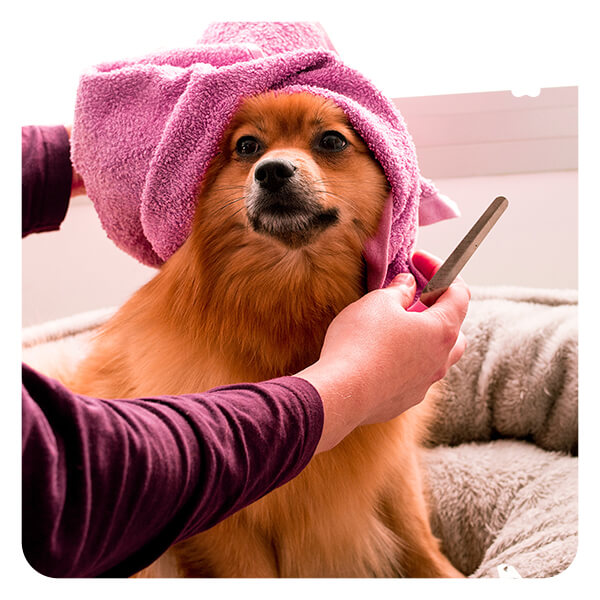
Begin drying with absorbent towels, blotting and pressing to remove surface water; for heavy coats, use multiple towels and follow with a dryer on low heat if the dog tolerates it and the device is designed for pet grooming[5].
When using a dryer, maintain an airflow temperature that feels warm but not hot to the inside of your wrist—many groomers recommend staying under 140°F (60°C) at the nozzle, using lower settings for small or thin-skinned dogs[5].
After the coat is mostly dry, brush again to remove any remaining loose hair and to reset the coat lay; inspect the skin for any lingering redness, rashes, or lesions that may need veterinary follow-up[3].
Finish with ear checks—ensure canals are dry and do not use cotton swabs deep in the ear canal—and offer a calm reward to reinforce a low-stress experience[4].
Maintaining Cleanliness Between Baths
Spot cleaning with damp cloths, waterless foam shampoos designed for dogs, or paw wipes can keep animals fresh between full baths and reduce the need for frequent immersions[1].
A regular brushing schedule—daily for long or curly coats, at least twice weekly for many medium coats, and weekly for many short coats—removes loose hair, distributes oils, and reduces odor buildup without water[2].
Maintain preventive measures such as appropriate flea and tick control per your veterinarian’s recommended schedule to reduce parasite-related bathing needs and skin complications[6].
Sources
- aaha.org — American Animal Hospital Association.
- wsava.org — World Small Animal Veterinary Association.
- merckvetmanual.com — Merck Veterinary Manual.
- avma.org — American Veterinary Medical Association.
- vcahospitals.com — VCA Animal Hospitals.
- cdc.gov — Centers for Disease Control and Prevention.