
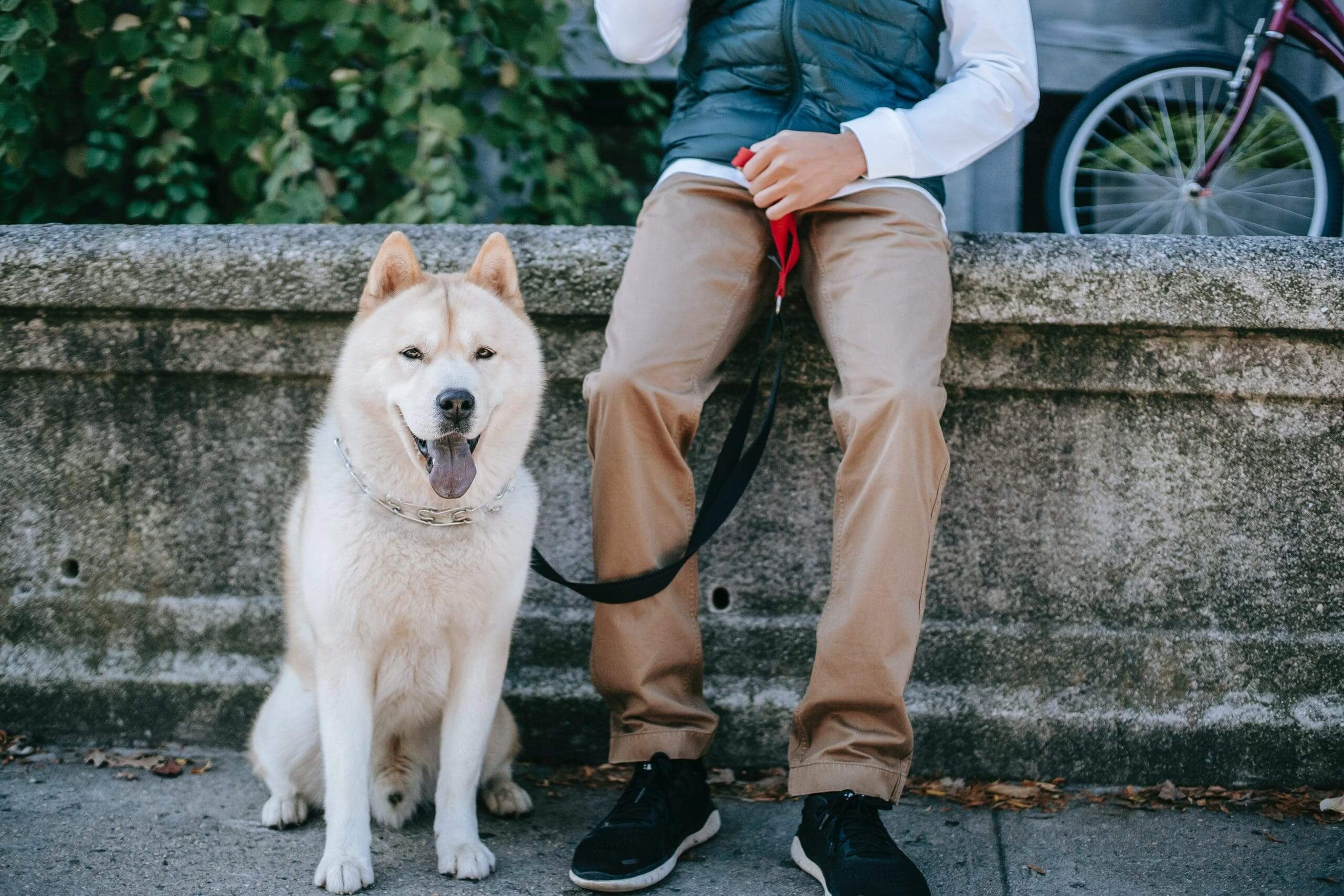
How to train a dog not to jump on people?
Post Date:
December 29, 2025
(Date Last Modified: February 5, 2026)
Stopping a dog from jumping on people matters because it changes everyday safety, household harmony, and the way others experience your dog. For many dog lovers the problem is more than an annoying habit: a large, excited jump can knock over a child or an elderly visitor, leave a guest scratched, or make public outings stressful. It also affects how others judge a dog owner’s competence in social settings and at the dog park. Training to reduce jumping is part of responsible ownership and deepens the bond between dog and person when done with clear timing and consistent reinforcement.
Why stopping your dog from jumping improves safety, manners, and your social life
In homes with small children or older adults, a dog that jumps creates a real safety hazard. Even a friendly Labrador can accidentally push a toddler or scrape fragile skin. I typically see owners prioritize stopping jumps for this reason first. For people who entertain often, a dog that greets every guest with all four paws in the air makes social visits awkward and can limit who comes over. Outside the home, a dog that jumps on strangers may be perceived as badly behaved or risky, which affects the owner’s ability to take the dog to cafes, stores that allow dogs, or community events.
Beyond safety and reputation, training greetings teaches impulse control, which generalizes to walks, mealtimes, and waiting at doors. Working through jumping with clear, reward-based methods also provides interaction that strengthens the human–dog relationship: dogs learn predictability from consistent rules, and owners gain confidence in handling the dog in varied situations.
Try this quick, do-it-now action plan
If you want immediate, practical steps to reduce jumping, focus on three actions: first, teach and make “sit” the default greeting; second, consistently withdraw attention whenever the dog jumps and only reward four-paws-on-the-floor calm; third, manage the situation until the dog’s behavior is reliable. In practice that means ignoring the dog (turning away, crossing arms, no eye contact or verbal scolding) when it jumps, rewarding quietly the moment all four paws are down, and using a leash or barrier at thresholds so guests aren’t immediate targets until the dog has learned the rule.
What jumping tells us: canine communication, motivation, and instinct
Jumping is usually a greeting behavior—dogs often stand up to bring their face nearer to a person’s face, to solicit attention, or to reach something interesting. The action is reinforced when it achieves a goal: if people push the dog away, shout, or laugh, those responses can still be rewarding because they provide attention. Attention, even negative attention, is often an effective reinforcer for dogs who are seeking social contact.
Physiologically, jumping is linked to arousal and excitement. When adrenaline and dopamine are high, motor impulses are stronger and inhibiting a jump requires deliberate training and repeated practice of an incompatible behavior. Learning mechanisms are central: behaviors that are rewarded quickly and reliably are likely to be repeated. That is why a single pat, a reach to the chest, or greeting with play can inadvertently maintain jumping.
It is also important to set aside dominance explanations. The idea that a dog jumps because it “thinks it’s dominant” is likely misleading and can lead owners to use aversive responses that make the problem worse. In most cases jumping reflects social motivation and reinforcement history rather than a desire to “control” people.
Where and when dogs most often jump — and why
Jumping tends to occur reliably in certain contexts. Doorways and arrivals are classic triggers: the excitement of a person coming in produces a burst of energy and immediate social opportunity. High-energy play sessions with family members may spill into greeting jumps as dogs stay amped up. Some dogs also jump in response to stress or fear, appearing to lunge toward a person when uncomfortable; these instances can be reactive and require a slower, more cautious approach.
Predictors for episodes include the dog’s exercise level, recent feeding, and time of day—an under-exercised dog in the evening may greet more energetically, and a dog with pent-up arousal after a day alone may greet guests noisily. I typically advise owners to observe patterns for a week: note times and situations when jumping increases, then plan interventions around those moments.
Safety risks and medical red flags to watch for
Jumping is not only a nuisance—it can cause real harm. Children and elderly people are at higher risk for falls and facial or chest injuries from an enthusiastic dog. Repeated jumping can escalate into mouthing or scratching, especially if visitors try to push the dog away forcefully. If a dog’s jumping is accompanied by growling, snapping, or stiff body posture, that signals escalation toward aggression and should be treated as a serious safety concern.
A sudden change in jumping behavior can also suggest medical problems. If a previously calm dog begins jumping obsessively or shows new impulsivity, consider pain, an undiagnosed neurological condition, or a reaction to medications. Likewise, if an owner can’t teach a dog to stop jumping despite consistent, reward-based efforts over several weeks, referral to a certified behaviorist or veterinary behaviorist is sensible.
How to train: a progressive owner-focused routine
-
Teach “sit” and “stay” as the default greeting. Start with short sessions: present a treat at nose level, lure the dog into a sit, mark and reward. Practice in low-distraction settings until the dog offers sit reliably on cue. Then add “stay” for a few seconds, increasing duration gradually. Timing is critical: reward the instant the dog’s rear hits the ground and again for remaining calm when people approach.
-
Practice ignoring jumping. When the dog jumps, turn your body away, cross your arms, and avoid eye contact and verbal scolding. Do not push the dog down—this can be interpreted as attention or escalate arousal. Wait until the dog’s paws are on the floor for one to two seconds, then reward. Consistency from all family members is essential; mixed responses will slow learning.
-
Use controlled greetings with a helper. Have a friend approach on a leash at a predictable pace while you cue the dog to sit. If the dog remains seated, reward the dog before the friend reaches in or touches. Gradually increase the proximity and unpredictability of the approach, always reinforcing the sit and calm before interaction.
-
Phase out continuous treats. Once the dog reliably offers four-paws-down greetings, switch to a variable schedule of reinforcement: reward every other time, then randomize more, and substitute social rewards (a brief pat, calm praise) later. Keep high-value treats available for harder contexts (crowds, excited guests) to maintain success during training transitions.
-
Generalize across people and environments by practicing with family, different guests, and in public. Dogs learn context-bound behaviors; a dog that sits for one person may jump for another if reinforcement histories differ. Run short, frequent drills rather than long sessions—ten minutes twice daily is more productive than one long, inconsistent effort.
Control the environment and reinforce calm behavior
Training will be far faster if the environment is set up to prevent accidental reinforcement. Use baby gates or keep the dog on a leash when guests arrive so you can control proximity. Limit unsupervised access to visitors until the dog has practiced calm greetings repeatedly. Pre-emptive exercise and mental stimulation before predictable triggers—such as a walk or 15 minutes of puzzle feeding before guests come—reduces impulse-driven jumping.
Clear rules from everyone in the household are crucial. If children are present, teach them to remain still and ignore the dog or to sit down to greet at the dog’s level so the dog can be petted without jumping. Ask guests to follow your protocol: no stroking while the dog is jumping, no loud reprimands that can still act as attention, and reward calm behavior instead.
Helpful equipment: collars, leashes, gates and other safety aids
Some equipment makes training and prevention easier without being punitive. A front-clip no-pull harness or a short lead gives you immediate control during greetings and allows gentle redirection. A long line (10–15 feet) can be used for distance practice in a yard so the dog experiences progressively closer approaches without full access. Baby gates or a leash attached to a secure anchor at the door prevent an immediate rush to a guest.
For timing, a clicker and a small treat pouch improve precision: click the exact instant four paws are down, then reward. High-value treats—small, soft pieces of chicken, cheese, or commercial training chews—help when the dog is highly aroused. Avoid choke or prong tools for this problem; they are unnecessary and can increase fear or escalate undesirable responses.
If it doesn’t improve: troubleshooting and next steps
If, after weeks of consistent, reward-based training and environmental management, the dog still jumps frequently or shows signs of stress or aggression, seek professional help. A certified professional dog trainer with force-free methods or a veterinary behaviorist can assess reinforcement history, rule out medical causes, and design a personalized plan. In some cases, situational management—such as always using a toddler gate when guests arrive—remains part of a long-term strategy.
Finally, expect setbacks. Dogs revert under high arousal or after long absences; refreshers and periodic practice are normal. The goal is reliable behavior in ordinary life, not perfection in every novel situation. Practical consistency from every person the dog interacts with is the most powerful tool to make calm greetings the rule.
Research sources and further reading
- American Veterinary Society of Animal Behavior (AVSAB). “AVSAB Position Statement: Dominance Theory” (position statements collection), 2015.
- Association of Professional Dog Trainers (APDT). “Reward-Based Training Guidelines” and trainer resources, APDT.org.
- American Kennel Club. “How to Stop Your Dog From Jumping Up” (AKC training article), AKC.org.
- Merck Veterinary Manual. “Canine Behavior Problems” (section on greeting and attention-seeking behaviors), MerckVetManual.com.
- Hiby, E.F., Rooney, N.J., & Bradshaw, J.W.S. (2004). “Dog training methods: their use, effectiveness and interaction with behavior and welfare.” Animal Welfare, 13, pages on training methods and outcomes.
- Overall, K.L. (2013). Manual of Clinical Behavioral Medicine for Dogs and Cats. Elsevier — clinical approaches to problem behaviors and when to refer.
