
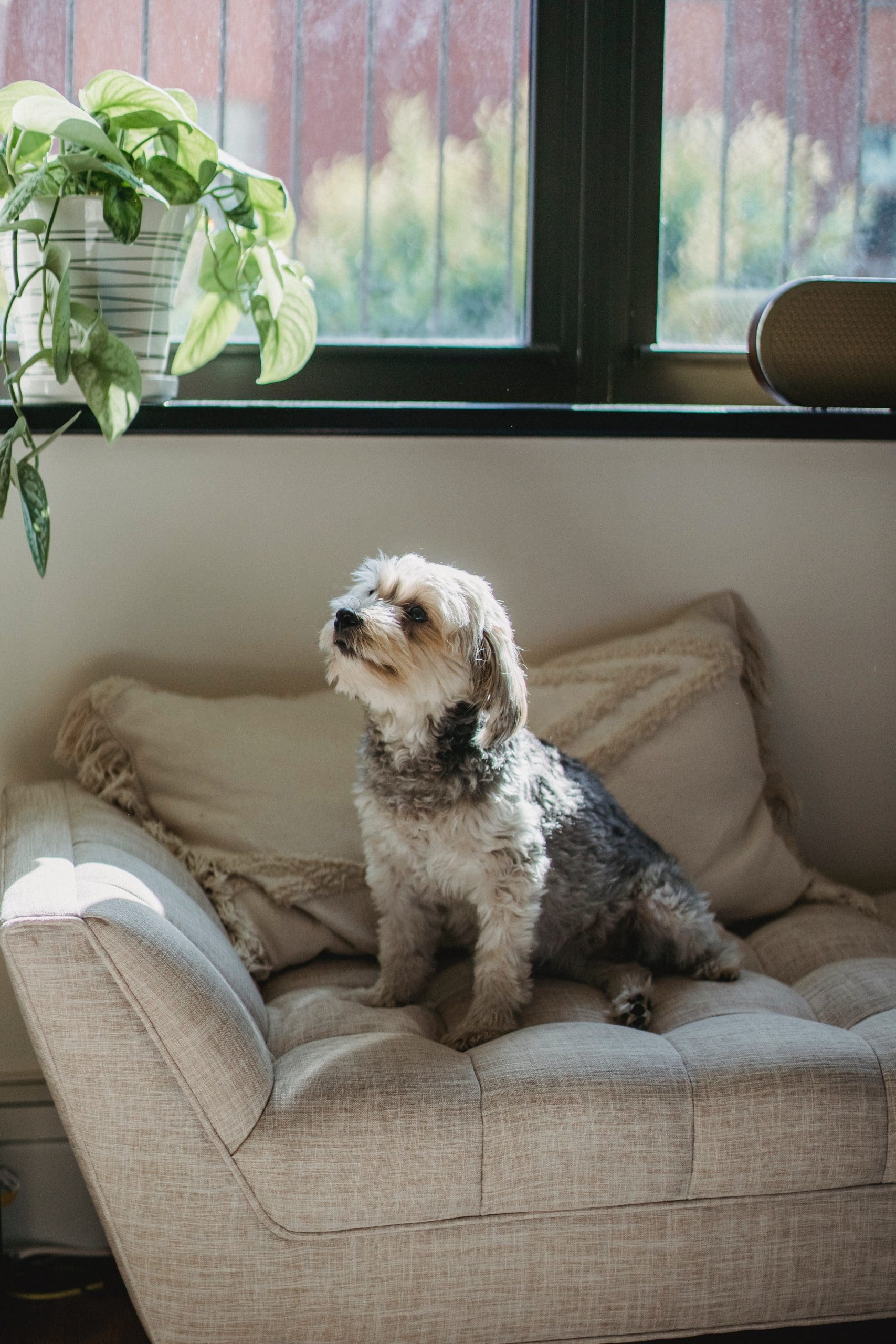
What does it mean when a dog paws at you?
Post Date:
January 30, 2026
(Date Last Modified: February 5, 2026)
Dogs use their bodies to talk; a paw on your leg can be as meaningful as a look or a whine. If you love dogs, knowing what pawing usually means helps you respond in a way that strengthens your relationship and prevents small habits from becoming ongoing problems. Below I explain the most likely reasons a dog will paw, how to tell the difference between a friendly nudge and a sign of trouble, what to do in the moment, and how to change the behavior when it’s unwanted.
Why your dog’s pawing matters for the bond — and for their health
When a dog paws at you, it’s rarely random. I typically see pawing show up in two ways: as an invitation—to play, to be petted, or to get something the dog wants—or as a signal of discomfort or stress. Understanding those differences helps owners meet a dog’s needs sooner, which builds trust and reduces frustration on both sides.
Consider common owner scenarios: the early-morning paw to wake you for breakfast, the nervous paw at the front door when guests arrive, or the persistent pawing after a fall. Some pawing is welcome—an affectionate nudge during cuddle time or a polite reminder that dinner is late. Other pawing becomes problematic when it’s insistent, happens at inappropriate times (like during greetings that invite jumping), or is accompanied by other concerning signs like growling, trembling, or limping.
Your goal as a curious or concerned dog lover should be twofold: first, to reliably tell the difference between social requests and medical or emotional signals; and second, to have clear, consistent responses that protect the bond and prevent reinforcement of unwanted pawing. That makes everyday life calmer and can prevent small signals from escalating into stress or injury.
In brief: what pawing usually means
Most commonly, a dog paws at you to get your attention or to request something. Less commonly, pawing is communication related to discomfort, anxiety, or a medical issue. In short: attention, request, communication, or discomfort are the primary meanings you’ll encounter.
- Attention: The dog wants you to look, pet, or engage immediately.
- Request: The paw may mean “open the door,” “feed me,” or “play now.”
- Communication: Dogs sometimes use pawing to initiate interaction or redirect you toward something they want you to notice.
- Discomfort: Repeated or focused pawing at a part of the body can suggest soreness, itch, or neurological changes.
Typical quick fixes are simple: if the pawing is a polite request for attention, briefly acknowledge the dog, then reward a calm alternative such as sit or settle. If the pawing appears painful or overly persistent, check the paw and limb for injury and consult a veterinarian. Investigate further when the pawing escalates, is accompanied by other changes in appetite or mobility, or when pawing becomes the dog’s primary way to get needs met.
What pawing communicates — the biology and body language behind it
Pawing has both social and biological roots. Socially, it’s a direct physical signal: dogs have learned that a touch to a person often produces quick responses. Over time, simple reinforcement—attention after a paw—teaches the dog that pawing works. I often see dogs that were rewarded for pawing as puppies continue the behavior because it reliably achieves the desired result.
From a biological standpoint, certain neurochemical systems likely support attention-seeking behaviors. The act of receiving petting or play releases peptides and neurotransmitters that reinforce bonding. Conversely, stress or pain may change how a dog uses body language: a dog in discomfort may become more insistent or may paw at the exact location that hurts. That focused pawing can be a practical attempt to communicate localized trouble.
Breed and age play a role. Terriers and some toy breeds often use their paws more frequently as an attention-getting strategy, while older dogs may paw more because of cognitive changes, arthritis, or sensory loss. Puppies use pawing as an exploratory and social behavior that is shaped by early experiences; if you accidentally reward a puppy for pawing at the table, that behavior can become routine by adulthood.
When and why dogs paw: common triggers and everyday contexts
Pawing rarely occurs in a vacuum. Routine triggers are common: hunger and feeding times, the cue to go outside, or a desire to resume play. Pay attention to timing—if pawing spikes around mealtime or right before your usual walk, the dog is most likely signaling a predictable request.
Environmental changes can also provoke pawing. New people, guests, unfamiliar noises, or travel can increase a dog’s uncertainty and lead to pawing as a reassurance-seeking behavior. I often see increased pawing during thunderstorms, fireworks, or when the household routine is disrupted.
Boredom and understimulation are frequent culprits. A dog that lacks physical exercise or mental challenge may use pawing to solicit interaction. Owner response patterns are part of the story too: if you consistently react—by picking up, feeding, or playing—pawing is reinforced and becomes more frequent. Conversely, inconsistent responses (sometimes ignored, sometimes rewarded) can make pawing more intense as the dog escalates to get a reliable outcome.
Red flags to watch for: medical issues and stress-related signs
Not all pawing is benign. Certain signs suggest a medical or safety-critical problem and warrant prompt attention. Persistent or escalating pawing that is paired with aggression, frantic behavior, or visible distress is a red flag. The dog may be trying to communicate severe pain or fear.
Focused pawing at a limb, a paw, or a specific body area may indicate injury, bite, foreign object, cut, swelling, or infection. Look for limping, reluctance to bear weight, heat, or bleeding. Even subtle changes—reluctance to jump, changes in grooming, or reduced activity—may be linked to pain and are worth checking.
Watch for neurological signs: stumbling, collapse, head tilting, one-sided weakness, or altered consciousness. These signs, when combined with unusual pawing, suggest a medical emergency. Changes in appetite, sleep, or elimination habits that accompany new pawing behavior also suggest it’s time to consult a veterinarian rather than assuming it’s purely behavioral.
Immediate steps owners can take to assess and respond
- Assess the scene. Note the dog’s body language (relaxed vs. tense), the recent context (was something dropped, did someone arrive?), and whether the pawing is focused on you or a body part.
- Choose a calm response. If the dog is requesting attention for normal reasons, reward a polite alternative—ask for a sit, then offer brief petting. If you want the behavior to stop, ignore the pawing calmly until the dog offers a different, rewarding behavior.
- Examine gently. If the pawing seems focused, safely check the paw and leg for cuts, swelling, heat, or foreign material. Lift each paw slowly and look between the toes. If the dog resists or shows pain, stop and contact your veterinarian.
- Record what you observe. Note the frequency, timing, and any associated events. This information is valuable if you end up consulting a behaviorist or veterinarian.
- Act on red flags. If you detect lameness, bleeding, neurological signs, or sudden severe behavior change, seek veterinary care promptly.
Long-term fixes: training strategies and home adjustments to curb pawing
Over the longer term, the most reliable solution is predictable structure and clear alternatives. Teach and reinforce a replacement behavior—sit, go to a mat, or target a specific object—so the dog learns how to ask politely. Start by rewarding small approximations and gradually require a longer hold before offering attention. Consistency is the key: everyone in the household should respond to pawing the same way.
Increase enrichment to reduce attention-seeking. Add daily walks that fit the dog’s energy level, structured play sessions, and mentally engaging tasks like puzzle feeders or scent work. I often recommend short nose-work games inside the house for dogs that paw out of boredom; these can be particularly effective because they tap into natural foraging behaviors.
Create scheduled attention windows. If the dog learns that you respond at set times—walks at 7 a.m., play at 5 p.m., grooming on certain days—there is less need for interruptive pawing. For anxiety-based pawing, desensitization and counter-conditioning can work: pair the triggering event with low-level positive experiences and gradually increase exposure while keeping the dog below the threshold of distress.
Helpful gear and tools — toys, calming aids, and equipment that work
Certain tools can support training and welfare when used humanely. Interactive feeders and nose-work mats slow feeding and provide mental stimulation, which often reduces attention-seeking pawing. Long-lasting safe chews and food-dispensing toys keep dogs occupied during predictable downtime.
Properly fitted harnesses or head collars can give you better control during training sessions or when exiting/entering doors, but they should be used as temporary management while teaching alternatives—not as a substitute for training. For dogs with anxiety, vet-approved calming measures such as a Thundershirt, dog-appeasing pheromone diffusers, or evidence-based supplements may help; discuss options with your veterinarian first.
Sources, studies, and expert references
- Merck Veterinary Manual: Lameness in Dogs and Common Causes of Forelimb Lameness
- American Veterinary Medical Association (AVMA): Understanding Canine Behavior and Body Language
- American College of Veterinary Behaviorists (ACVB): Position Statements and Clinical Guidance on Canine Behavior
- American Animal Hospital Association (AAHA): Canine Lifestyles & Problem Behavior Guidelines
- Overall, K. L., Manual of Clinical Behavioral Medicine for Dogs and Cats, 2nd Edition (clinical approaches to behavior problems)
