
What kind of dog is marmaduke?
Post Date:
January 16, 2026
(Date Last Modified: February 5, 2026)
When someone asks “What kind of dog is Marmaduke?” they are often asking more than a trivia question. The cartoon’s oversized, affable protagonist has shaped how many people picture and interact with very large dogs, and those impressions influence real choices about space, exercise, and safety. For anyone who loves dogs or is considering sharing their life with a giant breed, clarifying Marmaduke’s breed helps translate comic-strip behavior into practical care decisions.
What Marmaduke Reveals About Great Danes and Pop Culture
Marmaduke has been a long-running comic-strip character and a shorthand image of the “gentle giant.” Because the strip exaggerates size and antics for humor, many readers overestimate the power and misinterpret the needs of similarly large breeds. That matters because owning a very large dog raises distinct questions about housing, training, and medical risk—questions a casual glance at a cartoon won’t answer. I typically see people assume big dogs need little training or that their size alone makes them reliable guardians; in practice, the opposite is often true.
Short answer — Marmaduke is a Great Dane
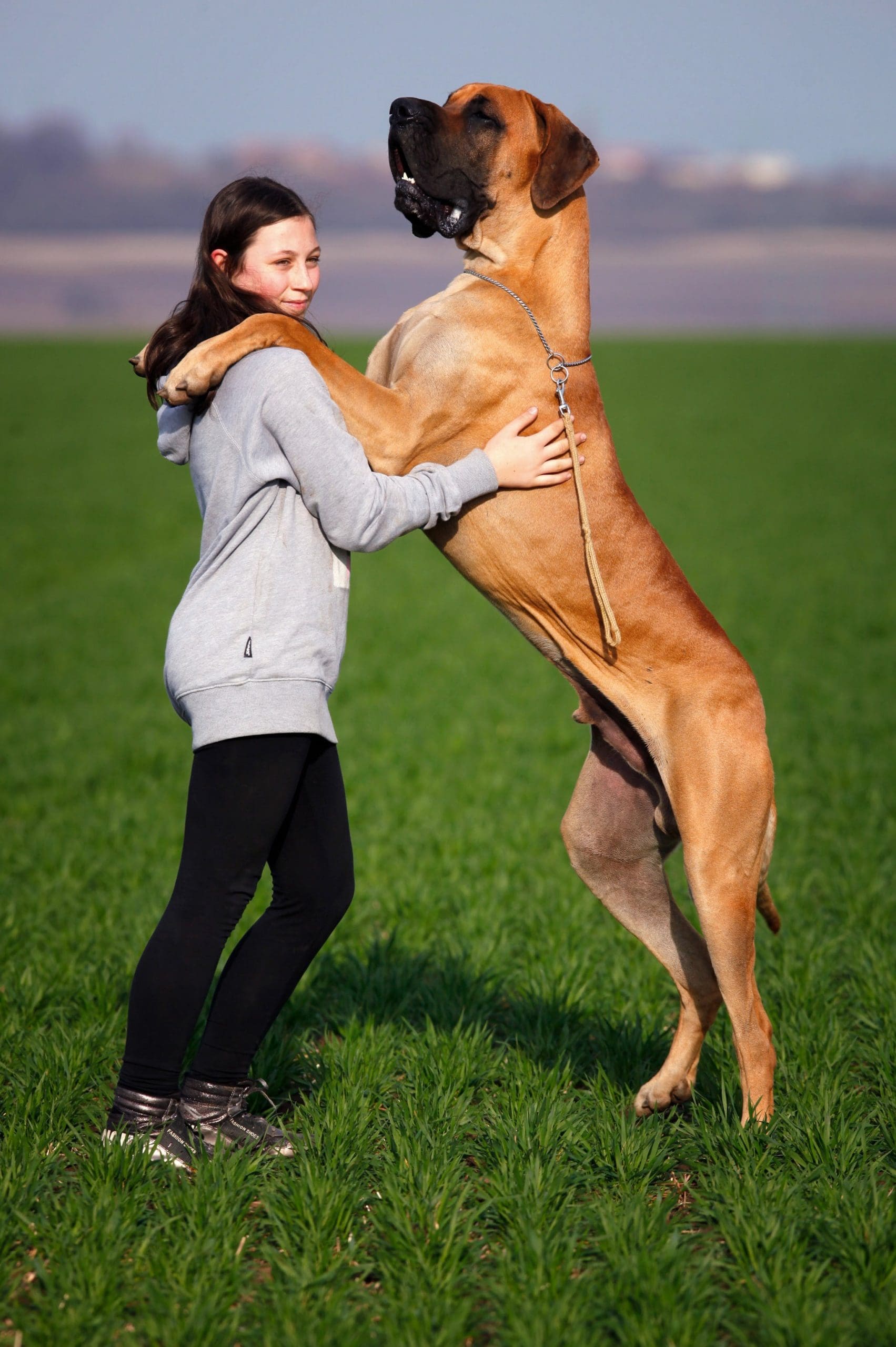
Marmaduke is portrayed as a Great Dane. In real dogs, Great Danes are a true giant breed: adults commonly stand in the high 20s to mid-30s inches at the shoulder and often weigh in the low hundreds of pounds. Their coat is short and smooth and occurs in several standard patterns—fawn, brindle, blue, black, harlequin, and mantle—though the comic simplifies and exaggerates the look and proportions for visual impact. That cartoon stylization can make them seem clumsier or more comic than most Great Danes actually are.
Inside the Great Dane: anatomy, temperament, and canine communication
Great Danes grow quickly. They may reach much of their adult height by about 8–12 months but often continue filling out and maturing in muscle and joint stability until around two years of age. Lifespan is shorter than for many smaller breeds and is often around 6–10 years; this is a function of rapid growth and the stresses of large body mass on organ systems.
The breed temperament is commonly described as social, people-oriented, and calm—hence the “gentle giant” label—but they are not uniformly passive. Great Danes can be protective of home and family and are likely to alert to strangers. Their social behavior is shaped by genetics and early experience: dogs bred and raised for companionship tend to show more tolerance and lower guarding intensity than dogs whose early socialization was limited.
Body language in large breeds needs close attention because subtle signals can be missed at eye level. A Great Dane leaning their weight into you may be seeking proximity rather than being dominant; a freeze-and-stare could be an early sign of concern. Common calming signals—yawning, lip-licking, turning the head—are used by Danes as by other breeds, but because of their size, these cues may be overshadowed by the physical presence, so it’s useful to watch small facial and ear movements rather than relying on raw posture alone.
When Marmaduke Acts Up: decoding common behaviors and what they mean
Many of Marmaduke’s most recognizable behaviors—bounding at the door when visitors arrive, knocking over small items, or getting into mischief—are typical triggers for large, social dogs. Excitement around visitors or other animals is common: a Great Dane’s size amplifies the consequences of a normal greeting. Without early training to sit or settle at the door, that same happy greeting can become dangerous in a crowded space.
Boredom and insufficient exercise often produce the mischief people associate with Marmaduke. Mental enrichment and structured activity are as important as physical walks; a bored Dane may chew furniture or find ways to get outside. Age also shifts behavior predictably: puppies are high-energy and curious; adults often settle into a calmer routine by 2–4 years; seniors slow down and may need more supportive bedding and gentler exercise. The amount of indoor space and a consistent routine strongly influence how those stages look in day-to-day life.
Health warnings every Great Dane owner should know
Large-breed dogs carry a set of medical risks you should watch for. Gastric dilatation-volvulus (GDV), commonly called bloat, is a life-threatening emergency. Signs that may suggest GDV include a sudden, distended belly, repeated unproductive retching, restlessness, pale gums, rapid breathing, and collapse. If GDV is suspected, rapid veterinary attention is essential.
Orthopedic problems are also a significant concern. Hip and elbow dysplasia, as well as early-onset osteoarthritis and other joint stresses, may produce limping, reluctance to jump or climb stairs, stiffness after rest, or the “bunny hop” gait. Early recognition and weight management can reduce long-term damage. Cardiac conditions—especially dilated cardiomyopathy—may lead to exercise intolerance, coughing, fainting, or fluid accumulation in the chest. Respiratory sensitivity and heat intolerance are common; excessive panting, drooling, rapid breathing in warm weather, or sudden collapse in the heat are red flags that require immediate evaluation.
Owner checklist: immediate steps and long-term care
-
Start with honest space and lifestyle assessment: consider how much room you have for a large dog to move and lie down comfortably, and whether your routine allows time for daily walks plus supervised play and enrichment.
-
Develop an age-appropriate exercise and enrichment plan. For puppies, use short, controlled play sessions to avoid overloading growing joints; for adults, aim for consistent daily activity with variety—walks, scent work, and puzzle feeders—to meet both physical and mental needs.
-
Implement feeding routines to reduce bloat risk. Feed multiple smaller meals a day rather than one large meal, avoid vigorous exercise for at least an hour before and after eating, and use slow-feeding bowls. Be cautious about elevated feeders: their benefit is debated and may be breed-specific, so discuss options with your veterinarian.
-
Schedule baseline veterinary checks and breed-specific screenings. These commonly include orthopedic evaluation and radiographs when indicated, cardiac auscultation and possibly echocardiography if murmurs or symptoms appear, and routine bloodwork to monitor organ function and growth.
-
Track growth, body condition, and mobility milestones. Keep a simple record of weight, resting respiratory rate, and any lameness episodes. Small, consistent changes in activity or appetite often precede more serious problems and may prompt earlier intervention.
Designing a Great Dane–friendly home and effective training strategies
Arrange your home to support a very large dog: clear wide pathways, use non-slip rugs or flooring where the dog walks frequently, and create a permanent resting area where the dog can lie fully stretched without blocking entrances. I usually recommend an elevated, sturdy bed away from direct sunlight and drafts to protect joints and allow comfortable rest.
Leash, door, and guest-entry training are essential because size multiplies impact. Teach a reliable “wait” or “sit” at doorways and a calm greeting routine for visitors—reward the dog for staying on a mat or in a designated spot until released. For leash manners, start with short, consistent sessions using positive reinforcement; because a Dane can overpower a person, consider enrolling in a class with an instructor experienced with large breeds.
Crate and bed training provide a safe refuge and help with house rules, but crates must be sized to allow standing and turning. Use crate time for short, positive periods initially, never as punishment. For impulse control, practice exercises like “place” (go to mat and settle), “leave it,” and calm-reward sequences; these build the dog’s ability to regulate excitement in real scenarios such as the doorbell ringing or another dog passing by.
Gear for a gentle giant: collars, beds, and essentials sized for Marmaduke
- Heavy-duty, properly sized harness and wide collar or martingale-style option to distribute pressure without choking; durable leash with strong hardware.
- Oversized crate or den space that allows full standing and turning; elevated or orthopedic bed with joint-supporting foam to reduce pressure on hips and elbows.
- Slow-feed bowls or puzzle feeders and measured feeders for portion control; ramps or low-profile steps to reduce jumping stress on joints.
- Sturdy grooming tools appropriate for a short coat, non-slip mats for bathing and walking areas, and a life jacket for water outings if you boat or swim with your dog.
References and further reading
- American Kennel Club: “Great Dane” breed profile and standard — American Kennel Club (AKC)
- Great Dane Club of America: Breed Standard, Health Resources, and Owner Guidelines — Great Dane Club of America
- Merck Veterinary Manual: “Gastric Dilatation–Volvulus (GDV) in Dogs” — Merck Veterinary Manual
- Merck Veterinary Manual: “Canine Dilated Cardiomyopathy” — Merck Veterinary Manual
- Orthopedic Foundation for Animals (OFA): Hip and Elbow Dysplasia Testing and Statistics for Large Breeds — OFA
