
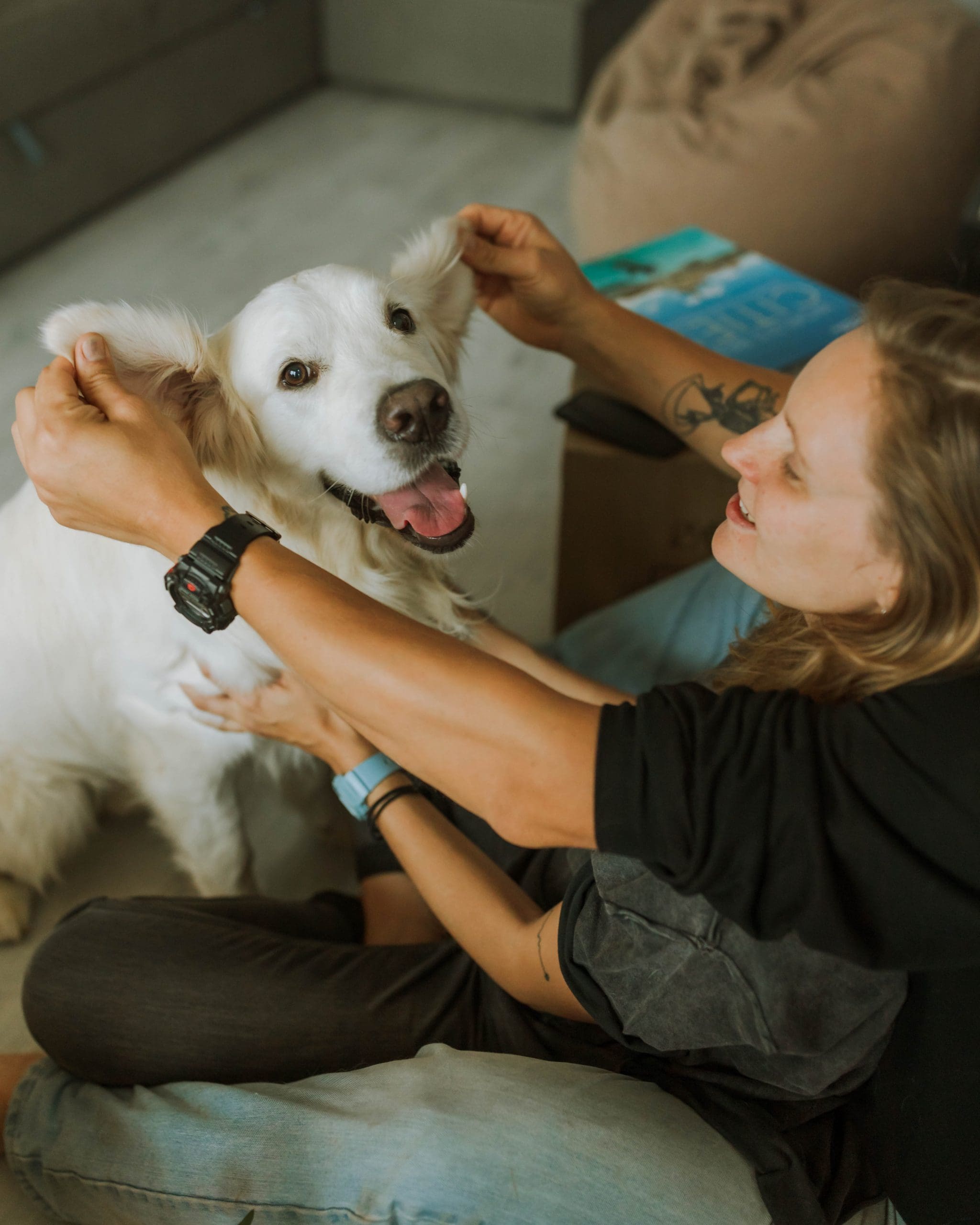
How to discipline a dog?
Post Date:
December 23, 2025
(Date Last Modified: February 5, 2026)
Disciplining a dog is not about punishment; it’s about creating predictable boundaries that keep the animal safe, reduce stress, and let you and your dog live together with fewer conflicts. The guidance below explains why discipline matters, how dogs learn, what to watch for, and a practical sequence you can follow to change behavior humanely and effectively.
Clear boundaries for happier dogs: safety, predictability and a stronger bond
Clear discipline gives dogs information. When rules are consistent and predictable, dogs can anticipate what is expected of them and make choices that keep them and their people safe. Common owner goals include reducing jumping on guests, stopping door-dash behavior, making walks safe, preventing resource guarding, and helping a dog tolerate veterinary handling. Each of those goals depends less on force and more on consistent responses that shape the dog’s experience.
Inconsistent discipline — for example, allowing a dog on the couch sometimes but not other times, or scolding in one room and ignoring in another — can lead to confusion, repeated testing, and attention-seeking escalation. I typically see dogs repeat the same unwanted behavior until the outcome becomes predictable for them; inconsistency is one of the fastest ways to maintain a problem behavior.
In homes with more than one person, consistent rules are especially important. Dogs are good at learning patterns across different people, but if each human applies different standards the dog is forced into constant re-evaluation and may respond by choosing whichever person offers the most immediate payoff (often attention or access to a resource). Clear, shared rules reduce tension among household members and support the dog’s welfare.
Finally, humane, consistent discipline tends to strengthen the relationship because it reduces fear and unpredictability. Dogs whose learning experiences are clear and fair are more likely to approach their owners confidently and to offer cooperative behavior. Discipline, when done correctly, is part of good care, not a substitute for it.
Core principles for safe, effective discipline
Here are the core principles to apply right away. These are practical rules you can start using today to keep discipline safe and effective.
- Be consistent and timely: respond to behavior immediately so the dog can link action and outcome. Delayed corrections rarely teach anything.
- Prefer reward-based reinforcement over physical punishment: reinforce behaviors you want with treats, praise, or play; avoid hitting, yelling, or methods that increase fear.
- Use clear cues and predictable rules: one cue per behavior and the same expectations from everyone in the household prevent confusion.
- Keep corrections humane and immediate if used: a brief, non-harmful interruption (a sound, a light leash tug, or removing attention) delivered within seconds is more effective than delayed reprimands.
- Seek professional help when needed: if aggression, severe anxiety, or sudden changes appear, contact a veterinarian or a certified behaviorist rather than trying intense methods on your own.
Reading your dog: body language, instincts and learning cues
Understanding why dogs do what they do helps shape how you discipline them. Dogs are social animals; many behaviors function to gain attention, secure resources, or reduce uncertainty. Attention-seeking actions such as pawing, barking, or nudging often get repeated because they reliably produce a response from people.
Learning in dogs is primarily governed by reinforcement. Behaviors followed by positive outcomes (food, play, attention) tend to increase; behaviors followed by unpleasant outcomes may decrease. This does not mean all “punishment” works well—the context, timing, and the dog’s emotional state strongly influence the result. I usually recommend strengthening desired alternatives with rewards rather than relying on aversive approaches that can have unintended effects.
Stress, fear, and pain change how a dog learns. A dog under chronic stress or in pain may be more reactive, less able to focus, and more likely to generalize fearful responses to new situations. Physiologically, stress responses may include increased heart rate and altered adrenal hormones, which can make a dog more likely to act impulsively. When behavior changes suddenly, a medical issue may be involved.
Dogs communicate through body language and vocalization. A stiff body, direct stare, raised hackles, and a fixed posture may suggest escalating arousal; a tucked tail, lip licking, or yawning in a tense context may suggest anxiety. Learning to read these signals helps you intervene before behavior escalates and choose the right training tactic.
When your dog misbehaves — common triggers and what they mean
Unwanted behaviors usually have triggers that are environmental or situational. The most common include boredom and insufficient exercise: a dog with too little physical and mental activity will often invent work for itself, which can look like destructive chewing, excessive vocalizing, or hyperactive greetings.
Anxiety, fear, or prior trauma is another frequent cause. Dogs with separation anxiety, noise phobia, or past abuse may show escape behaviors, destructive behavior, or aggression under stress. These behaviors are not “stubbornness”; they are coping strategies that need targeted intervention.
Lack of training or unclear expectations also produces problems. If a dog has never learned that calm behavior earns attention, it will keep repeating noisy or demanding behaviors until that lesson is clear. Routine changes, illness, or family stress can all change behavior quickly: a previously reliable dog might begin housesoiling or becoming clingy when a household routine shifts or if they are developing a medical problem.
Resource competition — around food, toys, or favored people — can lead to guarding behaviors that escalate if ignored. The context of the resource, who is allowed near it, and the dog’s prior learning about access determine how that behavior will look and how it should be managed.
Red flags and hidden health issues: when misbehavior signals danger
Certain signs suggest danger or an underlying medical issue and should prompt immediate attention. Sudden onset of aggression, especially if it escalates in intensity or direction (from lip-lift to bite attempts), may indicate pain, neurological disease, or severe fear; this should be evaluated by a veterinarian promptly.
Changes in appetite, mobility, or elimination habits may suggest an illness that is shaping behavior. Repetitive actions that look like compulsive behaviors — excessive licking, pacing, or staring — can be pain-related or neurologic and may need medical workup. Seizure-like activity or episodes of disorientation require urgent veterinary assessment.
If a dog shows bite attempts, strong resource guarding that threatens safety, or unpredictable aggression, contacting a veterinary behaviorist or certified behavior consultant is usually safer than attempting to “correct” the dog alone. I will often advise owners to seek a professional assessment before making major training changes when safety is a concern.
Practical owner actions you can start today
- Assess the situation and record incidents. Note when the behavior happens, what precedes it, and what follows it. Timing, location, and people involved are valuable clues.
- Set one consistent rule and communicate it. Choose a single, clear expectation (for example: “no jumping on people”) and ensure every household member applies the same response.
- Teach an incompatible alternative behavior. For jumping, teach “sit” as the alternative; for door-dashing, teach “wait” with the door closed. Train the alternative with positive reinforcement until it becomes reliable.
- Apply timely rewards and humane corrections. Reward correct alternatives immediately. If a correction is necessary, use an immediate, brief, non-harmful interruption (a firm “ah!” sound, brief leash interruption, or removing attention) that stops the behavior and allows you to cue the alternative behavior right away.
- Gradually increase difficulty and generalize. Once a behavior works at home, practice it in more distracting settings with controlled exposure, gradually raising the challenge while keeping success frequent.
Shaping behavior through training and a supportive environment
Prevention is often easier than correction. Management tools such as baby gates, crates used as safe dens, and timed confinement can prevent rehearsal of problem behaviors while you teach alternatives. I typically recommend crates only when the dog tolerates them calmly and they are introduced using reward-based steps.
Enrichment reduces many problem behaviors. Regular play, foraging toys that slow feeding, scent work, and short training sessions provide mental work that can reduce attention-seeking and destructiveness. A predictable daily schedule of exercise and social time helps reduce anxiety-driven behaviors.
Use shaping, cue fading, and graduated exposure when teaching new skills. Shaping reinforces small steps toward the goal; cue fading gradually removes prompts; and graduated exposure helps dogs learn tolerance to previously frightening stimuli without flooding them. These methods reduce the risk of setbacks that occur when owners push too fast.
Helpful gear and safety tools that actually make a difference
Certain equipment can support humane discipline when used correctly. A well-fitted harness or a head halter can give control on walks without causing pain; long lines allow recall practice while the dog still has room to move. Crates and baby gates help manage the environment and prevent rehearsal of problem behavior. Clickers and treat pouches make reinforcement convenient and timely, which is critical for learning. Muzzles can be a sensible safety tool for short-term management when an individual dog poses a risk, but they should be introduced slowly, used only under guidance, and not as a substitute for addressing underlying causes.
Further reading and source materials
- American Veterinary Society of Animal Behavior (AVSAB) Position Statement: The Use of Punishment for Behavior Modification of Animals (AVSAB, 2018).
- Merck Veterinary Manual: “Canine Behavior Problems” — clinical guidance on assessing behavioral and medical causes (Merck Veterinary Manual, sections on behavior).
- American Veterinary Medical Association (AVMA): “Dog Behavior and Training” resources, including guidance on positive reinforcement and canine welfare.
- Hiby, E.F., Rooney, N.J., & Bradshaw, J.W.S. (2004). Dog training methods: their use, effectiveness and interaction with behaviour and welfare. Animal Welfare, 13, 63–69.
- Certification Council for Professional Dog Trainers (CCPDT): Principles of Force-Free Training and certification resources for trainers and behavior consultants.
