
How to pick up a dog?
Post Date:
December 15, 2025
(Date Last Modified: February 5, 2026)
Picking up a dog is a common task for anyone who loves dogs, but it carries responsibility: the wrong lift can hurt the animal, frighten them, or provoke a defensive bite. The guidance below comes from years of clinical and behavior work with dogs of all sizes. Read the situations where lifting is appropriate, a quick safety summary you can use immediately, the body language and biology that explain reactions, when to delay or avoid lifting, and practical step-by-step instructions plus training and equipment that reduce risk over time.
When lifting a dog is necessary — common scenarios and practical examples
Moving an injured or ill dog often forces a rescue-style lift. When a dog has been hit by a car, fallen from height, or is suddenly unable to stand, a careful, immobilizing lift — ideally with a flat board or blanket — may be required to avoid worsening a spinal or limb injury. In those cases I work to keep the head and neck aligned, and I prefer a rigid support rather than cradling until a vet evaluates the animal.
Assisting elderly or mobility-impaired dogs is a frequent, low-risk reason to lift a dog. Dogs with arthritis, hip dysplasia, or neuromuscular weakness may need help getting into cars, onto beds, or up stairs. Short carries or a supportive sling can allow the dog to move without forcing painful joints into awkward positions. I typically advocate alternating support around the chest and hind end so one area doesn’t bear all the weight.
During grooming, bathing, or nail trimming you may need to lift a dog onto a table or into a tub. In these controlled situations the environment should be prepared first: non-slip surface, someone on hand to steady the dog, and minimal sudden noises or splashes. Lifting should be calm and deliberate so the dog doesn’t brace or twist midair.
Introducing dogs to children or new handlers sometimes means holding or steadying the dog while the child follows a safety script. This is only appropriate when the dog is relaxed and the adult has permission to handle the dog. In those moments it’s safer to have the dog step onto an adult’s lap or a low bench than to be lifted and restrained in an unfamiliar posture.
At-a-glance essentials for safely picking up a dog
- Assess size, temperament, and get permission from the owner if it’s not your dog.
- Place one hand under the chest (behind the front legs) and the other under the hindquarters.
- Keep the dog’s spine neutral and the dog close to your body; lift smoothly.
- Lower gently to the new surface and watch for signs of pain or stress.
If you’re in doubt, wait and prepare the environment (clear a pathway, call for help, or use a ramp). These four points are a practical checklist for most routine lifts; they are not a substitute for professional help when medical issues are present.
Reading your dog: body language, anatomy and physical limits
A dog’s reaction to being picked up comes from anatomy as much as temperament. The spine, hips, and stifles are areas that are likely linked to pain when twisted or unsupported, so a dog with back or hip problems may tense or cry when lifted. Puppies are typically more flexible and tolerant of being handled, whereas older dogs often have decreased muscle mass and stiff joints that make certain positions uncomfortable.
When a dog stiffens its body, freezes, pulls its tail down, or shows the whites of its eyes, these are stress or fear signals that may suggest discomfort with the lift. Growling, snapping, or repeated attempts to bite are clearer signs the dog is telling you “stop” and need a different approach. I commonly see a dog tighten their limbs or press into the ground when anticipating being picked up, which often indicates pain or fear rather than stubbornness.
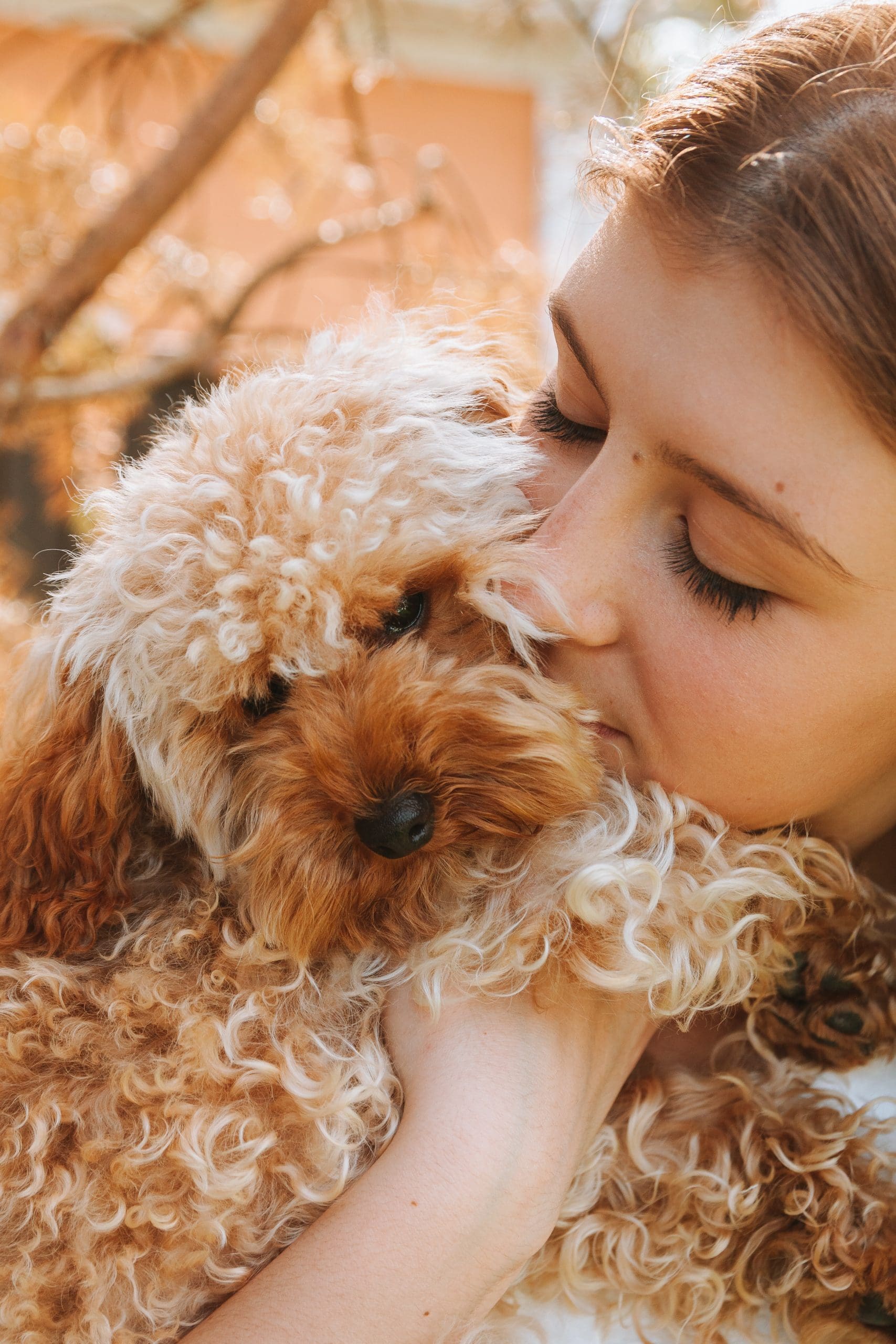
Conversely, a relaxed dog may lean into your chest, soften their eyes, wag gently, or rest their head on you — behaviors that commonly suggest comfort. Even so, tail wagging alone is not a guarantee of relaxation; it can occur when a dog is anxious but outwardly excited. Always combine several signals before deciding the dog accepts being handled.
Picking the right moment: environmental cues and timing to act
External factors can make a safe lift risky. Noisy, crowded, or high-traffic locations greatly increase a dog’s stress and make sudden movements more likely; if possible, move the dog to a quieter spot before lifting. A slippery or uneven surface can cause you or the dog to lose footing mid-lift; non-slip mats or lifting where you have a stable stance reduce that risk.
Immediately after an injury or the sudden onset of illness is not an ideal time for unsupported lifting. In those first minutes a dog can be in shock, disoriented, or more likely to bite because of acute pain. If the dog is unstable, collapsed, or showing neurological signs, it’s usually safer to immobilize and await veterinary guidance or use a rigid support board for transport.
The presence of other animals, excited children, or strangers nearby can provoke unpredictable reactions. If other dogs are barking or approaching, separate them first. If a child must be involved, keep the child at a safe distance until the dog is steady and relaxed.
Danger signs and medical red flags — when not to lift
Certain signs suggest that lifting the dog yourself could cause harm and that immediate veterinary care is needed. Sudden weakness or paralysis in the limbs, inability to control bladder or bowel function, or numbness in the limbs may suggest a spinal or severe neurological problem; moving the animal without professional stabilization may worsen injury.
Intense, continuous vocalization, inability to bear weight, visible deformity of a limb, or collapse are strong indicators to avoid manual lifting. Similarly, uncontrolled aggression — repeated bites or escalating threats — is a major safety risk for handlers; professional help or sedative protocols from a vet may be needed before safe transport.
Watch for respiratory distress (rapid or labored breathing), pale or blue-tinged gums, cold extremities, or signs of shock. These symptoms mean the dog’s condition may be life-threatening, and handling should be minimal and aimed at rapid transport with stabilization rather than prolonged manipulation.
Hands-on sequence for a safe dog pickup
Approach slowly and keep your movements predictable. Speak calmly and let the dog see you; sudden reaches toward the head or flailing arms often make dogs back away or snap. If it’s not your dog, ask the owner for permission and for any handling tips — many owners can tell you where the dog likes or dislikes being touched.
Position yourself so you can lift with your legs, not your back. For a medium to large dog I stand beside the dog’s shoulder and hip; for a small dog I crouch so my base is low. Slide one hand under the chest behind the front legs, and the other hand under the hindquarters in front of the back legs. If the dog is fractious, a towel wrapped across the shoulders can provide mild restraint and protect your hands.
Lift smoothly using your legs, bringing the dog close to your body to reduce torque on their spine. Keep the back level — avoid lifting with the head up and the hind end down or vice versa. A dog that is tucked tight against your chest feels more secure, and close contact reduces the likelihood of squirming that could lead to falls.
When setting the dog down, lower them gently to the intended surface so their feet touch the ground before releasing your support. Give the dog a moment to orient and watch their gait and behavior. If they hesitate, cry, or limp, avoid moving them further and seek veterinary assessment.
Train and set the space: preparing the dog and its environment
Reducing the need to lift a dog in the first place is often the best strategy. Desensitization through short, frequent handling sessions using high-value treats works well: touch the chest, paws, and hindquarters briefly then reward, gradually increasing duration. I typically recommend several two- to three-minute sessions per day rather than one long session, especially with nervous dogs.
Targeting and “step up” cues teach dogs to climb onto a surface voluntarily. Using a target stick or a held treat to mark a specific spot on a mat, then rewarding the dog for stepping up, builds voluntary cooperation. Mat work — rewarding a dog for staying on a defined surface — helps for grooming tables and car entries because the dog learns a clear, rewarded place to go.
Routine handling exercises for puppies and seniors help normalize touch. For puppies, gentle lifts combined with praise and soft handling set expectations. For seniors, shorter, gentle sessions that respect joint pain are better; integrate massage and passive range-of-motion to maintain comfort. Over time these exercises reduce stress and make needed lifts less traumatic.
Modify the environment so lifts are less necessary: install ramps or steps into vehicles, use non-slip mats on slick floors, and keep a clear, direct path between common points (bed-to-door, door-to-car). Even small changes, like a stable bench near the car so a dog can step up rather than be lifted, cut risk significantly.
Gear that helps: recommended slings, harnesses and supports
- Support slings and lifting harnesses: designed for pelvic or hip support in arthritic or recovering dogs; choose a size rated for your dog’s weight and follow manufacturer instructions.
- Ramps and non-slip mats: ramps for vehicle access and textured mats for tubs and tables reduce slipping and the need to lift.
- Appropriately sized carriers or crates: for small dogs, a secure carrier prevents stress during transport while protecting handler and dog.
- Muzzles and protective gloves: only use these when a dog poses a bite risk and after owner consent; muzzles must allow panting and drinking and be fitted correctly.
Equipment is an adjunct, not a cure. A sling or harness that’s too tight or a ramp with an unsafe angle can make things worse. Try gear before you need it in an emergency, and practice using it so the dog is familiar with the sensation.
References, sources and further reading
- Merck Veterinary Manual: “Musculoskeletal Injuries in Dogs” — practical guidance on fracture management and stabilization approaches.
- American Veterinary Medical Association (AVMA): “Handling and Restraint of Dogs and Cats” — best-practice recommendations for safe animal handling in clinic and field settings.
- International Association of Animal Behavior Consultants (IAABC): resources on safe introductions and handling for reactive or fearful dogs.
- Certification Council for Professional Dog Trainers (CCPDT): position statements and guidelines on force-free handling and ethical restraint.
- Small Animal Emergency and Critical Care: “Emergency Stabilization and Transport” — protocols for immobilizing injured dogs prior to veterinary assessment.
