
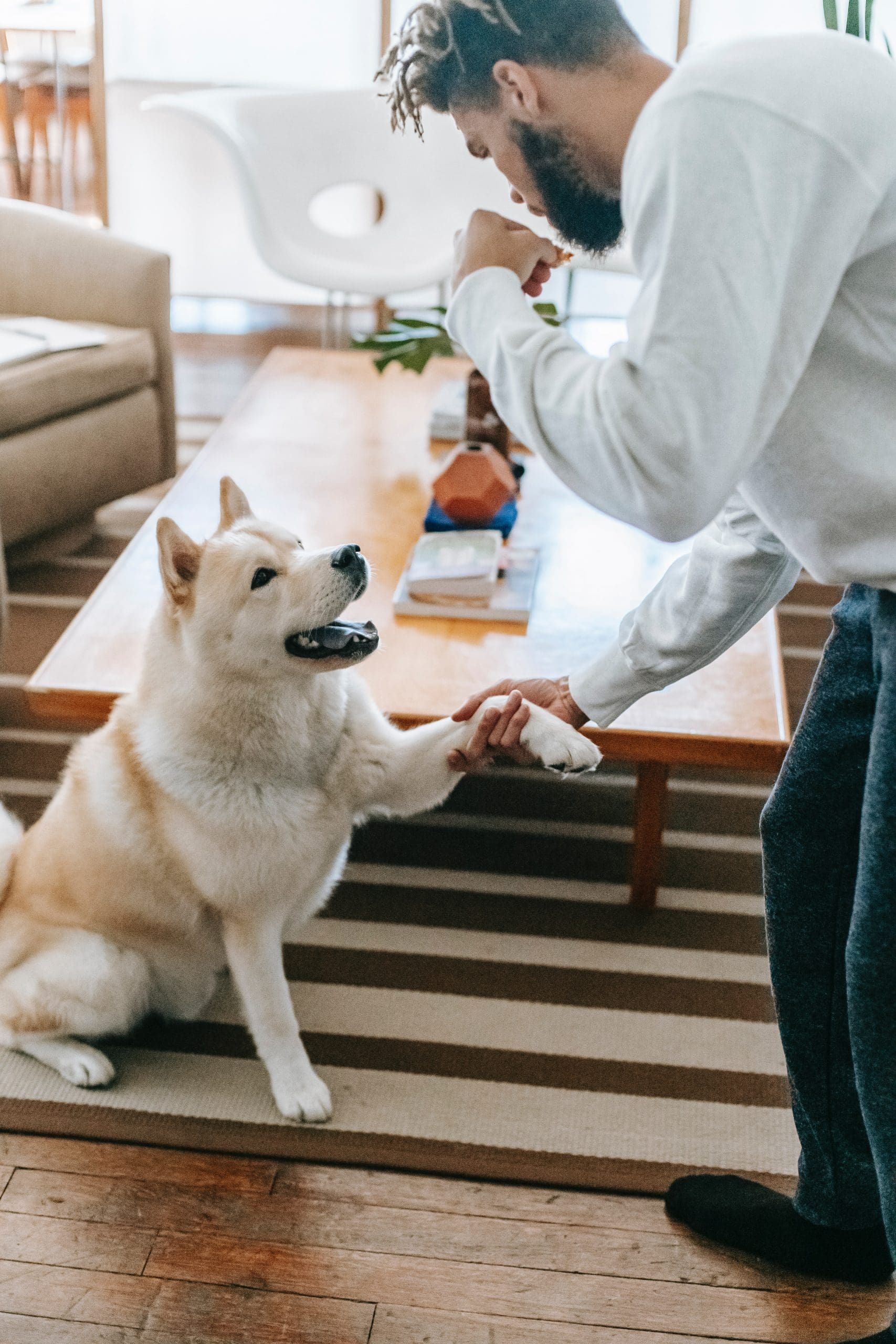
Why does my dog nibble on me?
Post Date:
January 22, 2026
(Date Last Modified: February 5, 2026)
If your dog lightly nibbles at your hand, sleeve or even your foot, it can be confusing: affectionate? demanding? worrying? Understanding why dogs nibble matters beyond simple curiosity — it shapes how you respond, keeps interactions safe, and helps you build the kind of relationship most dog lovers want: confident, clear, and comfortable for both dog and human.
Why your dog’s nibbling deserves attention (what it reveals about behavior and bonds)
Nibbling touches on three things dog lovers care about: bonding, safety, and training. When you correctly interpret a nibble, you can strengthen the social bond and teach a preferred way to ask for attention. When you misread it, play can escalate or routine interactions can become irritating or unsafe. I typically see owners worry about whether nibbling will turn into biting, whether a child is safe around a nipping dog, or whether the dog is stressed or in pain. Knowing what to look for helps you keep greetings relaxed, play appropriate, and training consistent.
Read the dog’s nibble as a piece of a larger conversation. In some households nibbling is merely a tolerated habit; in others it becomes a nuisance that undermines command-following or creates tension around food and toys. Interpreting nibbling correctly can turn an annoying habit into an opportunity to teach impulse control, redirect energy into toys or foraging, and prevent miscommunication that might otherwise lead to escalation.
The essentials at a glance — what to know right now
Here is an immediate, one-line answer for fast curiosity: most dogs mouth or nibble for play, communication, teething, attention, or because of stress — and in most cases the behavior is benign, but context matters.
- Short answer: mouthing for play, social communication, teething (puppies), attention-seeking, or stress-related oral behavior.
- Most nibbling is mild and not dangerous; watch for changes in force, intent, and accompanying body language.
- Act now if nibbling becomes hard, frequent around children, tied to guarding, or accompanied by sudden behavioral change; otherwise monitor and apply consistent training.
How canine communication and biology explain nibbling
Puppies have a natural mouthing reflex that may be linked to teething and to learning bite inhibition from littermates and their mother. Even after puppyhood, many dogs carry a gentler version of that behavior into adult play. I often see young dogs using their mouths to explore objects and people in a way humans find intrusive but that for dogs is information-gathering.
Nibbling can also be a social behavior. Dogs may lightly groom each other, mouth one another during play, or use soft bites as affiliative signals. A gentle nibble paired with relaxed posture, loose wagging, and soft eyes is likely social. Conversely, a nibble paired with stiffening, hard stares, growling, or pinned ears may be an early form of escalation and should be treated differently.
Some dogs learn that nibbling gets results: attention, food, a game starting, or the removal of something unpleasant. In those cases the nibbling is reinforced and becomes a reliable — if annoying — strategy for the dog. There are also times when oral behaviors are linked to stress, pain, or compulsive tendencies; repetitive nibbling that seems disconnected from context may suggest underlying discomfort or anxiety and is likely linked to physiological or emotional drivers that deserve investigation.
Everyday situations that trigger nibbling behavior
Nibbling tends to show up in predictable situations: during play, at greetings after a separation, when seeking attention, around feeding time, and in moments of high excitement. A dog may nibble at clothing or fingers when someone enters the house because the behavior has previously led to pats, treats, or play.
Resource-related contexts can change how nibbling is used. Near food, toys, or favored people a dog might mouth the air or your hand as part of resource guarding; here the nibble can be an early warning sign. Breed tendencies and age matter: terrier-type dogs or breeds with strong oral drives may use their mouths more, and puppies will mouth far more than geriatric dogs. Individual temperament shapes both frequency and intensity.
Household routines and family responses also set the stage. If one person laughs and games always follow a nibble while another person pulls away and scolds, the dog may quickly learn to repeat the behavior with the person who responds positively. Stressors such as chaotic schedules, new pets, or inconsistent rules can increase attention-seeking nibbling as dogs try to regain predictability.
Keeping both of you safe: bite prevention and first steps
Most nibbling is harmless, but some signs suggest the situation requires more immediate attention. If the nibble shifts into a hard bite, or the dog clamps down and doesn’t release on command, that’s an escalation and needs prompt intervention. Repeated skin damage, bleeding, or wounds where nibbling is blamed should be checked by a veterinarian to rule out infection and by a behavior professional to address the cause.
A sudden change in nibbling behavior — for example, a previously gentle dog suddenly nipping at hands or clothes — may suggest pain, fear, or a medical issue. I typically recommend seeing your veterinarian when a behavioral pattern shifts quickly; medical problems such as dental pain, joint pain, or neurological changes can underlie altered mouthiness.
For child safety: never assume a nibble is safe around small children. Even gentle mouthing can frighten a child or accidentally escalate. Supervise all interactions, teach children to be still and calm around dogs, and consult a behaviorist if a child and dog live in the same home and nibbling is frequent or unpredictable.
How to respond in the moment — clear actions to try
Immediate calm: if your dog nibbles and you want it to stop, remove your attention and tone: stop play, sit or stand still, avoid loud scolding, and withdraw eye contact. Attention is often the reward the dog seeks; taking it away may reduce the behavior in the short term. Remaining calm decreases arousal and models the response you want.
Redirect to something appropriate: offer a suitable chew toy or a food-dispensing object the moment nibbling starts. Reward the dog for taking the toy instead of your hand. Consistent timing is critical — praise or treat only when the dog is engaging with the approved object, and avoid rewarding the nibble by giving the toy after the dog nibbles your sleeve unless you plan to exchange on cue.
Consistent consequences: choose an approach and apply it every time. For many owners that looks like an immediate, calm time-out when the dog nips — a brief removal from the room or ending play for 30–60 seconds — paired with returning to positive interaction when the dog is calmer. For other families, planned teaching of “gentle” and “leave it” with positive reinforcement works better. Inconsistent responses tend to prolong the behavior.
If nibbling escalates despite consistent management, document incidents: note the context, people present, time of day, triggers, body language, and whether food or high-value items were involved. This information is valuable when you consult a professional. Seek veterinary evaluation if you suspect pain, sudden behavioral change, or if wounds are present. A certified behaviorist or a board-certified veterinary behaviorist can help design a stepwise plan for more complex cases.
Training methods and home adjustments that reduce nibbling
Long-term change combines training with environmental management. Teach alternative behaviors: reward the dog for sitting calmly for attention, teach “leave it” and “drop” so hands are not the target for oral exploration, and train a reliable “settle” or mat behavior to reduce arousal at greetings. I often start with short, frequent sessions and high-value reinforcement to speed learning.
Provide predictable outlets for oral drive: scheduled play sessions, supervised chew time, and enrichment activities like puzzle feeders or frozen stuffed toys help satisfy the need to mouth without involving your skin or clothing. For puppies, teething-specific chew toys and cold, chew-safe objects are especially useful and may shorten the period when mouthing is most intense.
Desensitization can help when nibbling is tied to greeting arousal. Practice low-intensity approaches: enter and exit the room calmly, reward calm behavior before full greeting access, and gradually increase greeting duration only as self-control improves. Reducing household stress — consistent routines, sufficient exercise, and clear rules applied by all family members — lowers the baseline arousal that often fuels attention-seeking nibbling.
Make sure everyone in the household follows the same rules. Dogs learn quickly which person will permit a behavior. If you aim to reduce nibbling, explain and demonstrate the chosen response so that visitors and family members don’t inadvertently reinforce the habit.
Tools, toys and gear that redirect unwanted mouthing
Choose gear that supports safe redirection and management. Durable, appropriately sized chew toys and teething aids reduce the dog’s need to mouth people. For dogs with strong oral drives, rotating toys and introducing novelty (different textures, flavors, or puzzle complexity) helps keep interest high.
Interactive puzzle feeders and slow feeders reduce attention-seeking by occupying the dog’s focus and giving a predictable food source. Calming aids such as pressure wraps, pheromone diffusers, or veterinarian-recommended supplements may be useful as part of a broader plan for anxious dogs, but they should be used under guidance and not as a sole solution.
For temporary management, training-friendly tools such as a soft head halter or a properly fitted basket muzzle may be appropriate, provided they are introduced with positive, food-based training and used safely. These are tools for safety or management, not quick fixes; long-term behavioral work should accompany their use.
If it doesn’t improve: escalation steps and when to consult a pro
If consistent, calm management and training don’t reduce unwanted nibbling, or if the behavior becomes more forceful, seek professional help. A certified professional dog trainer experienced with positive-reinforcement methods can assess triggers and teach alternatives. If there are signs of possible medical causes, consult your veterinarian first. For complex or risky cases — such as escalation to hard bites, guarding, or sudden behavioral changes — a board-certified veterinary behaviorist or a certified applied animal behaviorist is the most appropriate next step because they can integrate medical, behavioral, and environmental factors into a tailored plan.
Documenting patterns, avoiding punishment-based interventions that can increase fear or aggression, and keeping interactions predictable will usually improve outcomes. With patience, consistent rules, and the right guidance, most nibbling behaviors can be managed and redirected into safe, enjoyable interactions that improve the bond you share with your dog.
References and further resources
- Merck Veterinary Manual: “Aggression in Dogs” — Merck Veterinary Manual client information on canine aggression and bite prevention.
- AVSAB (American Veterinary Society of Animal Behavior): “Position Statement on Puppy Socialization” — guidance on early social experiences, bite inhibition, and behavior development.
- American Veterinary Medical Association (AVMA): “Puppy Biting and How to Handle It” — client education on mouthing, training basics, and safety.
- Cornell University College of Veterinary Medicine, Baker Institute for Animal Health: “Canine Behavior — Bite Inhibition and Mouthing” — practical notes on assessing and shaping oral behavior.
- ASPCA Professional: “Why Dogs Bite and How to Prevent It” — resources on identifying triggers, managing greetings, and child-pet safety.
