What Does It Mean When A Dogs Ears Are Back?
Post Date:
December 10, 2024
(Date Last Modified: November 13, 2025)
Dogs move their ears to communicate internal state and to collect sound, and the phrase “ears back” covers a range of positions that look similar but mean different things depending on context.
What “Ears Back” Looks Like
Describing ear position precisely helps separate signals that are subtle yet important for understanding a dog’s emotion or intent. Observers commonly divide ears held toward the rear into distinct visual categories so they can report whether the ears are merely rotated, softly laid back, pinned tightly to the skull, or asymmetrically displaced when the dog is turning its head.[1]
Practically, those categories are often described as three basic positions: rotated slightly rearward, laid-back (a softer backward tilt), and pinned flat against the head; using consistent labels reduces misinterpretation when owners, trainers, or veterinarians compare notes about a dog’s behavior.[2]
At a measurement level used by some behavior researchers, a mild backward rotation typically falls in the range of 10–20° from the normal forward-or-neutral axis, producing a look that is noticeably turned but not tight or alarmed.[3] In contrast, truly pinned ears are often within about 0–5° of the skull surface and appear flattened as if pressed backward, a posture that is visually distinct from a relaxed backward tilt.[4]
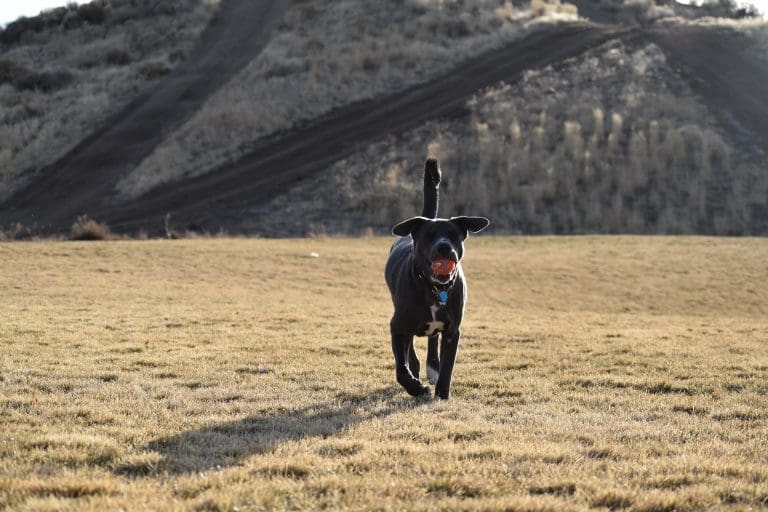
Some dogs rotate a single ear or both ears toward sounds behind them; those rotations commonly span 30–60° when the dog is actively localizing a noise rather than signaling emotion, so lateral rotation combined with quick head movement usually indicates attention rather than distress.[5] Because natural ear set and carriage vary greatly by breed and by individual anatomy, visual examples—photographs or diagrams taken from several angles—are the best way to show the difference between a subtle rearward tilt and a fully pinned ear, and precise written descriptions help professionals track change over time.
Ear Anatomy and Breed Differences
Canine ear structure combines cartilage, skin, muscles, and a vascular supply that together determine how far and how quickly a pinna can move; breeds with thicker auricular cartilage show less dramatic movement than breeds with thin, highly mobile cartilage, which affects how signals are expressed and read.[4]
Key anatomical components related to movement include the scapha and conchal cartilage, the auricular muscles that rotate and tilt the ear, and the sensory innervation that provides feedback about touch and pain; dysfunction or pain in any of these components changes posture and may produce a prolonged ears-back appearance.[1]
Breed differences are striking: breeds such as the German Shepherd and Siberian Husky typically carry erect, forward-facing ears that can rotate roughly 30–60° when localizing sound, whereas breeds like the Beagle and Cocker Spaniel have long, pendulous ears that naturally fall back or to the sides and can mask subtle rearward tilts.[5] Conformation alterations such as surgical cropping or natural rear-set ears created by selective breeding also change baseline ear posture and therefore the interpretation of a backward tilt.[2]
| Ear Type | Breed Examples | Movement Range | Signal Interpretation |
|---|---|---|---|
| Erect | German Shepherd, Husky | ~30–60° rotation | Clear rotation for sound; pinned often signals tension |
| Button | Jack Russell, Terrier types | ~10–30° tilt | Subtle shifts; ears back often paired with eye and body cues |
| Drop/Floppy | Beagle, Cocker Spaniel | Minimal independent movement | Rearward lay may be baseline; look for other signals |
| Rear-set | Some sighthounds | Varies by individual | Neutral ears may appear backward relative to other breeds |
Fear, Anxiety, and Submission
When ears are pulled back in conjunction with lowered body posture, a tucked tail, and avoidance behaviors, the posture commonly functions as an appeasement or submissive signal meant to reduce the perceived threat and avoid escalation.[2]
Behavioral triggers that commonly produce a submissive ear posture include unfamiliar people approaching directly, looming gestures over the dog, or sudden loud noises; in shelter studies, dogs exposed to repeated stressful handling displayed increased frequency of ears-back postures over observation periods of 10–30 minutes when no accommodations were made for their comfort.[3]
Additional associated signals often occur together: lip licking, yawning, and averted gaze are common, and if the underlying fear is ignored the dog may escalate from passive avoidance to active avoidance or defensive snapping—an escalation pathway documented in behavior research assessing human-dog interactions.[1]
Relaxation, Comfort, and Affection
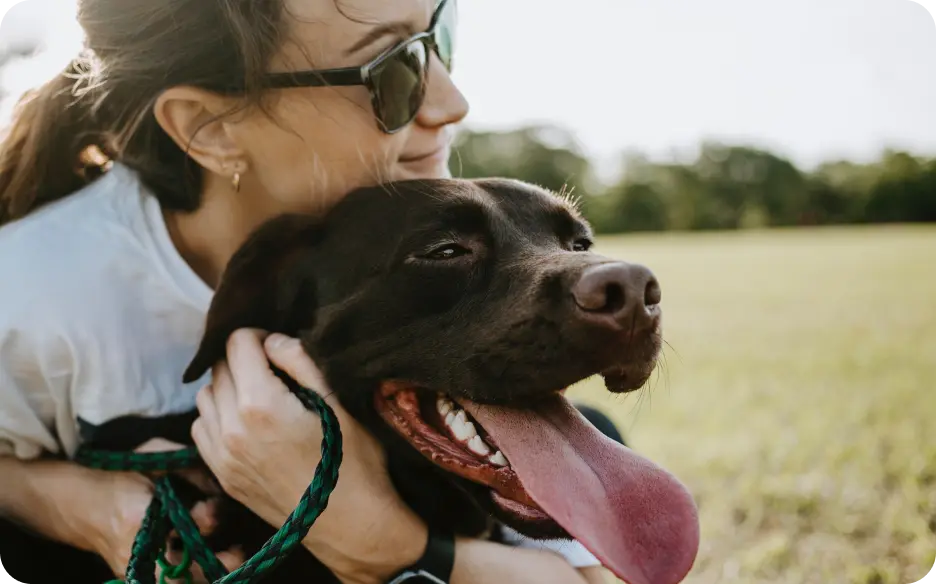
Not every ears-back posture signals distress; a soft backward tilt that appears with relaxed eyes, a loose body, and a slightly open, relaxed mouth is frequently a sign of calmness or social bonding, and owners often see this when a dog leans into petting or rests its head against a trusted person.[5]
Greeting behavior can include brief ear retraction combined with tail wagging and forward-bent posture; the key differentiator is the overall muscle tone and facial expression—relaxed ears that recur during content activities such as settling to sleep or gentle play are not the same as the tense, pinned ears of fear or pain.[4]
Observe duration: a short-lived backward tilt lasting a few seconds during a positive interaction is more likely contentment, whereas a persistent, high-intensity pinned posture lasting for 10 minutes or more without obvious calm signs warrants closer evaluation for stress or discomfort.[3]
Attention, Listening, and Sound Localization
Dogs rotate their pinnae toward sound sources; lateral rotation and quick head turns that include rearward ear positioning typically represent auditory focus rather than an emotional state, and such movements are often brief (seconds) and coupled with oriented eyes and still body to maximize sound capture.[5]
When a noise originates behind the dog, ears may turn back 30–60° as the animal triangulates the sound source; in working and hunting breeds this response is fast and precise, reflecting a functional rather than an affective posture.[1]
Pain, Injury, and Medical Causes
Medical issues can cause a dog to hold ears back suddenly and persistently; common causes include otitis externa (ear infection), aural hematoma, ear mites, and referred pain from dental disease or neck injury, each of which may produce asymmetry, head shaking, or ear sensitivity to palpation.[4]
Red flags that suggest veterinary evaluation include sudden onset of ear-back posture accompanied by vigorous head shaking, visible discharge, a foul odor from the ear canal, or vocalization on touch; in such cases a veterinary exam is recommended within 24–48 hours to avoid progression and to manage pain and infection effectively.[4]
For systemic concerns where fluids are required, maintenance fluid guidelines commonly used in clinical practice are approximately 40–60 mL/kg/day for an adult dog, adjusted by the attending veterinarian based on clinical condition and ongoing losses.[4]
Aggression, Defensive Posture, and Tension
Ears pulled tightly back can be part of an aggressive or defensive display when combined with other high-arousal signals such as a hard, fixed stare, raised hackles, a stiff body, and low growling; intensity and duration of these combined cues differentiate defensive hostility from submissive avoidance.[2]
In a threatening interaction, postures tend to be rigid and oriented toward the perceived threat, with ears pinned close to the head in anticipation of forward action; by contrast, submissive postures often include lowered body and avoidance, not forward orientation or fixation.
Safety recommendations emphasize maintaining distance, avoiding direct eye contact, and using barriers rather than hands to separate dogs in conflict; professionals typically advise that untrained people should not attempt to forcibly reorient or grab a dog showing high-tension signals because the risk of escalation and injury increases substantially without proper handling tools and training.[1]
Puppies, Socialization, and Developmental Differences
Puppies use ear position extensively during play and submission; they often present exaggerated ears-back signals during play bows and when soliciting care, and this behavior normally decreases as they learn social rules and gain confidence between roughly 3 and 6 months of age in many litters.[3]
Poor early socialization or traumatic experiences can increase the frequency and intensity of ears-back postures later in life, and behaviorists often see higher baseline submission signals in dogs from understimulating or aversive rearing environments, which underscores the importance of gradual, positive social exposure during the first 12–16 weeks of life.[3]
Training and controlled socialization that incorporate predictable positive reinforcement reduce fear-based ears-back signals over time; measurable improvement in baseline body language is often seen within 4–8 weeks of consistent, appropriate training protocols depending on the dog and the severity of prior experiences.[5]
Interpreting Context and How to Respond
Reading ears-in-back requires assessing the whole dog and the situation; check for body tone, facial expression, tail position, recent events, and environmental triggers to determine whether the posture reflects attention, comfort, fear, pain, or aggression rather than relying on ears alone.[2]
Immediate, appropriate responses include: remove or distance the stressor when fear is suspected, offer calm reassurance without direct looming, avoid punishment that can worsen fear-based signals, and seek veterinary care when medical causes are suspected—if signs such as discharge, persistent head tilt, or vocalization accompany the ear-back posture, contact a veterinarian within 24–48 hours.[4]
Long-term strategies focus on desensitization and counterconditioning for fear triggers, enrichment and predictable routines to reduce generalized anxiety, and professional behavior consultation for recurrent or escalating aggression; many dogs show measurable behavioral gains within 6–12 weeks of an evidence-based training plan when implemented consistently.[5]
- Context checklist: body posture, tail carriage, facial tension, vocalizations, environmental trigger, duration and recurrence of ear posture.[2]
Sources
- merckvetmanual.com — General veterinary reference on canine behavior and posture.
- avma.org — American Veterinary Medical Association information on behavior reporting and terminology.
- wsava.org — World Small Animal Veterinary Association resources on clinical observations and measurements.
- vcahospitals.com — Clinical notes on ear carriage, pain signs, and examination.
- aaha.org — American Animal Hospital Association guidance on behavior assessment and context interpretation.