
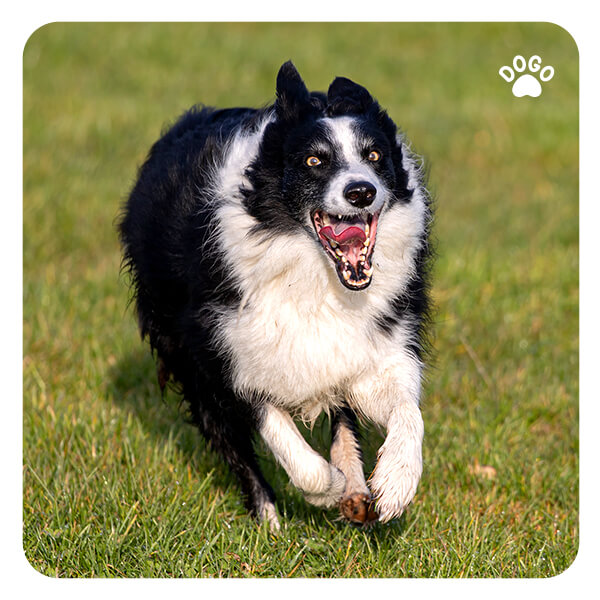
Zoomies Horror Show: Why Is Your Dog Running Wild?
Post Date:
July 18, 2024
(Date Last Modified: November 13, 2025)
Many dog owners recognize sudden bursts of frenetic running and spinning in their pets, and understanding the behavior helps manage safety and expectations.
What Are Zoomies?
Zoomies, often called frenetic random activity periods (FRAP), are sudden episodes of high-energy running that typically include sharp turns, spinning, and sliding and usually last about 30 seconds to 5 minutes[1].
These episodes present as rapid acceleration, tight circling, play-bows followed by sprinting, and sudden stops with vocalization in some dogs[1]. Zoomies differ from normal play by their unstructured, repetitive racing and often a lack of clear play partner interaction, while abnormal movement such as seizure activity typically shows loss of awareness or rhythmic limb tremors[2].
The Physiology Behind the Frenzy
Brief biochemical cascades involving adrenaline and dopamine are implicated in rapid arousal and reward-seeking during FRAP, with measurable spikes in catecholamines during acute excitement in canines according to physiological reviews[2].
Energy discharge is often the proximate cause: dogs with recent calorie intake or incomplete exhaustion of activity stores are more likely to convert excess energy into short, intense bursts rather than steady exercise[3].
The autonomic nervous system shifts toward sympathetic dominance during zoomies, raising heart rate and arousal for brief windows; heart-rate and respiratory increases are transient and return to baseline shortly after the episode ends, typically within minutes[3].
Typical Triggers and Immediate Contexts
Owners commonly see zoomies immediately after a bath, following elimination, or after a nap, with many dogs displaying the behavior within minutes of those events[3].
- Post-bath or grooming excitement
- Post-elimination relief runs
- Release from confinement such as opening a crate or door
- Visitor arrival or meal delivery excitement
Confinement-release can trigger intense single episodes, and meal-related excitement commonly precedes a short burst of running in the 1–10 minutes after feeding in many dogs[4].
Age, Breed, and Individual Differences
Puppies and adolescents show FRAP more frequently than mature adults; peak frequency is often observed in the 3–6 month developmental window and remains elevated through adolescence for many breeds[4].
High-energy and working breeds typically display more frequent and longer bursts compared with low-energy companion breeds, and some individuals may have multiple episodes per day while others rarely exhibit zoomies[4].
Past reinforcement matters: dogs that receive play rewards immediately after a zoomie can have that behavior strengthened, increasing the chance of recurrence in similar contexts[5].
Timing, Frequency, and Environmental Patterns
Many owners report evening peaks in zoomie incidence, with notable increases around household routines such as dinner time or family arrival; frequency often ranges from a few episodes per week to several per day depending on life stage and activity level[5].
Indoor spaces foster sliding and collision risks during zoomies, while outdoor areas allow longer sprints; dogs confined to small indoor spaces may show more intense short bursts when given a chance to escape that confinement[4].
A sudden change to a pattern—such as a jump from rare episodes to multiple daily runs over a week—can be a diagnostic clue that warrants veterinary evaluation for underlying pain or neurologic change[2].
| Age Stage | Common Frequency | Typical Duration | Relative Risk |
|---|---|---|---|
| Puppy (0–6 mo) | Multiple times/day | 30–90 seconds | Moderate |
| Adolescent (6–18 mo) | Daily to multiple/day | 30 sec–5 min | Moderate–High |
| Adult (1.5–7 yr) | Few times/week | 30 sec–3 min | Low–Moderate |
| Senior (7+ yr) | Rare | <1–2 min | Higher if mobility issues |
Safety Risks and Household Hazards
Collision with furniture, impact on stairs, and slipping on smooth floors are common injury mechanisms during zoomies, and some household surfaces increase fall risk significantly when dogs sprint at speed[1].
Doors and leashes can create entanglement hazards if a dog bolts; tethered dogs that begin a sudden sprint may suffer neck or spinal injury if restraint is abrupt, so supervised release into a clear space reduces those dangers[2].
Simple environment-proofing measures—moving sharp objects, using non-slip rugs on tile, gating off stair access, and supervising interactions with children—reduce major injury risks during episodes[3].
When Zoomies Are Not Just Zoomies
Red flags that suggest a medical issue include loss of consciousness, prolonged disorientation lasting more than 5 minutes after an episode, repetitive rhythmic limb jerking, or severe vocalization during the event[3].
Important medical differentials include generalized seizure, vestibular disease, syncope, and pain-driven escape behaviors; video that shows sudden collapse, tonic-clonic movements, or postictal confusion is especially useful for a clinician[2].
If a dog repeatedly bolts despite cueing, shows progressive gait change, or has new reluctance to bear weight, veterinary assessment is recommended because these signs can indicate musculoskeletal or neurologic disease rather than simple FRAP[2].
Management and Prevention Strategies
Regular, scheduled exercise reduces the incidence of uncontrolled bursts; many adult dogs benefit from at least 30 minutes of structured activity per day, supplemented with short play sessions for high-energy breeds[4].
Mental enrichment such as puzzle feeders, scent work, and short training sessions can lower excess arousal; rotating enrichment items and providing 10–20 minutes of cognitively demanding activity before times that typically trigger zoomies helps redirect energy[5].
Hydration and baseline metabolic needs matter: a general maintenance water intake guideline is approximately 50 mL/kg/day for many adult dogs, and ensuring free access to water helps prevent dehydration that can amplify restless behavior[1].
Training Techniques to Channel Zoomies Constructively
Recall training practiced under low-distraction conditions and then generalized to higher arousal contexts gives owners a safe tool to interrupt a zoomie and redirect to a controlled activity; repeated short sessions spread across the week build reliability[5].
Impulse-control exercises such as “wait,” “place,” or mat training can turn an abrupt run into a practiced calm response; dogs taught to go to a mat on cue can be guided there when an episode starts and rewarded for settling for 30–60 seconds[4].
Positive reinforcement—rewarding the calm behavior that follows a cue rather than punishing the zoomie—reduces the chance of inadvertent reinforcement of the high-energy run and supports long-term behavior shaping[5].
Consider practical, stepwise tools that help owners reduce risk and channel high-energy episodes into safe outlets.
Advanced Management Tactics and Practical Routines
One practical preemptive routine that many owners find effective is a 10-minute brisk walk followed by 15 minutes of mental enrichment and then a short 5–10 minute structured play session to dissipate energy before household peak times such as dinner or guest arrival[6].
For growing puppies, a commonly cited guideline is approximately 5 minutes of structured exercise per month of age, up to twice daily, to avoid repetitive high-impact sessions that stress developing joints[3].
When substituting indoors for outdoor sprinting, provide multiple short outlets: for example, three 10-minute scent or puzzle sessions spread across the day reduces cumulative arousal and gives predictable opportunities for discharge[4].
Owners aiming to prevent zoomies around routine events can shift feeding and play timing; delaying free play for 10–20 minutes after a meal often lowers immediate post-feeding bursts by providing a calm digestion window[1].
If zoomies increase in frequency to more than 3 episodes per day or individual episodes last longer than 5 minutes, that change is a practical threshold for seeking veterinary or behavior consultation, especially if accompanied by other signs such as gait change or vocalization[2].
Video documentation helps clinicians; capture at least 60 seconds before the episode when possible, continuous footage during the event, and at least 120 seconds after to show recovery and orientation, and note whether the dog remains alert and responsive to cues[7].
For leash and door management, a practical rule is to provide a clear 6–10 foot (1.8–3.0 m) release zone before opening a door or removing a leash, and to use a harness rather than a choke-style collar to minimize neck injury if a dog bolts suddenly[3].
Behavioral shaping aims for progressive criteria: reward calm behavior for 10–30 seconds initially, then gradually extend the calm duration by 5–10 seconds per successful repetition until the dog reliably settles for 2–3 minutes on cue in moderate distraction environments[5].
When introducing mat/settle training under arousal, begin with low-intensity practice sessions of 3–5 minutes and increase to two to three 10-minute sessions daily once the dog consistently chooses the mat on cue, reinforcing with high-value treats or toys[4].
If pain or neurologic disease is suspected, veterinarians may recommend diagnostic steps such as a focused neurologic exam, orthopedic evaluation, or imaging; owners should expect a clinician to request symptom timelines and any video and to advise diagnostics based on the clinical picture rather than a fixed set of tests for all cases[2].
Finally, for multi-dog households, stagger exercise so the highest-energy animal has an outlet before times that typically trigger household-wide excitement; a simple plan is to give the angriest energy spender its main session 20–30 minutes prior to common trigger events, reducing contagion of frantic runs[1].
Sources
